
 About


Mike Colter (Cupertino) reflects on his Luke Cage return in Daredevil: Born Again and embracing the opportunity to "add more to the story."
Posted in: CBS, Star Trek, TV | Tagged: star trek
Star Trek: Shatner, Frakes & Picardo Talk AI & Franchise's Tech Legacy
For its 60th anniversary, Star Trek legends William Shatner, Jonathan Frakes, and Robert Picardo discuss AI and the franchise's tech legacy.
Article Summary
- Star Trek icons William Shatner, Jonathan Frakes, and Robert Picardo discuss AI and the franchise’s tech legacy.
- Shatner says he uses ChatGPT daily, linking today’s AI tools to the starship computer imagined in Star Trek.
- Picardo reflects on The Doctor and how Star Trek science fiction often predicts real-world technology advances.
- Frakes credits Star Trek’s optimistic future, humor, and human themes for keeping Gene Roddenberry’s vision vital.
Since Star Trek's original premiere in 1966 with The Original Series on NBC, Gene Roddenberry not only created a blueprint for an ideal world set in the future, but also provided inspiration for what technology will become, and, in some respects, science fiction has become scientific reality. TOS star William Shatner (Captain/Admiral James T. Kirk), The Next Generation and Picard star Jonathan Frakes (Commander/Captain William Riker), and Voyager, Prodigy, and Starfleet Academy star Robert Picardo (The Doctor) spoke with CBS Evening News as part of its "Weekend Journal" segment on what technologies that Trek predicted have become reality, especially with artificial intelligence, and the franchise's longevity.
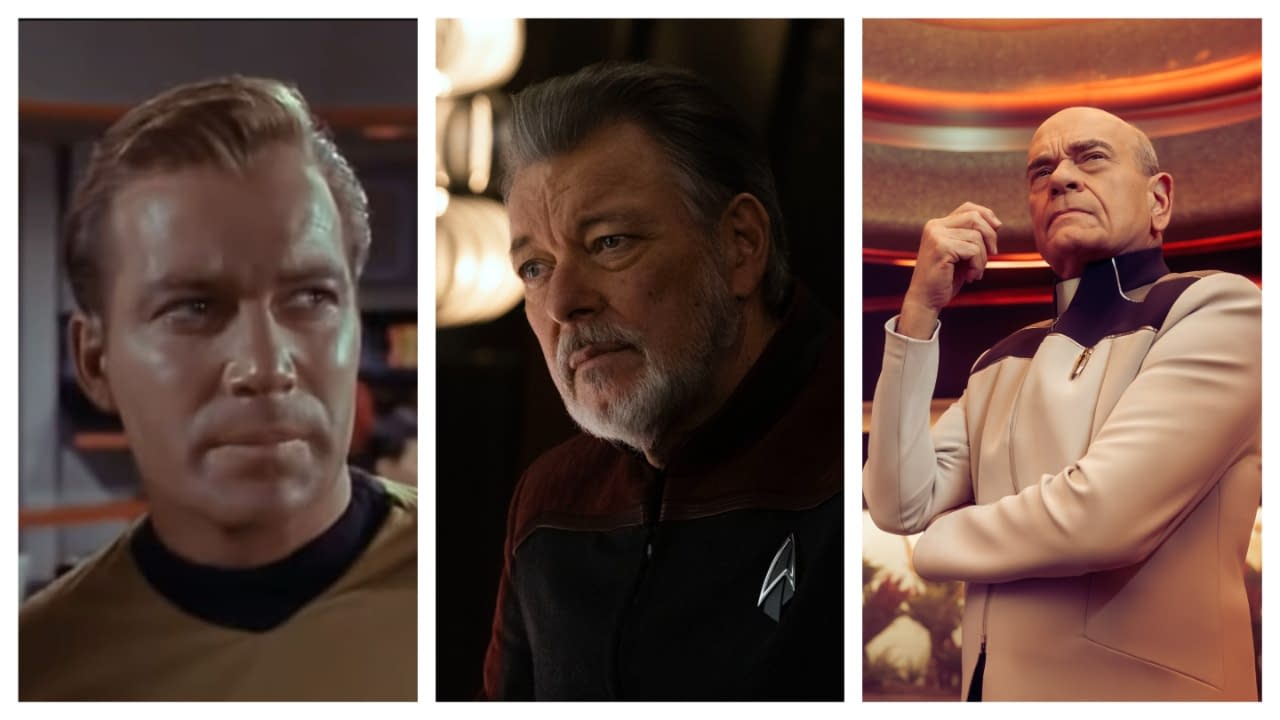
Star Trek Icons William Shatner, Jonathan Frakes, and Robert Picardo on AI and Franchise Legacy
The first piece touched on the ship's AI, a universal staple of the franchise since TOS, voiced mostly by Majel Barrett Roddenberry until her passing in 2008, as a subject of how AI has become a staple in daily life today. "Oh, I mean, I'm asking ChatGPT tens of questions in a day," Shatner told CBS's Dave Malkoff, to which he responded. "That's something that the ship's computer could do for Captain Kirk." "And I understand it, because I use AI a lot," Shatner said. "There can't be anything similar to Star Trek."
The segment transitions to Picardo, who's played the Emergency Medical Hologram, The Doctor, since Voyager, as Malkoff triggers the actor, "Computer, activate Emergency Medical Hologram." Materializing like he would on the show, Picardo tweaks his signature greeting, "Please state the nature of the 60th anniversary of Star Trek emergency," before saying, "The Doctor was the first artificial intelligence software." When Malkoff said he's seeing a lot of that now, Picardo offers a prophetic response to the nature of the genre, "Science fiction dreams the dream, and then real science catches up."
Not only does Star Trek unofficially lay out the technical foundation of what's possible, but, more importantly, the franchise continues to provide a blueprint for exploration and offers timely social commentary on the human condition. "I think because it wasn't afraid to be positive and it wasn't afraid to have some levity, so 60 years on, they're still making Star Trek shows based on what Roddenberry had created, and the magic of that family on that bridge," Frakes said. For more on Malkoff talking to astrophysicist, NASA astronaut, advisor, and Prodigy guest star Erin Macdonald about the science behind Trek, and Shatner's journey on Blue Origin, you can check out the video.
Enjoyed this? Please share on social media!



Stay up-to-date and support the site by following Bleeding Cool on Google News today!