
 About
About 

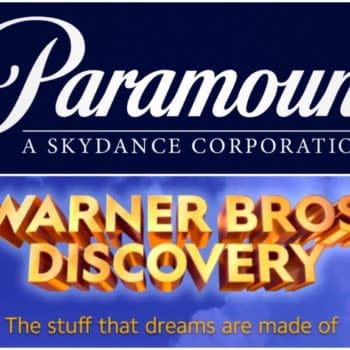
Defending the $110 billion Paramount/WBD deal, the Department of Justice says it's "not likely to harm competition or American consumers."
Posted in: HBO, Max, Movies, Paramount+, TV | Tagged: paramount, Warner Bros
Paramount/WB Deal Won't Harm Entertainment Industry, Consumers: DOJ
Defending the $110 billion Paramount/WBD deal, the Department of Justice says it's "not likely to harm competition or American consumers."
Article Summary
- DOJ backs the $110 billion Paramount/WBD merger, saying the deal is unlikely to harm competition or consumers.
- Antitrust officials say Paramount and Warner Bros. Discovery together could boost competition across media and streaming.
- DOJ argues a combined Paramount+ and HBO Max would better challenge Netflix, Prime Video, and Disney+.
- Paramount still faces EU, UK, and potential U.S. state scrutiny as the merger moves toward key approval deadlines.
Now that David Ellison's Paramount Skydance deal to take over David Zaslav's Warner Bros Discovery has cleared a major hurdle, Donald Trump's Justice Department is justifying its decision to sign off on the $110 billion deal with no changes requested. "The legacy of these transactions illustrates the challenges that arise when the commercial rationale for a deal lacks clear alignment with competitive incentives of the acquiring firm or the competitive evolution of the marketplace. In technology-driven industries, the disruptors of the recent past may quickly become the entrenched monopolists of the present day," read the statement from the Antitrust Division.
"It is with this historical experience and present enforcement sensitivity to the contestability of dynamic markets that the Division conducted a thorough investigation of the proposed transaction to assess whether the proposed transaction presented any harm to competition. The extensive investigatory record reviewed by the Division suggests that the impact of the transaction will be to increase competition across the media and entertainment ecosystem, with benefits for American consumers and workers."
Despite arguments that the merger would lead to hits to the entertainment industry, including layoffs and a reduction in overall production, the DOJ believes its findings "all led to the same conclusion: the film and television industry is highly dynamic, and the proposed transaction is not likely to harm competition or American consumers." The statement went on to claim that the deal will also make a combined Paramount+ and HBO Max more competitive with Netflix, Amazon's Prime Video, and Disney+. "Based on extensive interviews with market participants and review of the parties' own documents that were made in the ordinary course of business, the parties have a clear path to injecting additional competitive pressures across the media ecosystem to innovate and provide value to creators and consumers," the statement read.
As for Netflix's previous argument that YouTube, TikTok, and social media pose serious competition in an ever-changing landscape, it seems the DOJ didn't see it that way. The DOJ claimed that alternatives like those "do not appear to be competitive substitutes here under well-established antitrust legal precedents, although they compete broadly for consumer attention."
"We are grateful for the Department of Justice's thorough review of this transaction, as well as the work of the other agencies that have completed their reviews and provided clearance to date," a Paramount spokesperson said in a statement to CNBC. "This deal is pro-competitive, resulting in a stronger company better positioned to compete against dominant technology platforms in an industry increasingly defined by intense competition for audiences, talent, technology, and investment. We remain focused on completing the transaction as soon as possible and delivering its benefits to consumers, creators, and the entertainment industry as a whole."
The deal still has some potential roadblocks ahead as it inches closer to that "ticking fee" deadline that would require Paramount to pay Warner Bros shareholders a set fee per share for every financial quarter the deal wasn't approved during after September 30th. Along with concerns from the European Union regarding a monopoly on kids' programming (with Nickelodeon and Cartoon Network being some of the bigger concerns), we also learned that a number of U.S. states are looking to file a lawsuit to block the deal (with more development expected on that front after today's thumbs-up from the DOJ). Earlier this month, we also learned that Britain's Competition and Markets Authority (CMA) had formally opened a probe into the $110 billion deal. The first phase will wrap up on August 7th, at which point the CMA will announce whether a second investigation is warranted, which could take months (and would trigger the "ticking fee").
Enjoyed this? Please share on social media!



Stay up-to-date and support the site by following Bleeding Cool on Google News today!