
 About
About 


With a teaser for Matt & Ross Duffer and Showrunner Eric Robles's Stranger Things: Tales From ’85 set for Monday, here's a new poster!
Posted in: CBS, Opinion, TV, TV | Tagged: 60 minutes
60 Minutes: Weiss Defends Pulling Segment; Big Questions Still Remain
CBS News Editor-in-Chief Bari Weiss defended pulling a segment from 60 Minutes critical of the Trump Administration, but questions remain.
Article Summary
- 60 Minutes segment critical of the Trump Administration was pulled hours before airing, sparking controversy
- Bari Weiss says segment lacked sufficient reporting, but staff and correspondent Sharyn Alfonsi call it political
- Alfonsi argues the story met all CBS legal and editorial standards, alleging political interference in the decision
- Debate grows on whether withholding administration response is censorship and if CBS New is protecting Trump
CBS News Editor-in-Chief Bari Weiss is being called out over her decision to pull a segment critical of the Trump Administration, with the notice going out only hours before the segment was set to air. In the segment, correspondent Sharyn Alfonsi was set to speak with several Venezuelan individuals who were detained in El Salvador's CECOT (Centro de Confinamiento del Terrorismo/Terrorism Confinement Center) by the Trump Administration to discuss the brutal and torturous conditions they endured. Here's a look at the official overview for the segment that was released on December 19th:
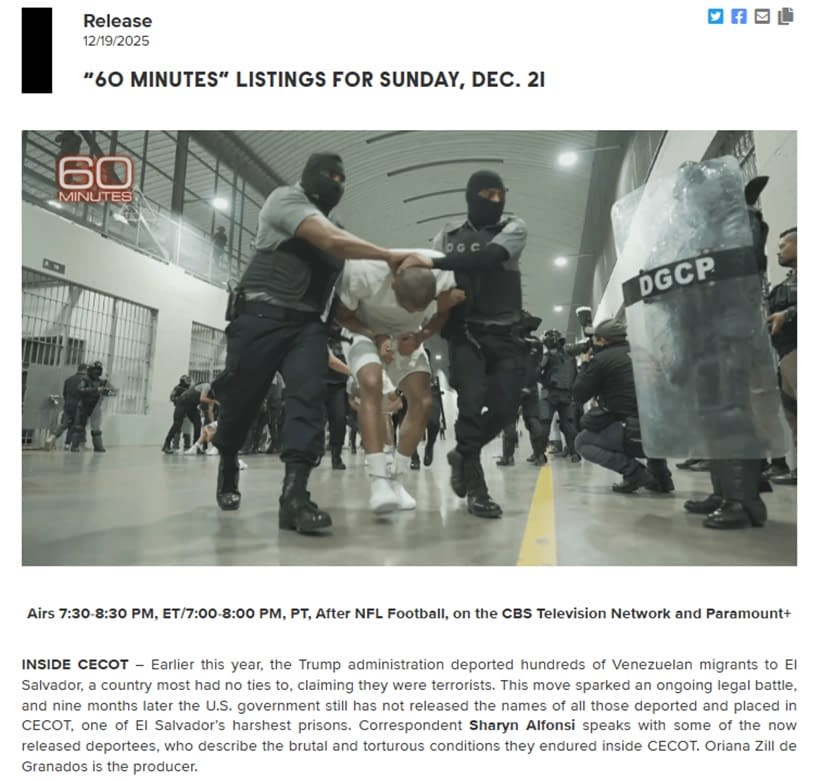
INSIDE CECOT – Earlier this year, the Trump administration deported hundreds of Venezuelan migrants to El Salvador, a country most had no ties to, claiming they were terrorists. This move sparked an ongoing legal battle, and nine months later the U.S. government still has not released the names of all those deported and placed in CECOT, one of El Salvador's harshest prisons. Correspondent Sharyn Alfonsi speaks with some of the now released deportees, who describe the brutal and torturous conditions they endured inside CECOT. Oriana Zill de Granados is the producer.
Shortly after the notice that the segment had been pulled and moved to a "future broadcast," a CBS News representative claimed that the segment "needed additional reporting." On Sunday night, The New York Times reported that Weiss "requested numerous changes to the segment." But in a private note sent to colleagues, Alfonsi pushed back on the reasoning, noting that the segment was pulled for "political" reasons. "Our story was screened five times and cleared by both CBS attorneys and Standards and Practices," Alfonsi wrote in the note (which The New York Times obtained a copy of). "It is factually correct. In my view, pulling it now, after every rigorous internal check has been met, is not an editorial decision; it is a political one." CNN's Brian Stelter posted the full text of the reported note from Alfonsi:
News Team,
Thank you for the notes and texts. I apologize for not reaching out earlier.
I learned on Saturday that Bari Weiss spiked our story, INSIDE CECOT, which was supposed to air tonight. We (Ori and I) asked for a call to discuss her decision. She did not afford us that courtesy/opportunity.
Our story was screened five times and cleared by both CBS attorneys and Standards and Practices. It is factually correct. In my view, pulling it now—after every rigorous internal check has been met is not an editorial decision, it is a political one.
We requested responses to questions and/or interviews with DHS, the White House, and the State Department. Government silence is a statement, not a VETO. Their refusal to be interviewed is a tactical maneuver designed to kill the story.
If the administration's refusal to participate becomes a valid reason to spike a story, we have effectively handed them a "kill switch" for any reporting they find inconvenient.
If the standard for airing a story becomes "the government must agree to be interviewed," then the government effectively gains control over the 60 Minutes broadcast. We go from an investigative powerhouse to a stenographer for the state.
These men risked their lives to speak with us. We have a moral and professional obligation to the sources who entrusted us with their stories. Abandoning them now is a betrayal of the most basic tenet of journalism: giving voice to the voiceless.
CBS spiked the Jeffrey Wigand interview due to legal concerns, nearly destroying the credibility of this broadcast. It took years to recover from that "low point." By pulling this story to shield an administration, we are repeating that history, but for political optics rather than legal ones.
We have been promoting this story on social media for days. Our viewers are expecting it. When it fails to air without a credible explanation, the public will correctly identify this as corporate censorship. We are trading 50 years of "Gold Standard" reputation for a single week of political quiet.
I care too much about this broadcast to watch it be dismantled without a fight.
Sharyn
Earlier today, Weiss defended her action to the CBS News staff during an editorial call – but in doing so, actually raised some concerning questions. "The story presented very powerful testimony of abuse at CECOT, but that testimony has already been reported on by places like the [New York] Times," Weiss said, based on source reporting. "The public knows that Venezuelans have been subjected to horrific treatment in this prison. So to run a story on this subject, two months later, we simply need to do more. And this is '60 Minutes.' We need to be able to make every effort to get the principles on the record and on camera."
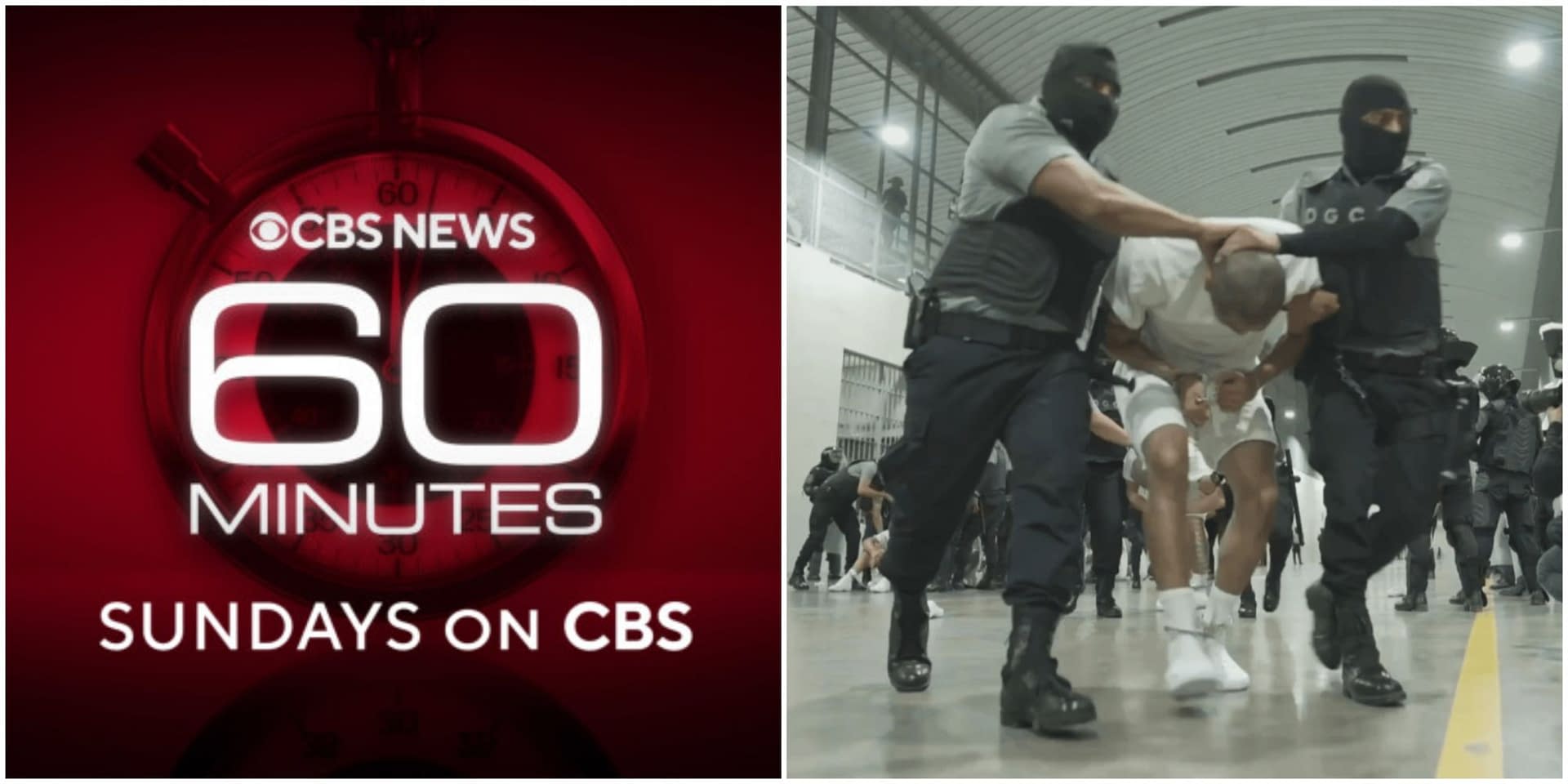
Weiss continued, "The only newsroom I'm interested in running is one in which we are able to have contentious disagreements about the thorniest editorial matters with respect, and, crucially, where we assume the best intent of our colleagues. Anything else is absolutely unacceptable. She added, "To me, our viewers come first, not a listing schedule or anything else, and that is my North Star, and I hope it's the north star of every person in this newsroom."
Here's where the questions come into play:
- Was the segment cleared by CBS's attorneys and Standards and Practices? If so, what did Weiss see that they didn't?
- How long should 60 Minutes sit on a story when the Trump Administration won't respond?
- If a segment can't run until the Trump Administration offers a response, isn't that just another form of censorship?
- How many times in the past has a segment been publicly pulled from 60 Minutes only hours before it was set to air (and two days after the press went out for it), even though the network cleared it?
- Who did Weiss have conversations with about the segment before the decision was made?
- With Trump's recent, less-than-flattering comments about Paramount Skydance's David Ellison and how he sees 60 Minutes treating him, are we looking at a move meant to appease the president?
Enjoyed this? Please share on social media!



Stay up-to-date and support the site by following Bleeding Cool on Google News today!