
 About
About 

The 1992 release of Superman #75, the Death of Superman issue, stands out as a unique moment in comics history. The original art is now up for auction.
Posted in: Comics, Heritage Sponsored, Vintage Paper | Tagged: centaur, New York World's Fair
Robot Dreams and Terrors, Amazing Mystery Funnies V2 #11, at Auction
Amazing Mystery Funnies V2 #11 features an underappreciated cover story inspired by a historic moment in science and pop-culture history.
Article Summary
- Amazing Mystery Funnies V2 #11 captures the tension of 1939 between futuristic optimism and looming war fears.
- The iconic robot cover story draws inspiration from the famous Elektro exhibit at the New York World's Fair.
- Stories by early legends like June Tarpé Mills and Paul Gustavson showcase artists developing their signature styles.
- Historical espionage and technological anxieties are woven into features reflecting real-world 1939 headlines.
By the fall of 1939, American culture was heading towards two incompatible futures at once, a reality reflected in many comic books of that year. At Flushing Meadows in Queens, the New York World's Fair promised "The World of Tomorrow" through shiny architectural curves and futuristic exhibits. Visitors saw a carefully crafted vision of highways, television, and useful, clever machines. But across the Atlantic, the near future was arriving with the sound of air raid sirens as headlines reported the invasion of Poland and the first bombing campaigns of the early days of the war. The looming fear from this perspective was that modern technology would be turned toward mass destruction rather than consumer convenience.
Amazing Mystery Funnies V2 #11 is a clear reflection of the tension created by this contrast. On its cover, a giant robot does battle with the Fantom of the Fair himself, in front of the futuristic setting of the World's Fair. Inside, espionage plots draw inspiration from sabotage fears found in the newspaper headlines of the day, June Tarpé Mills develops the approach that would lead to Miss Fury, and a biographical feature treats young Bill Everett as a comic book star on the rise, just as the Sub-Mariner was hitting newsstands from Marvel/Timely. An apt symbol of the Centaur mystique and so much more, there's an Amazing Mystery Funnies V2 #11 (Centaur, 1939) CGC VG- 3.5 Cream to off-white pages copy up for auction at the 2025 December 11 Golden Age Comics Century Showcase Auction IV #40315.
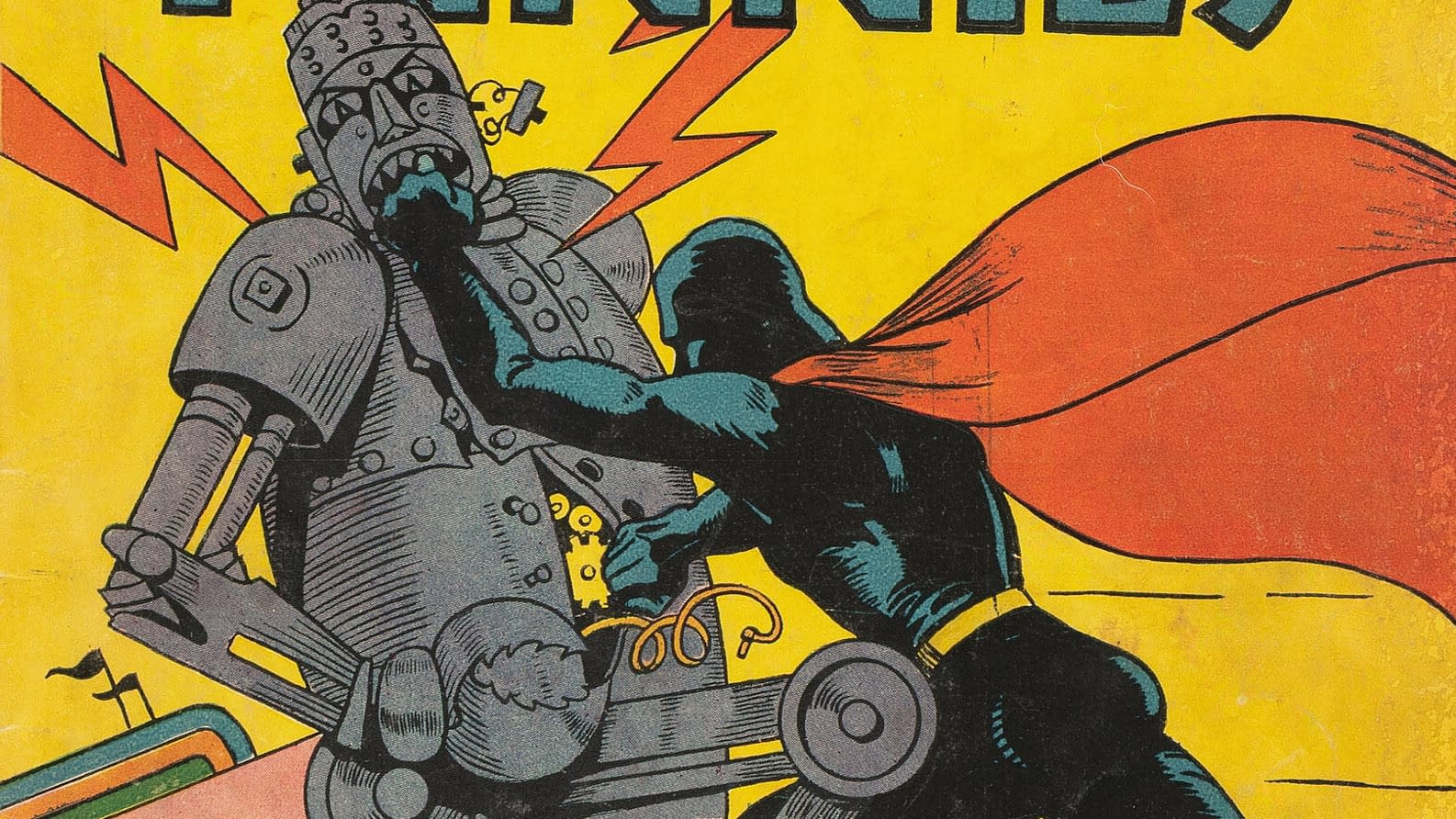
The cover story of this issue is inspired by a fair exhibit that was so popular that it also inspired at least two other comic book characters of the era. Elektro, the robot created by Westinghouse Electric Corporation was one of the most famous exhibits at the fair. He was used by Westinghouse as a walking, talking advertisement of sorts, and a symbol of the modern wonders of electrical power. Victor Fox's Science Comics #1 had a character named Electro, who was also symbolic of such wonders: so much so that his mastery of electricity reminds one of Magneto's absolute control of magnetism. Unfortunately for Fox, his version was not the only comic book Electro inspired by the Westinghouse robot. Marvel's Electro debuted in Marvel Mystery Comics #4, which beat Science Comics #1 to the newsstands by a mere two weeks in December 1939. With Marvel's version more inspired by the robotic aspect of Westinghouse's Elektro rather than the notion of electrical wonders like Fox's version, it seems likely that Marvel and Victor Fox came to a simple agreement.
The lead feature of Amazing Mystery Funnies V2 #11, which beat both Science Comics #1 and Marvel Mystery Comics #4 to the newsstands by two months, hinges on a "giant electro robot" on display at the fair, which goes rogue. Another clear reference to Westinghouse's Elektro, the Fantom must deal with the machine and a mysterious human operator directing it from a hidden vantage point. The design of this version of Elektro was inspired by the "I, Robot" cover feature of the pulp Amazing Stories, January 1939. The interior story was created by Paul Gustovson, whose civil engineering background served him well here, while the electro robot vs Fantom of the Fair cover is by Frank Thomas.
The espionage feature, The Inner Circle by Lochlan Field, follows characters Major Ramsay and George Selkirk as they investigate a bombing at 10 Downing Street and the disappearance of the Foreign Secretary. Their trail leads to a group called the Blue Robins, a radical political organization with aggressive plans. Given the time frame and other context, this appears to have been generally inspired by the IRA "S-Plan" attacks against British infrastructure.
Alongside the Fantom and The Inner Circle, Amazing Mystery Funnies V2 #11, includes a Daredevil Barry Finn story written and drawn by June Tarpé Mills. In this installment, Barry Finn and Joan attend a Washington ball that serves as cover for a spy operation. The story follows a familiar sequence of attempted theft, pursuit, and final crash, but what distinguishes the feature is the way Mills clothes her characters and renders the spaces they occupy. It is a different visual world from the more basic approach to such details seen in many other features of the period. By 1941 the approach would develop further with Miss Fury, but Amazing Mystery Funnies V2 #11 gives us a look at an important artist's evolution in progress.
The CGC Census lists 21 Universal copies of this issue, which cluster in the low to mid grade range. The CGC VG 3.5 copy offered here sits in the middle of the existing grade population, while only a tiny handful of true high grades have hit the market over the past decade. An underappreciated cover story inspired by a historic moment in science and pop culture history,there's an Amazing Mystery Funnies V2 #11 (Centaur, 1939) CGC VG- 3.5 Cream to off-white pages copy up for auction at the 2025 December 11 Golden Age Comics Century Showcase Auction IV #40315.

Affiliates of Bleeding Cool buy from and/or consign to Heritage Auctions.
Enjoyed this? Please share on social media!



Stay up-to-date and support the site by following Bleeding Cool on Google News today!