
 About
About 
AEW content exits NJPW World as Bushiroad transfers promotion to TV Asahi and CyberAgent. Streaming strategy shift, not relationship breakdown.
Posted in: AEW, Sports, TV | Tagged: wrestling
Was WrestleMania Saturday the Beginning of the End of WWE?
WrestleMania Saturday left fans disillusioned with short matches, celebrity overload, and corporate greed. Is TKO's enshittification of WWE now irreversible?
Article Summary
- WrestleMania Saturday delivered short matches, celebrity overload, and aging talent — leaving fans frustrated and disillusioned.
- TKO's corporate prioritization of profit over product quality is accelerating WWE's creative decline.
- Triple H's creative era has failed to build new stars, exposing a broken developmental pipeline.
- WWE's "enshittification" — extracting value without investing in quality — may be nearing a point of no return.
There is a term gaining considerable traction in the lexicon of contemporary digital culture: "enshittification." Coined to describe the inexorable process by which a once-beloved platform or product systematically degrades itself — first by serving its users, then by exploiting them to court business partners, and ultimately by exploiting everyone in service of shareholder returns — the word has found an unlikely but increasingly apt application in the world of professional wrestling. Specifically, it has found a home in any honest conversation about World Wrestling Entertainment (WWE) under the stewardship of TKO Group Holdings (TKO).
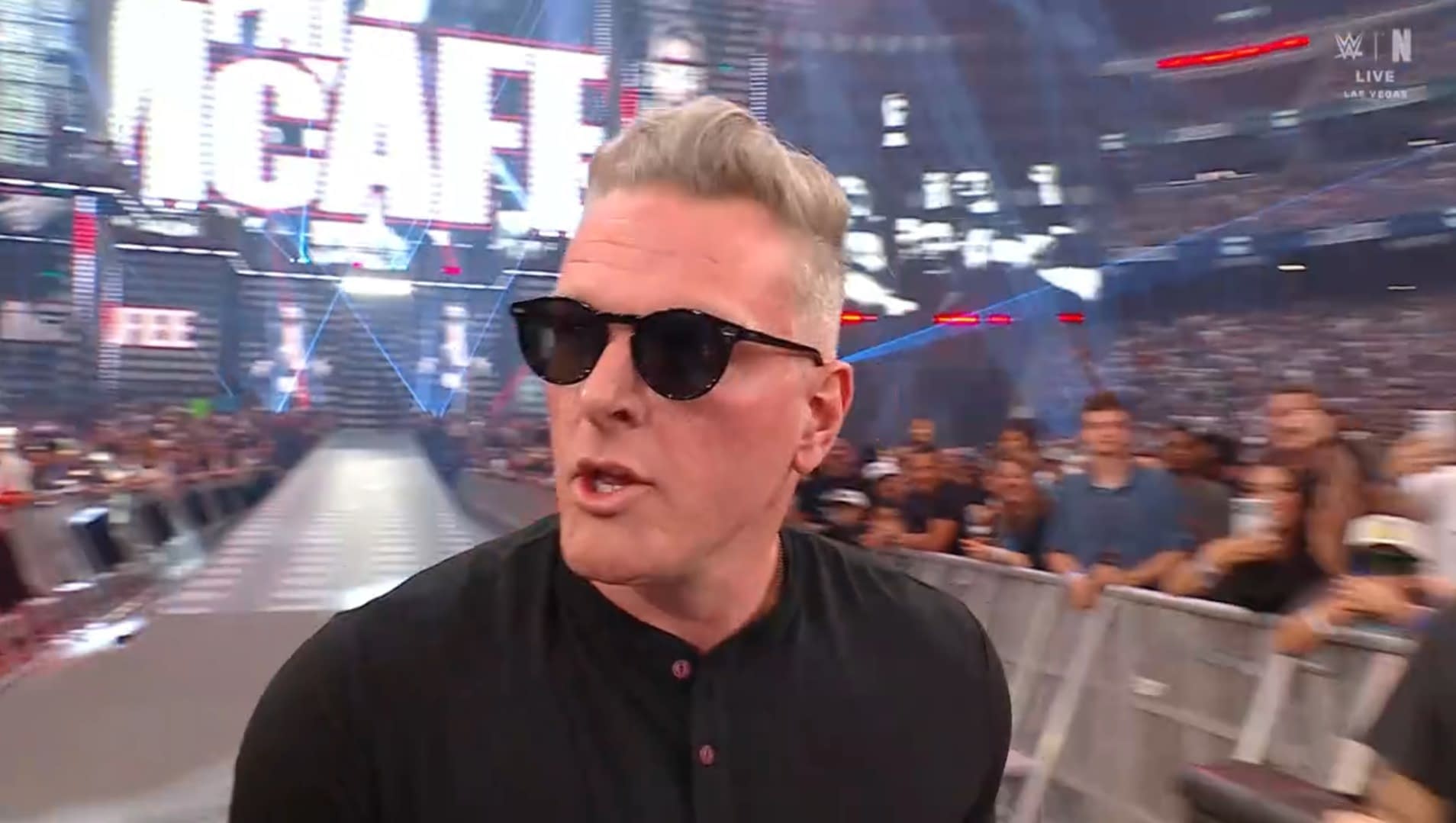
Last night's WrestleMania Saturday, the first half of the company's marquee two-night extravaganza, may well be remembered as the evening this slow rot became impossible to ignore.
The portents were evident well before the pyrotechnics illuminated the stadium. The build to this year's WrestleMania was, by nearly all accounts, a disjointed exercise in corporate desperation. Ticket sales lagged conspicuously, a fact made all the more galling by the revelation that TKO executives had publicly opined that prices were not high enough while simultaneously criticizing the company's historical practice of marketing to families. The dual main event feuds — Randy Orton challenging WWE Champion Cody Rhodes on Saturday, and Roman Reigns squaring off against World Heavyweight Champion CM Punk tonight — became mired in a bewildering quagmire of self-referential, worked-shoot-style booking that seemed less like compelling storytelling and more like a company publicly litigating its own failures.
Consider the bizarre spectacle that unfolded in the weeks preceding the event. Former National Football League (NFL) star and manosphere podcast personality Pat McAfee appeared on WWE SmackDown to deliver a promo lamenting that the product had deteriorated since the vaunted Attitude Era, demanding that Orton dethrone Rhodes to restore the company's former glory, and — in a moment of almost surreal candor — complaining about the very ticket prices that were ostensibly set by the company employing him. Rhodes and Punk subsequently cut promos attacking McAfee's involvement, with Punk going so far as to castigate TKO for its pricing structure and the company's associations with the Donald Trump presidential administration. McAfee then returned fire by calling Punk a hypocrite for accepting a paycheck from the very corporation whose moral compass he professed to find objectionable. The net effect was not the generation of heat for any particular villain or hero, but rather the dissemination of a singular, dispiriting message: WWE, by its own implicit admission, is not particularly good right now, and nobody within it can agree on why or what to do about it.
The card itself did little to dispel this impression.
A Night of Diminished Returns
The evening commenced with a six-man tag team contest on what was formerly designated as the pre-show, airing on ESPN2, in which The Usos and LA Knight dispatched The Vision and YouTube influencer IShowSpeed. The bout's denouement saw IShowSpeed betray fellow content-creator-turned-wrestler Logan Paul by putting him through a table — a moment that encapsulated the company's increasingly transparent reliance on external celebrity to generate interest it can no longer cultivate organically.
Jacob Fatu and Drew McIntyre engaged in an unsanctioned match that, despite its ostensibly violent stipulation, featured the customary deployment of gimmicked weaponry that failed to produce so much as a drop of blood — a sanitized simulacrum of danger that fooled precisely no one and also aired, essentially, as part of the pre-show.

The women's division fared particularly poorly. Paige, a star whose heyday occurred over a decade ago, returned to replace the injured Nikki Bella — herself a relic of a bygone era — to team with Brie Bella in capturing the Women's Tag Team Championship in a fatal four-way match. Becky Lynch, another holdover from a previous generation of talent, defeated an even more temporally distant star in AJ Lee for the Women's Intercontinental Championship. Liv Morgan, the youngest champion crowned on the evening but hardly a fresh face, dispatched Stephanie Vaquer for the Women's World Championship in a match that clocked in at under seven minutes. Not a single women's bout exceeded ten minutes in duration — a fact that stings all the more given that Lynch herself had, just one week prior, publicly lamented the company's insufficient investment in its women's divisions.
Gunther defeated Seth Rollins in a match that was cobbled together at the eleventh hour after Rollins and several of his prior adversaries spent the majority of the WrestleMania build sidelined by injuries — a circumstance that speaks volumes about the company's failure to cultivate sufficient depth on its roster.
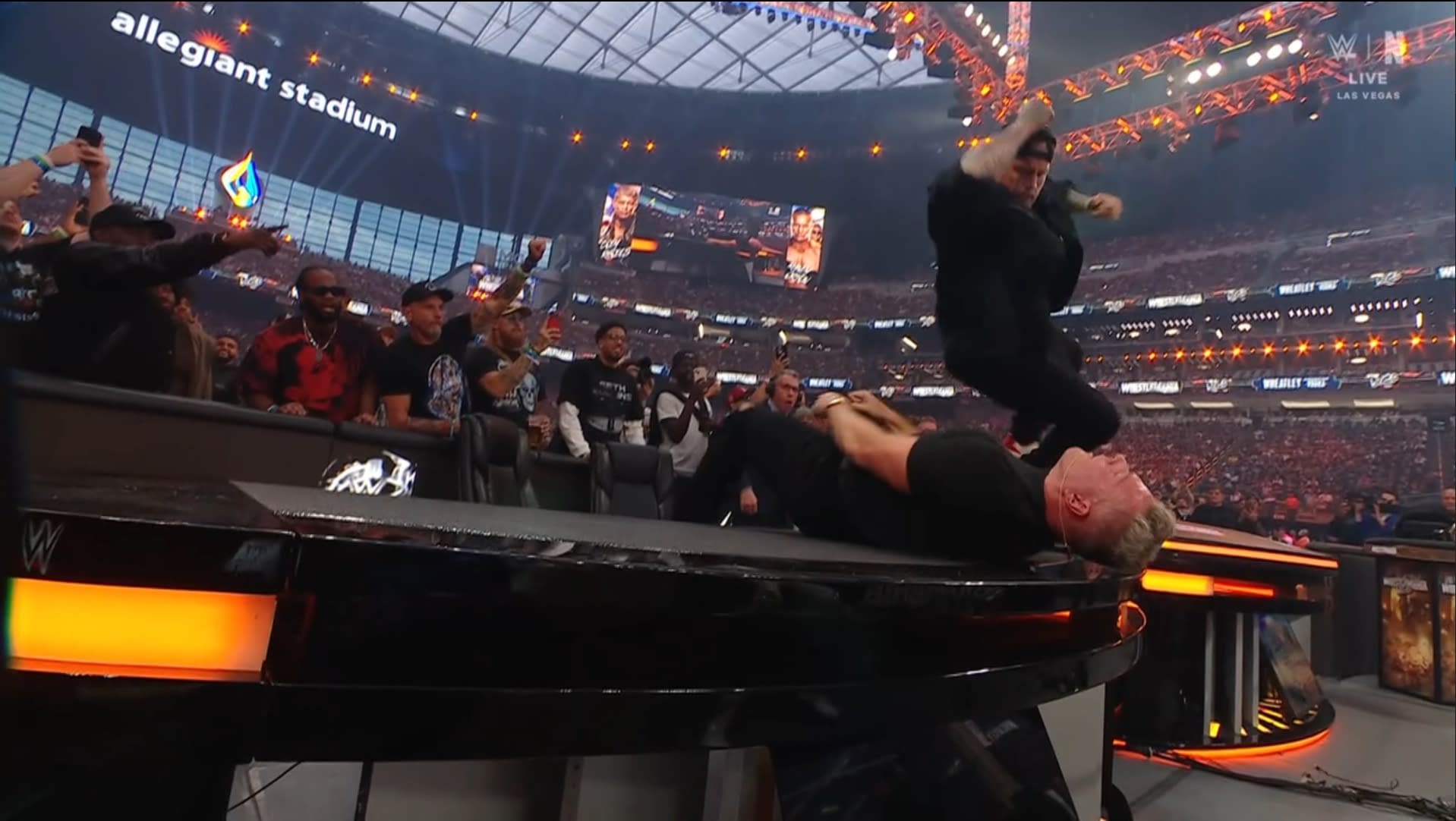
And then there was the main event. Rhodes retained the WWE Championship over Orton in a bout that was less a wrestling match than a multimedia production, heavily featuring the involvement of both McAfee and country music artist Jelly Roll. The contest included a referee bump, outside interference, and a post-match attack by Orton — telegraphing the dispiriting reality that this particular feud, already received with considerable apathy, is not yet concluded.
The Triple H Paradox
When Paul "Triple H" Levesque assumed control of WWE's creative direction following the ignominious departure of his father-in-law, Vincent Kennedy McMahon, the response from the wrestling community was overwhelmingly enthusiastic. Levesque was perceived as a lifelong devotee of the art form, a man who had shepherded the critically acclaimed NXT developmental brand and who would, at long last, bring a coherent creative vision to the main roster.
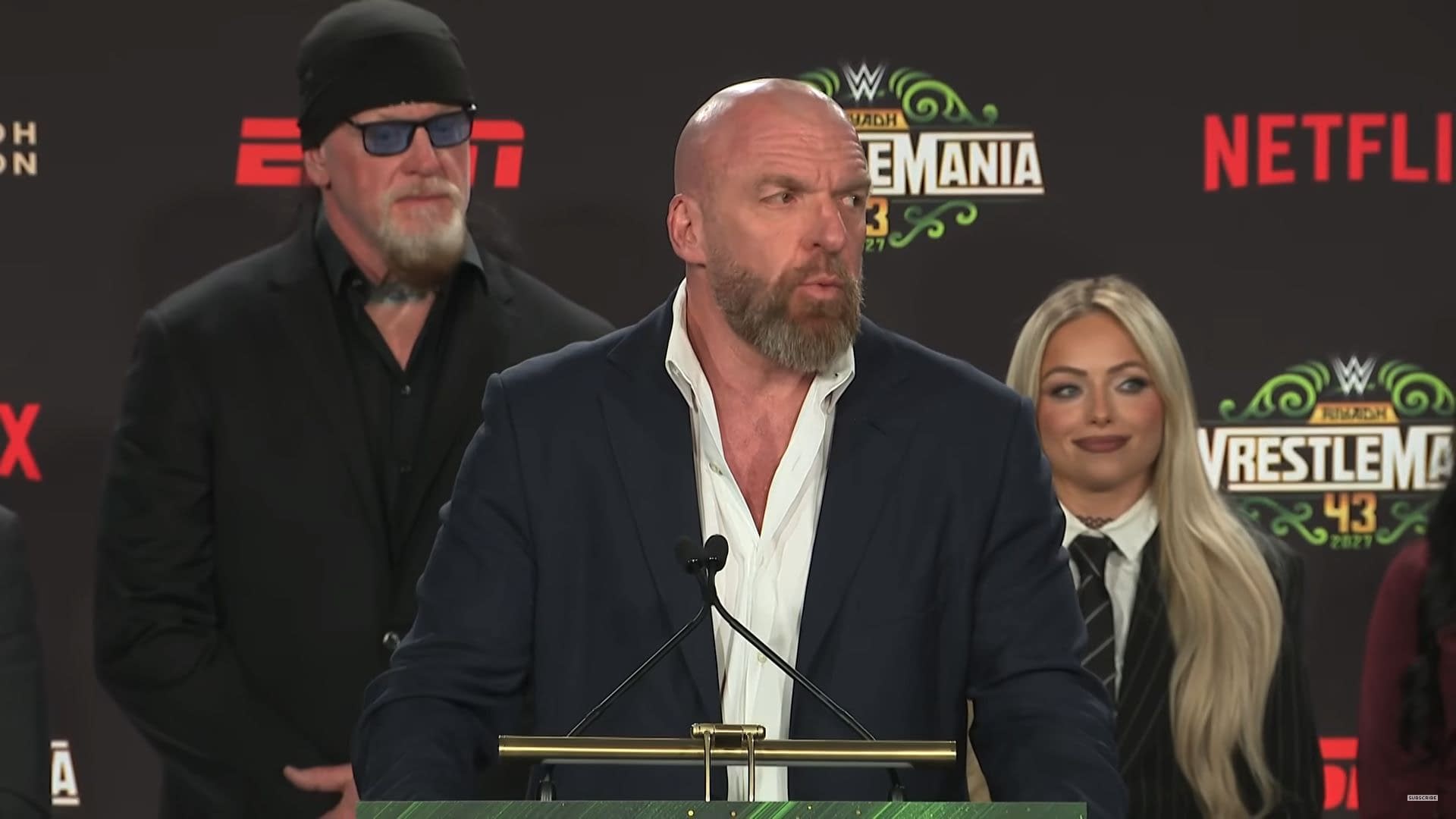
In retrospect, it has become increasingly apparent that much of Levesque's early goodwill was derived from his stewardship of storylines he inherited rather than originated. The culmination of the Bloodline saga, the completion of Rhodes' long-gestating championship quest — these were narratives set in motion before Levesque took the helm. In the years since those inherited threads were tied off, the creative apparatus has sputtered. New stars have not been built. New storylines have not captured the collective imagination. The WrestleMania card's reliance on performers aged forty and above is not merely a stylistic choice; it is an indictment of a developmental pipeline that has, for all intents and purposes, ceased to function.
The Enshittification of Sports Entertainment
Whatever one may say about McMahon — and the litany of allegations that precipitated his removal from power renders his return neither desirable nor likely — the man possessed an undeniable, if frequently misdirected, passion for his product. He wanted, in his own often misguided fashion, for audiences to be entertained. TKO, by contrast, appears to view WWE not as a creative enterprise but as an intellectual property to be monetized unto exhaustion. The exorbitant ticket prices, the truncated match times designed to accommodate an ever-expanding roster of advertisements, the shoehorning of celebrities into prominent positions on the card — these are not the decisions of an organization that prioritizes the satisfaction of its audience. They are the decisions of a corporate entity engaged in the systematic extraction of value from a brand it did not build and does not appear to understand.
Fans responded to last night's proceedings with a chorus of complaints: matches were too short, entrances were too long, advertisements were too numerous, feuds were too shallow, and the women's division was treated with something approaching contempt. Social media, that ever-reliable barometer of popular sentiment, was largely unanimous in its assessment that WrestleMania Saturday was a disappointment of considerable magnitude.
So, Is This the Beginning of the End?
It would be premature — and perhaps melodramatic — to declare that a single subpar evening of professional wrestling constitutes the death knell of an institution that has survived scandal, competition, and its own worst creative impulses for the better part of half a century. WWE has weathered lean periods before and emerged, if not unscathed, then at least intact.
But the confluence of factors presently afflicting the company — a creatively stagnant product, a corporate ownership structure that prioritizes extraction over investment, an aging roster with no viable successors waiting in the wings, and a fanbase that is increasingly vocal in its disillusionment — presents a more formidable existential challenge than any the company has faced in recent memory. The question on many fans' minds is not whether WWE will survive, but what, precisely, will be left of it when TKO has finished wringing every last dollar from its carcass. Some have speculated that the endgame involves an eventual sale to Saudi Arabian interests, a prospect that would have seemed fanciful a decade ago but feels distressingly plausible today.
Tonight's WrestleMania Sunday, headlined by Reigns and Punk, offers the company an opportunity to course-correct, however modestly. But if last night was any indication, the creative and corporate ailments that produced such a lackluster spectacle are not the sort that can be remedied in twenty-four hours.
The enshittification of WWE is not a single event. It is a process. And last night, that process advanced another measurable step.
Enjoyed this? Please share on social media!



Stay up-to-date and support the site by following Bleeding Cool on Google News today!