
 About
About 

"I did corrections on things, insane corrections." Patrick Lamar complains about comic publishers and page rates in court in 1941.
Posted in: Comics, Golden Age Good Girl Collection, Vintage Paper | Tagged: Archer St. John, Matt Baker, St John
Matt Baker Romance Comics: The Brunette, the Blonde or the Redhead?
A deep dive into some of the issues involved in the Golden Age Good Girl Comic Book Facsimile Collection Kickstarter, focused on romance comic books.
Article Summary
- Matt Baker's romance covers for St. John Publications rank among the most iconic and sought-after in comic book history.
- Giant Comics Editions #12 Diary Secrets is the single most valuable romance comic in American comic book history.
- The rise of romance comics traces back to Joe Simon and Jack Kirby's Young Romance and Bernarr Macfadden's True Story Magazine.
- Secrets of True Love #1 stands as the final St. John romance comic and the last St. John cover by Matt Baker.
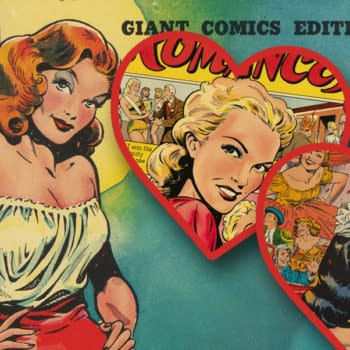
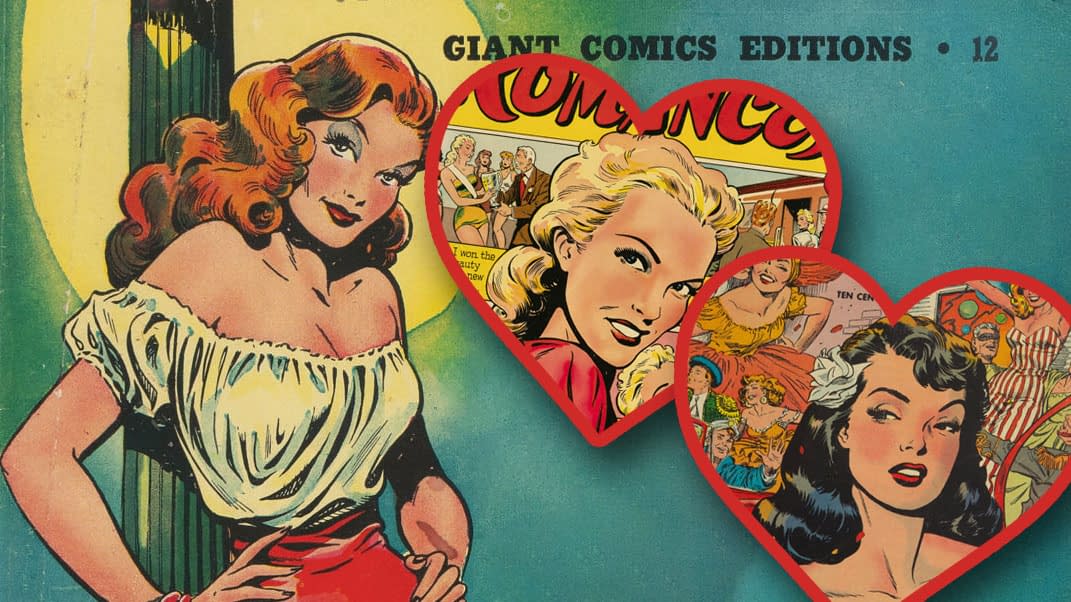
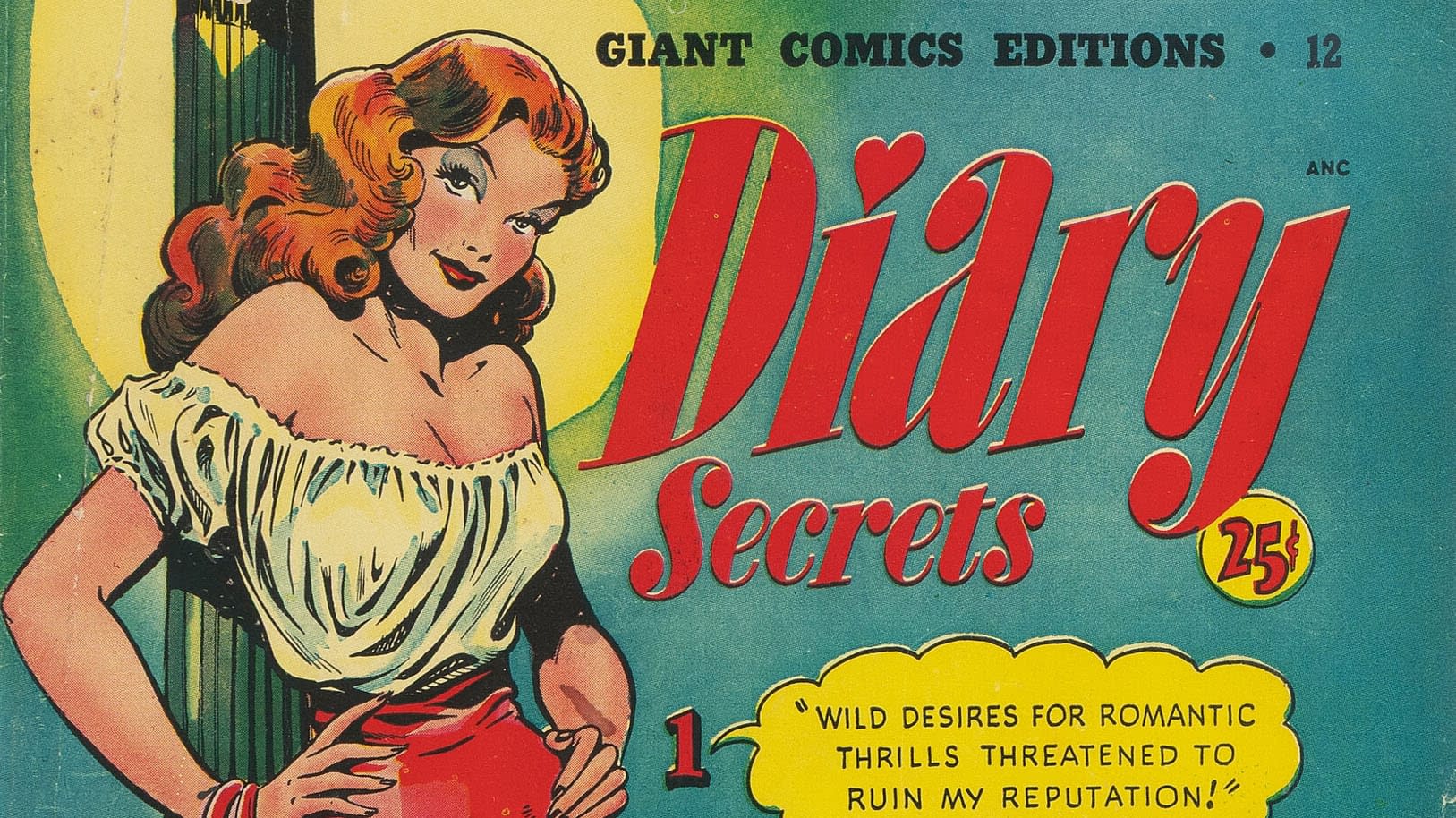
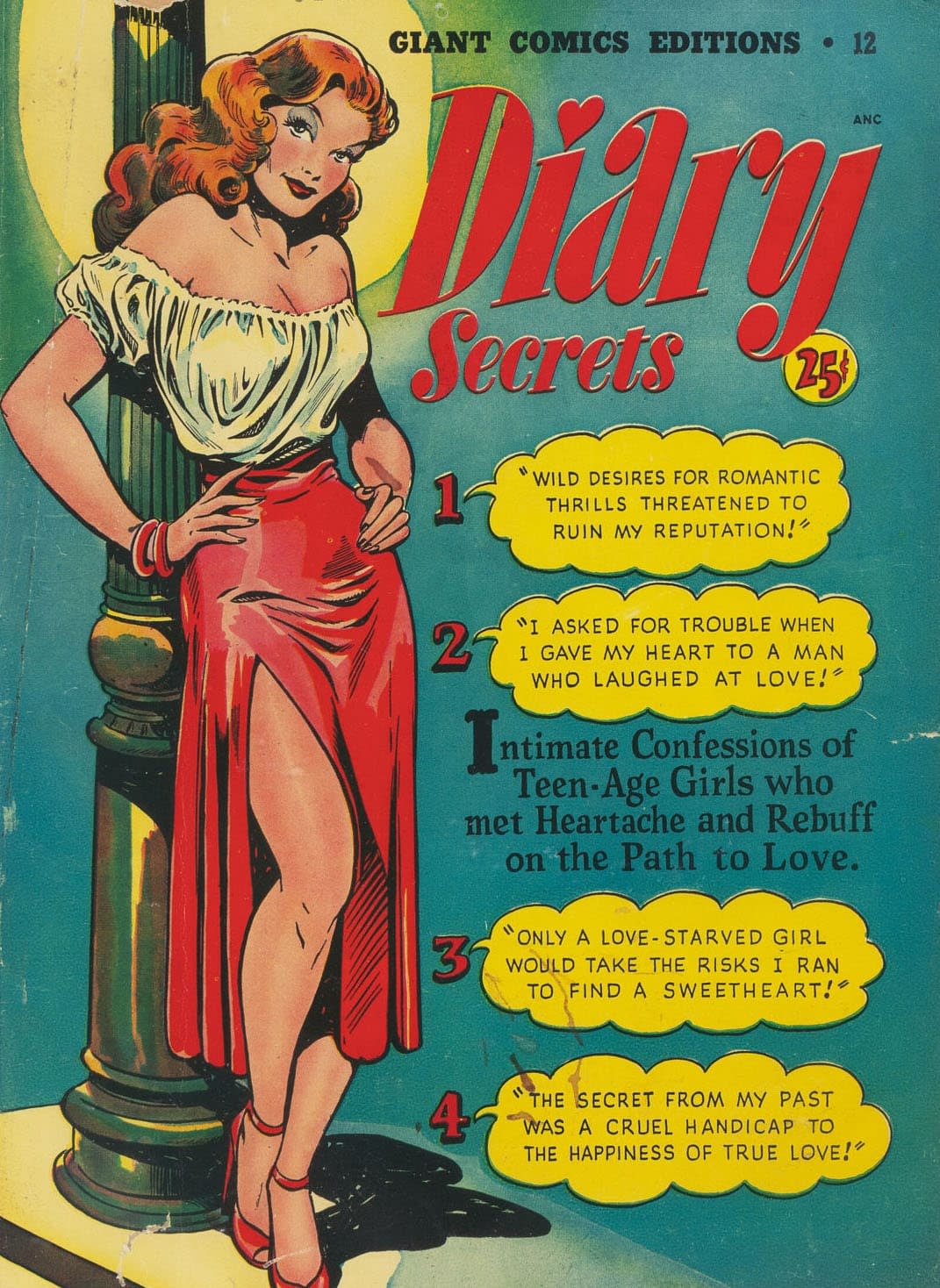
Every comic book tells more than one kind of story: the story on its pages, and the story of its creation. The second part is actually many different stories that all collide together; of creators, editors, publishers, and the world they lived in. Such details are what make some comic books, like Action Comics #1 and Amazing Fantasy #15, truly important. Of course, it's about the cover and what's inside, but also about all the people and circumstances that came together to bring that comic book to life. Every collector knows about comics like Detective Comics #27 and Amazing Spider-Man #129, and many more should know about Giant Comic Comics Editions #12 Diary Secrets. It features one of the most iconic covers in comic book history by artist Matt Baker at the peak of his abilities, and as we've said before about this one, when you think of comic book romance, you think of this cover, even if you don't know the comic book by name. And for those who already know its name, Giant Comics Editions #12 is the single most sought-after romance comic book in American comic book history.
But on the subject of romance, the number of Matt Baker St. John romance comic books to choose from made deciding what to focus on when Pixelmon Media asked us to talk about some of the romance comic books featured in their Golden Age Good Girl Comic Book Facsimile Collection Kickstarter a tricky conundrum. One might even call it a Betty or Veronica type of decision, or perhaps Mary Ann or Ginger, or maybe a little bit of both of those choices. Giant Comics Editions #12 is an obvious choice that we've written about a bit before, and Cinderella Love #25 is a legendary beauty that has been catching collectors' eyes more and more in recent years. Giant Comics Editions #15 is another longtime entrant on Overstreet's Top 10 most valuable romance comics list, and having talked to more than a few serious romance comic book collectors over the years, there are also many others here that are highly sought after.
Those covers and the comic books they represent are one part of the story. The other part is the history that converged to make Baker's romance run at St. John so memorable. Of course, publishers like Macfadden and Fawcett are a big part of the lead-up to that story. So are people that Baker worked with at St. John, such as writer Dana Dutch, inker Ray Osrin, editors Nadine French King and Marion McDermott, and of course, Archer St. John himself. The rise of genres such as crime, horror, and romance in the wake of World War II, and that leading to the Comics Code, is another piece of the story.
Fighting for Love: The Contentious Rise of Comic Book Romance
In our recent discussion of the true crime roots of the historically notorious title Crime Does Not Pay, we noted the origins of "true" as a major magazine genre in Bernarr Macfadden's True Story Magazine, which began in 1919. Those who were there at the time varyingly credit the launch of the true story concept to a combination of Bernarr Macfadden, his wife Mary Williamson Macfadden, and writer/editor and dime novel legend John R. Coryell, with the concept solidifying and expanding under the editorial direction of Fulton Oursler. Street & Smith jumped into the fray in 1921 with Love Story Magazine, while Fawcett Publications launched True Confessions in 1922. Fawcett's monstrous success with that title would eventually lead to some complications when the comic book publishers jumped in.
Joe Simon and Jack Kirby launched the romance comics field with Young Romance in 1947, and the genre quickly exploded in comics, just as it had in magazines. When Time Magazine covered the romance comic book boom in 1949, it was already citing Young Romance as the originator of the trend, and comic book history has recognized the title as the first comic book romance series ever since. In the wake of Simon & Kirby's Young Romance, comic book publishers flooded into the field the next year, largely following the patterns of their magazine counterparts.
In Joe Simon's second biography, Joe Simon: My Life in Comics, he notes that he and Kirby believed in the Young Romance concept so much that they were willing to accept some risk to secure a better deal from Prize Comics publishers Theodore Epstein and Milton Bleier. Instead of a page rate and a modest percentage of profits, Simon and Kirby would receive production costs plus 50% of the profits. In his earlier biography, The Comic Book Makers, Simon acknowledged being inspired by Macfadden's original romance magazine. "I wondered how they [female readers] would accept a comic book version of the popular True Story Magazine, with youthful, emotional yet wholesome stories supposedly told in the first person by love-smitten teenagers. Visually, the magazine love stories seemed a natural conversion for comic books."
Less than a year after Young Romance pioneered the field, Fawcett moved in with Sweethearts and Life Story, and soon began to dominate. That same 1949 Time Magazine article gushed over Fawcett's success in entering the field, while claiming that Macfadden's financial returns had suffered because it had failed to do the same. Fawcett subsequently made their dominance a problem for other companies. The publisher had become protective of what it viewed as its True Confessions turf by this time, and tended to be legally aggressive toward rivals who used the word "confessions" in their titles. This was not an uncommon situation among comic book publishers. We noted a similar battle over the word "eerie" in our discussion of Pixelmon Media's Pre-Code Horror offerings, and there was an additional scuffle of this nature with the American Comics Group v Ace Magazines battle over the usage of "unknown." While courts generally agreed that no publisher could claim proprietary use of a common English word, whether that specific use in the context of the publication could create confusion among consumers (and thus lead to unfair competition) can be another matter entirely. Fawcett succeeded in stopping a rival from registering the trademark Crime Confessions in 1943, but failed to stop the usage of Bronze Confessions on a magazine in 1949.
In another 1949 case, Fawcett filed suit against St. John for infringing on its trademark for True Confessions with the comic book titles Pictorial Confessions and Hollywood Confessions. While there's no sign that this suit went to trial, it would appear that St. John settled, with Hollywood Confessions lasting for two issues and Pictorial Confessions lasting for three. Those titles were then renamed and resumed as Hollywood Pictorial and Pictorial Romances, respectively. That little scrape didn't stop Archer St. John from moving forward with romance as a growing part of his comic book line.
St. John: The Giants of Romance
The late 1940s to early 1950s were a boom time for high-page-count, squarebound giant comics from several publishers, and Fawcett was again one of the pioneers here. In 1941-1942 and later in 1947-1952, Fawcett Publications produced a number of giant, squarebound annual editions targeting the holiday and otherwise gift-giving market. Gift Comics and Xmas Comics both topped out at a massive 324 pages, while the one-issue Holiday Comics title was 196 pages. This concept quickly spread beyond the holidays as other publishers joined in. Farrell's giant Voodoo Annual #1 is a highly sought-after 100-page Pre-Code Horror giant. Fox produced a number of giants, including many in the romance genre.
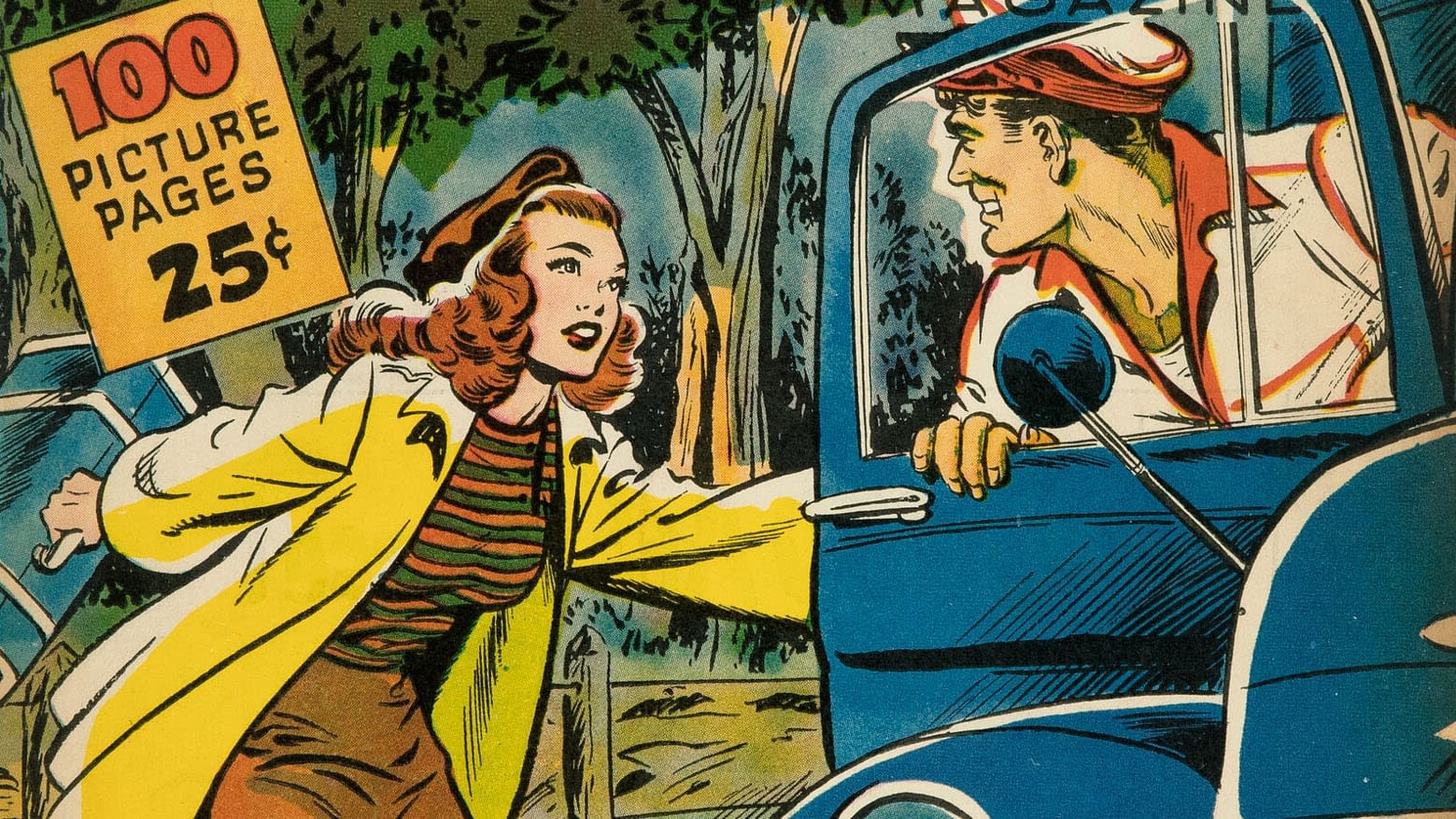
St. John's Giant Comics Editions was the formal title for a series of 18 rebound remaindered comic books that was published 1948-1950. Issues in this series generally ran for 100 to 132 pages and were priced at 25 cents. They included a variety of material published by St. John, from romance to newspaper strip reprints to Terry-Toons. Nine of the 18 covers of the series were based on newspaper strip material or Mighty Mouse. Two of them were photo covers. It's a tribute to Matt Baker's star power as a cover artist, not to mention St. John's awareness of that star power, that six of the remaining seven covers featured Matt Baker artwork. Five of those featured new, original artwork, while the sixth was a montage of previously-run interior panel art mostly by Baker. There are other St. John giants as well. In 1952, St. John somewhat confusingly used various permutations of "All Picture" and "All True" branding for a number of rebound giant-size issues. These included All-Picture All-True Love Story, All-True All-Picture Police Cases, and All-Picture Adventure Magazine.
Many of these are considered difficult to get in any condition, and that should come as no surprise. Paper was difficult to get during the war era and for several years beyond the end of the war, and with these also being rebinds of unsold copies of a well-regarded comic line and being sold at a higher price point besides, it is incredibly unlikely that they were produced in anything resembling the average St. John print run, and probably a small fraction of that.
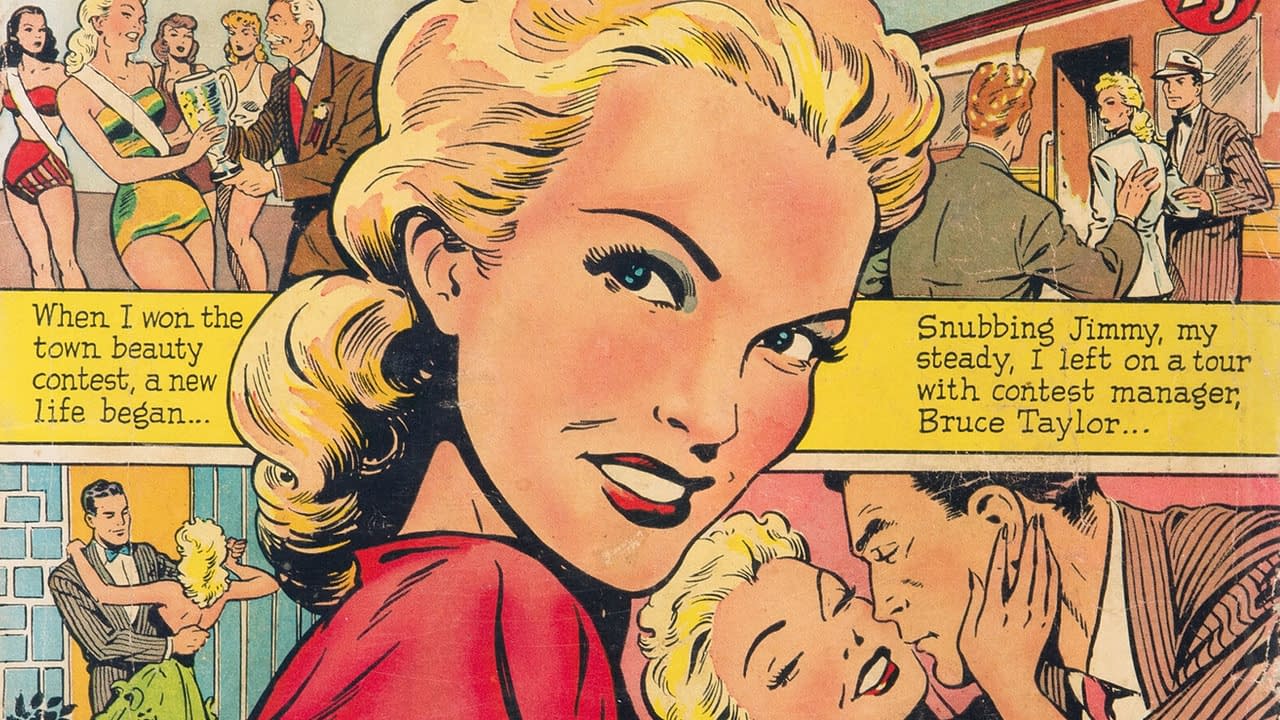
The Blonde: Giant Comics Editions #15
Much more often than not, Matt Baker's covers for St. John Publications reflected one of the issue's interior stories, and even when they didn't, the mismatch could often be traced to an editorial mix-up. But for St. John's giant editions, such coordination was sometimes impossible since those issues were often rebound, remaindered material that could vary even under the same issue number. It's hard not to wonder what Baker's cover assignments from his editor looked like in those cases, and the answer seems to have varied from issue to issue.
Every Matt Baker romance cover has a story to tell, but the cover of Giant Comics Editions #15 is a little bit different than most. Perhaps not wanting to leave the reader hanging with a cover that might have very little to do with the interior stories, Baker or his editor, perhaps Nadine King French or Marion McDermott, chose to tell a complete romance story arc with the carefully placed background panels on this cover. The unnamed beautiful blonde featured here wins a beauty contest, leaves her hometown sweetheart to seek fame and fortune, falls in love with another man, gets betrayed by that man, and returns home to her true love — all in the space of six panels. Some people believe the beautiful blonde on this cover is St. John editor and former model Nadine French King, who had been known to model for her husband, Warren King's covers, and we would certainly agree with that assessment.
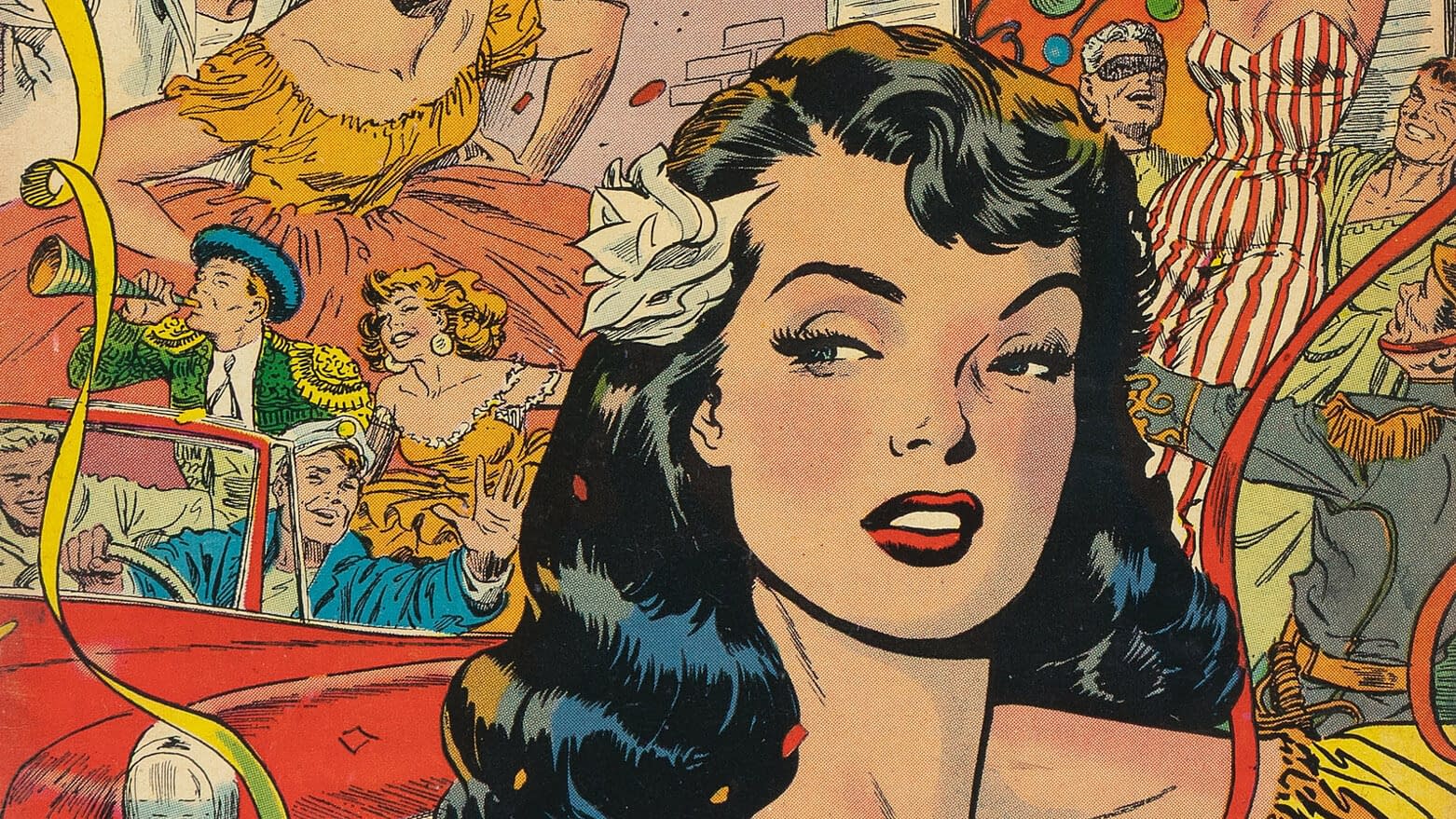
The Brunette: Cinderella Love #25
This stunning cover has a wild story to tell, as Bleeding Cool outlined in some detail in 2024. Long story short, this cover was largely inspired by a painted illustration in Liberty Magazine volume 24 #1, January 4, 1947 by artist Ernest Chiriacka. The original version of this image accompanies a story by author James Aswell called Nocturne Creole. As Chiriacka's painting implies, the story is a tale of romance and drama set in New Orleans during Mardi Gras:
New Orleans seemed to rock gently to the orgiastic pulse of Mardi Gras. Above the bumbling crowds, above the rosy fog of the flares, above King Zulu grandiosely drunk in bis jungle paint, above the rowdy débutantes on the Float of the Seven Sins, above the sad dark wind that was blowing a storm of confetti hearts down Canal Street—above all this and much, much more—things were happening in a hotel room.
They weren't original things. A boy and a girl had been married that afternoon and had begun to quarrel. Over nothing and over all the important things—how this character Pierre had come over to their table in Larabie's and she had been too nice to him. As little as that—and as much.
St. John Publications acquired the title Cinderella Love (along with the titles Romantic Love, Kid Cowboy and Wild Boy of the Congo) from publisher Ziff Davis, and the title contained reprints of the Ziff Davis material and earlier St John romance titles. Baker was often loosely inspired for his covers on Cinderella Love by those previous interior stories. His cover for Cinderella Love #15 seems based on the interior story The Wall of Wealth, and his cover for Cinderella Love #26 is based on the interior story Dreams and Deceptions, for example. But there were sometimes mix-ups. The cover of Cinderella Love #29 appears to match a scene from the story I was a Campus Tramp from issue #28, the previous issue. And it has been noted that the cover of Cinderella Love #25 seems to have the same theme as the story Mardi Gras Sweatheart from issue #26, the next issue. Given that Ernest Chiriacka's image from Liberty Magazine volume 24 #1 was also for a Mardi Gras story, this match seems likely. This fascinating backstory has only increased collectors' interest in Cinderella Love #25.
The Redhead: Giant Comics Editions #12
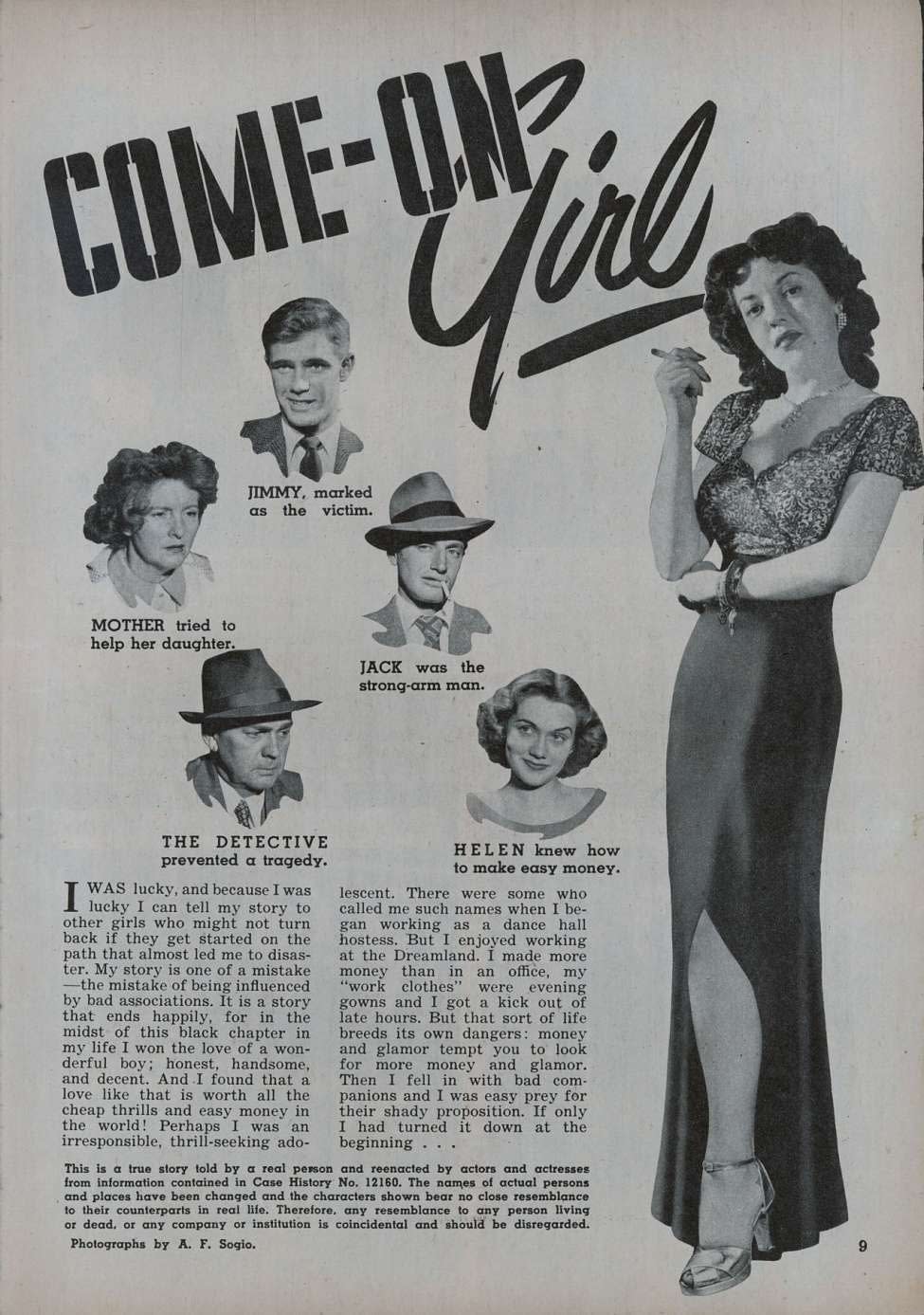
Once again here, Baker seems to have let an interior story from the comic material in question inspire him in some way. It is not unlikely that the fumetti photo-comics feature "Come-On Girl" in Teen-Age Romances #5 provided Baker with both his thematic inspiration and his photo reference in this case. Based on the discernible patterns and timing of the Giant Comics Edition reprint material for each release, that issue falls within the time frame of possible contents for Giant Comics Editions #12 Diary Secrets. The central female figure of the title page of "Come-On Girl" is wearing a similar dress, shoes, bracelets, and while her pose is different it is not too dissimilar. And the theme of this story certainly fits this cover, all coming together to inspire the most iconic romance comic book cover in history.
Or so we say. You might have a different opinion, and there's certainly room for disagreement with the number of Baker entries available in the Kickstarter for St. John romance titles such as Teen-Age Romances, Diary Secrets, True Love Pictorial, Wartime Romances, Teen-Age Temptations, and others.
The Heartbreak of the Last Romance
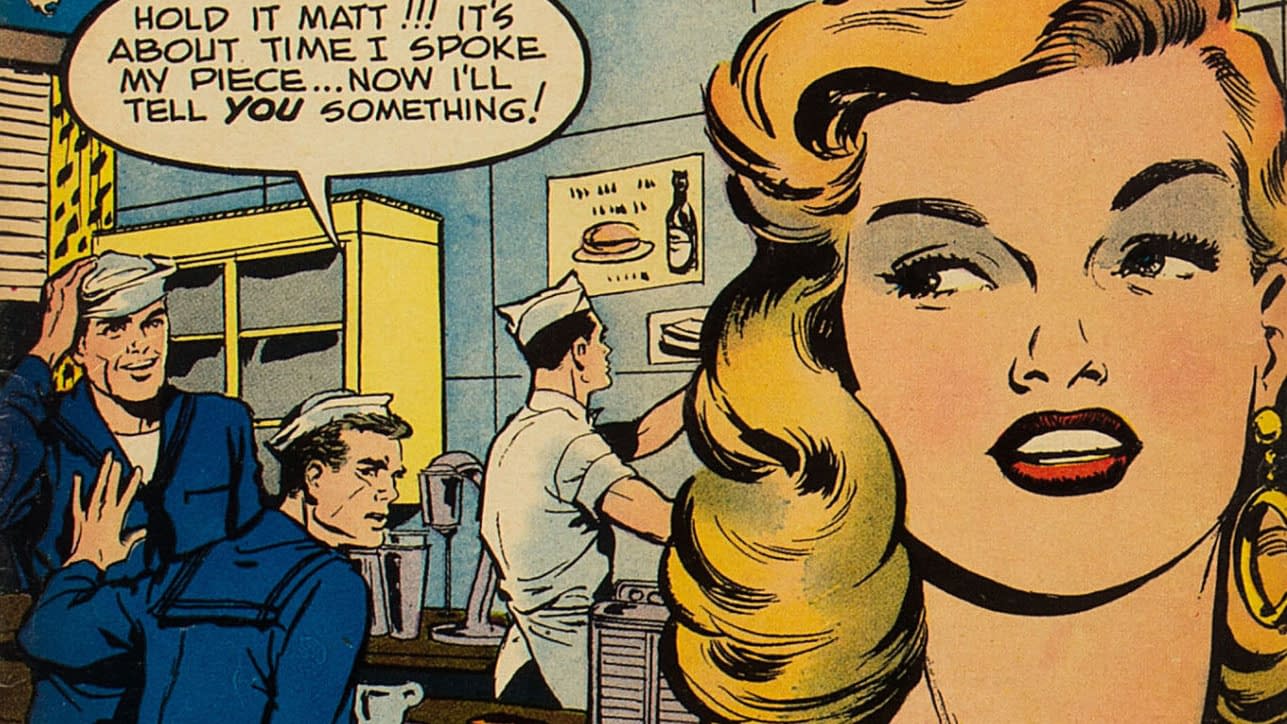
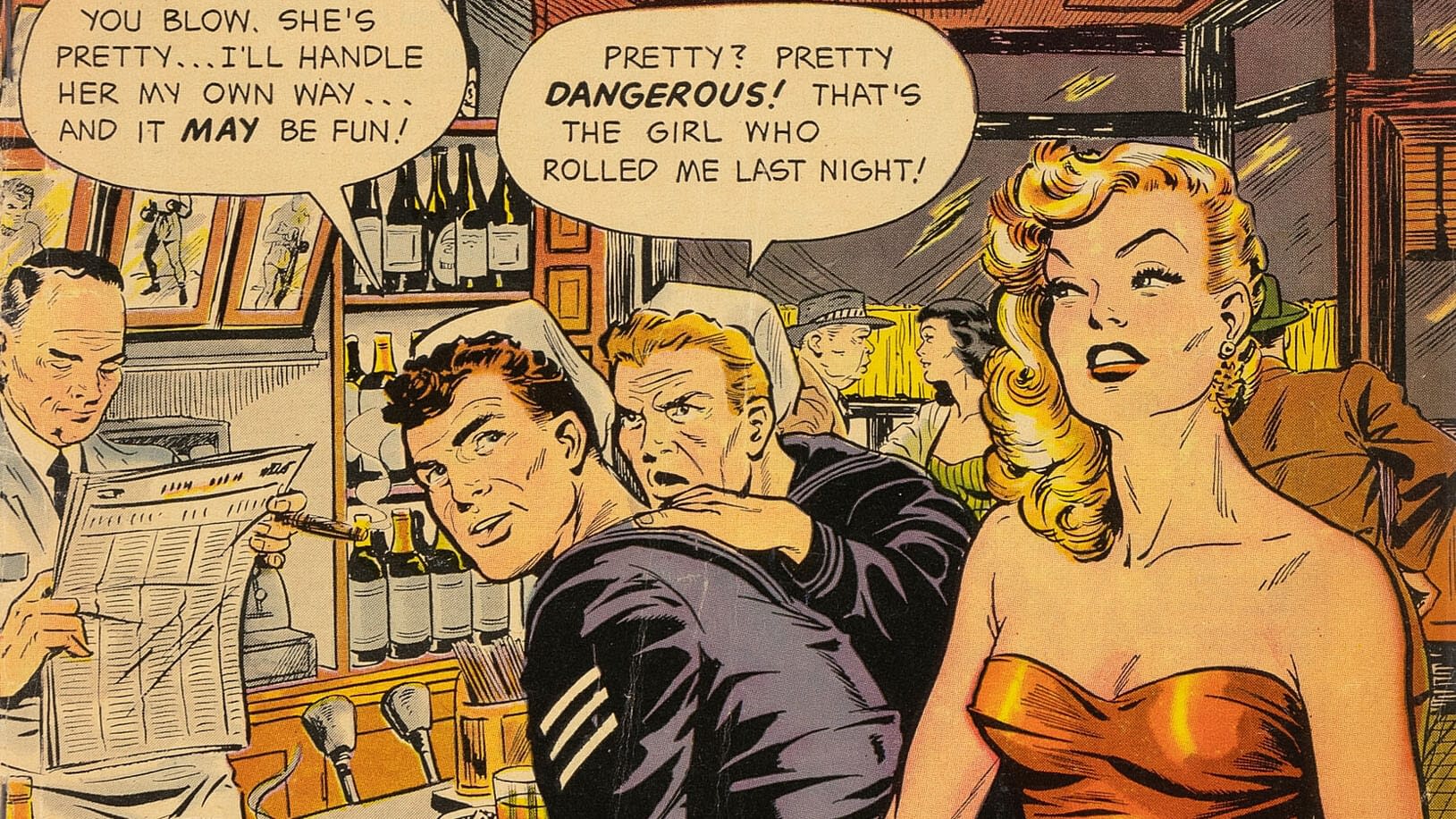
Secrets of True Love #1, among the many St. John romance comics present in the Golden Age Good Girl Comic Book Facsimile Collection Kickstarter, is the last of the once-great St. John romance line, and the last St. John comic book cover attributed to Matt Baker. It also seems to be a different take on his cover for Wartime Romances #17 from 1953. Part of the end-game St. John Publishing comic book era that was packaged by Al Fago, Secrets of True Love #1, Atom-Age Combat #1 and Li'l Ghost #1 are the last comic books St. John ever published. The circumstances leading up to this single-issue Secrets of True Love ultimately start here: On August 13, 1955, St. John Publications owner Archer St. John was found dead in the apartment of a former Powers model, with the NY Daily News proclaiming, "A couple of shadowy West Side characters, a man and a woman, suspected of feeding dope pills to magazine publisher Archer St. John, were being hunted last night by detectives investigating St. John's mysterious death in the penthouse apartment of a former Powers model."
The company came under the control of Archer's son, Michael St. John, with the help of St. John Publications general manager Richard E. Decker. However, Archer St. John seemed to have prepared the company's comic line to survive the moral panic era and the Comics Code transition by converting his romance line and Authentic Police Cases into reprint series with new Baker covers in early 1954. St. John then took over several properties from United Features, such as Fritzi Ritz, Nancy and Sluggo, and Tip Top Comics. A Jackie Gleason licensed title had been added alongside the successful ongoing Abbott and Costello series. The Terry-Toons properties were still a pillar of the publisher's comics line. In 1953, St. John had set up a Beverly Hills office under Disney animator and cartoonist George Crenshaw, with the apparent intent of getting West Coast animation industry artists to work on the likes of the Terry-Toons comic books.
As the comic book industry pushed into the post-Code era, St. John Publications' comic publishing operation wound down substantially shortly after Archer St. John's death. In what was the company's biggest blow, St. John's passing led to the immediate loss of the Terry-Toons license, which was then picked up by Pines. The Universal Features comics lasted until the July 1957 cover-dated issues, after which they were taken over by Dell. Everything else was gone by then, and the St. John comic line went on a four-month hiatus. There has been speculation that some of St. John's contractual dealings were made personally rather than as an officer of a corporation, and there is significant evidence supporting this.
Produced by Al Fago, St. John returned to the comics newsstands with a small burst of new title attempts for November 1957 cover-dated issues, which quickly ended with the final St. John comics cover-dated February 1958: Li'l Ghost #1, Secrets of True Love #1, and Atom-Age Combat #1. In total, this attempted revival consisted of nine issues across six different titles and lasted for three months. They were an assortment of remixes of some titles that Fago had packaged at Charlton, the return of the St. John title Atom-Age Combat, and the mysterious Secrets of True Love. After this last gasp of St. John's comic line, Fago briefly continued Atom-Age Combat and Li'l Ghost by launching his own publishing company, Fago Magazines. The fact that he did not attempt to continue Secrets of True Love may imply that it sold poorly, which likely accounts for its rarity, even by the standards we're talking about here.
While it's pretty clear that the cover of Secrets of True Love #1 is an alternate take on the cover of Wartime Romances #17, how it came to be published by St. John in 1958 is a bit of a mystery. Baker's comic book assignments from St. John had trickled off over two years prior, and it's unlikely he submitted it to St. John after that. It's also clear that this cover was not inked in 1953 alongside its Wartime Romances #17 companion, and that the published piece also underwent post-Comics Code revisions. It's an odd little mystery, memorializing the final days of St. John Publications with a comic book rarely seen but not quite forgotten.

Enjoyed this? Please share on social media!



Stay up-to-date and support the site by following Bleeding Cool on Google News today!