


 About
About 


Why Matthew Rosenberg turned down writing Absolute Green Arrow for Image Comics... and what would bring him back to DC
Posted in: Comics, DC Comics, Fantagraphics, IDW, Image, Marvel Comics | Tagged: andy mangels, Dave Ryan, don chin, j scott campbell, Joe Rubenstein, John Holland, matt wagner, rob liefeld, sam kieth, sandman, Scott Ian, Steven Scott, Stuart Hopen, The Maxx, William Messner-Loebs
More Tales From Those Who Worked With Sam Kieth, Over The Decades
From those who worked with Sam Kieth; Matt Wagner, Scott Ian, J Scott Campbell, Rob Liefeld, Don Chin, William Messner Loebs and more
Article Summary
- Sam Kieth remembered through tributes from fellow creators like Matt Wagner, Rob Liefeld, and J Scott Campbell.
- Collaborators share insider stories from Kieth’s early days to his rise with The Maxx and Sandman.
- Personal anecdotes highlight Kieth’s generosity, unique style, and collaborative spirit in comics.
- Creators recall behind-the-scenes moments on projects like Lobo, Adolescent Radioactive Black Belt Hamsters, and more.
I was distraught to share the news of Sam Kieth's passing on Bleeding Cool over the weekend. I have been rereading the most recent republication of The Maxx from IDW, also heartened to share the love and experiences creators and publishers had with him over the decades, or just their appreciation of his work. More tributes have flooded out from other creators, talking about working with him, that I couldn't not do this again, as we heard from the likes of Scott Ian, Joe Rubenstein, J Scott Campbell, Rob Liefeld, Don Chin, William Messner Loebs and many more. And we begin at the beginning, as Mage creator Matt Wagner wrote,
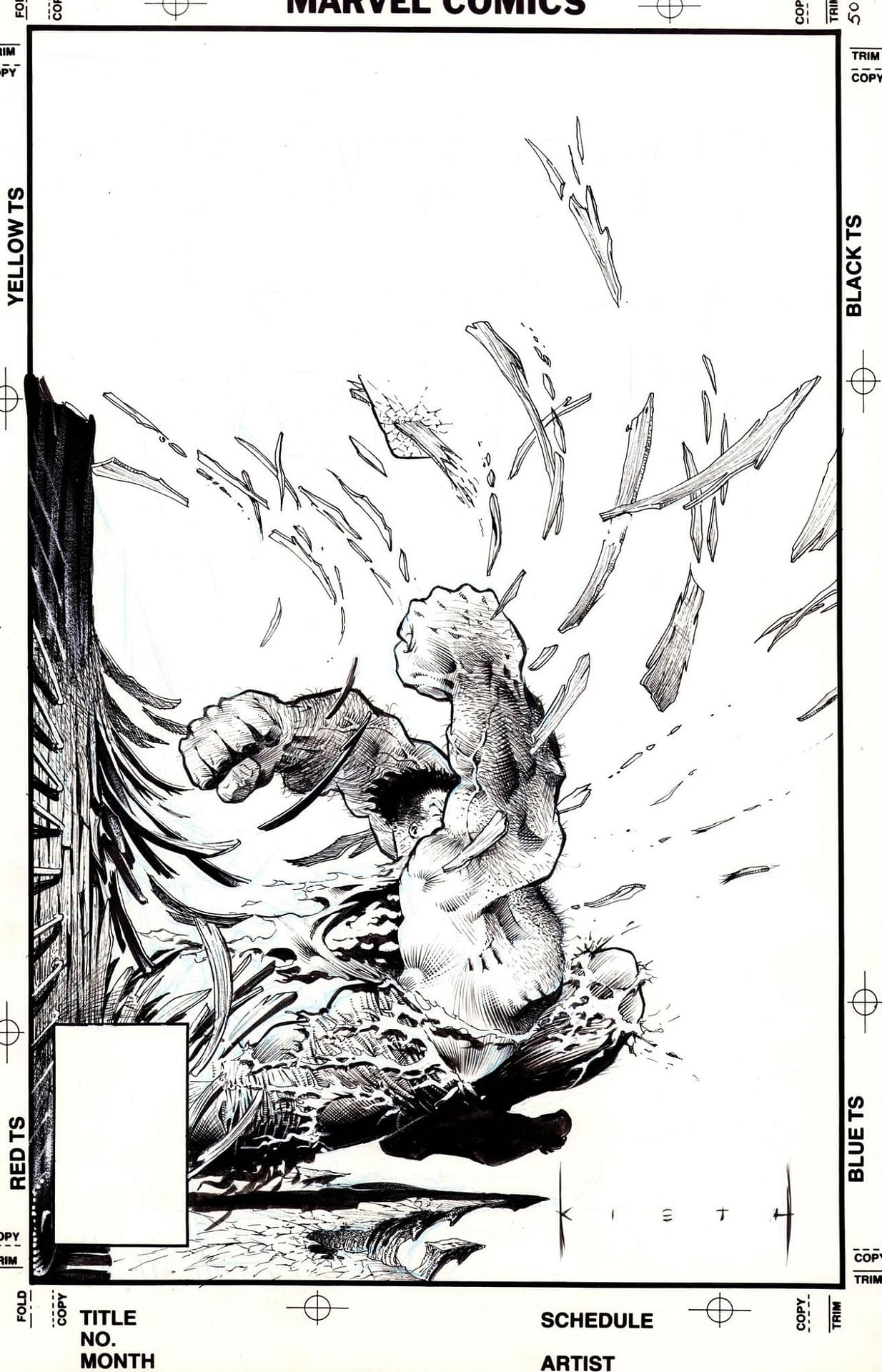
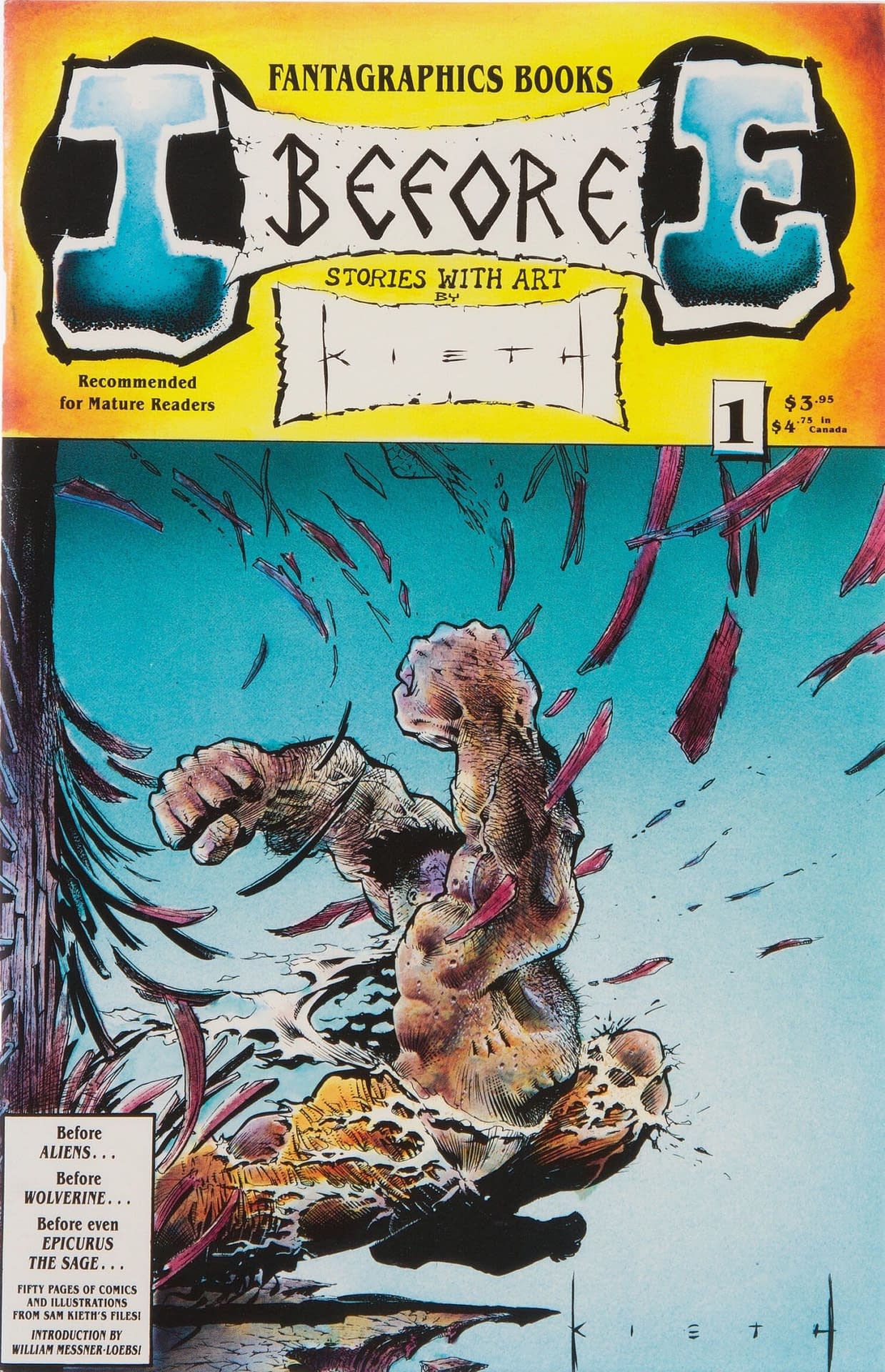
"He was such a seminal part of my early career as the inker on MAGE: THE HERO DISCOVERED. After which, of course, Sam went on to a very illustrious career as a creator all on his own. In honor of his life and legacy, I thought I'd share this piece of his original art that I've owned for years–a rejected cover for THE INCREDIBLE HULK. It was rejected because you can't see The Hulk's face…as if there could be any confusion over who's busting through that wall. We both agreed that this dynamic piece was a million times better than the one Marvel eventually approved. When he showed me this piece at a con and realized that I felt the same way he did about it…he gave me the piece, saying he wanted it have an appreciative home. That's the kind of guy Sam was." The cover was later used for the Fantagraphics collection of his non-corporate work, I Before E, all the more ironic as it was meant to be The Hulk.
-
- Sam Kieth Hulk
-
- Sam Kieth not Hulk
One of his earliest collaborators recalled those earliest of days, John Holland recalled those days, the successes and missed chances. He posted to Substack;
"My first published comic book story was drawn by Sam Kieth. It appeared in the back of Fantagraphics JOURNEY by Bill Loebs. It was a three-page story in black and white. Even then, his style was uniquely his own. My second published comic book story was in Fantagraphics CRITTERS anthology, and while it was drawn by Ron Wilber it was based on characters that Sam and I created."
"I met Sam from an article that appeared in the magazine Comicscene. It was about a fan group that helped writers and artists come together. I'm sorry, I don't remember the name of the group now. They had an address to contact them, no email; this was before the internet and pretty much before computers. Or at least ones that were cheap enough for wanna be writers to purchase. If I remember right, they sent me a list of other members with their addresses so you could contact whomever you felt the urge to. This was a long time ago, so I might be misremembering some of the details. I met my three oldest friends in comics through this group. Sam, Monica Sharp, and Dave Garcia. Honestly, I have no idea why I wrote Sam. But I did, and I'm glad I did. After a letter or two, we exchanged phone numbers, and soon a weekly session on the phone started. I was still living at home at the time, I had just started college, and we only had one phone in the house. Again, this was long ago, that it was before cell phones. All we had were landlines. Our phone was in the kitchen, so whenever we talked, I'd have to be in the kitchen, while my parents were usually in the next room watching TV."
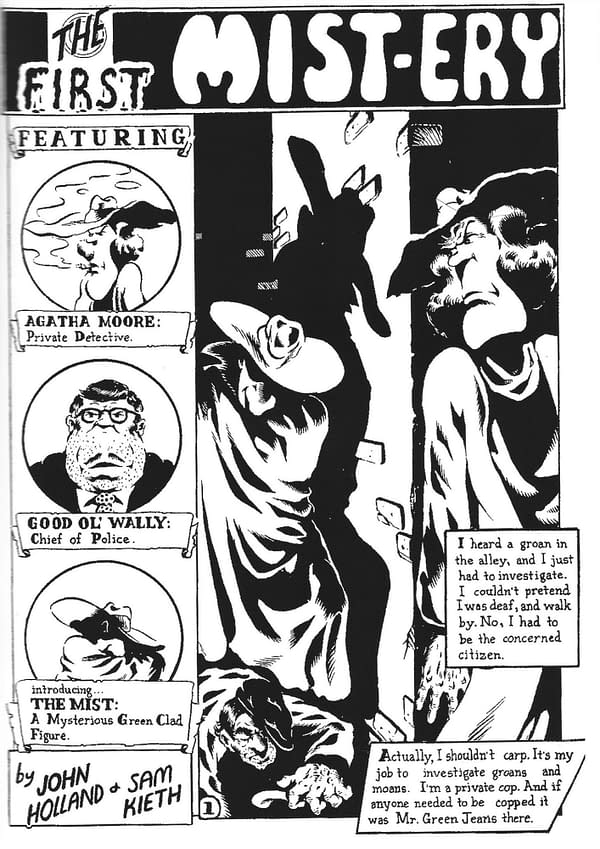
"I loved Sam's art from the start. It was amazing. You could see some of his influences, but it was already his style and his art. Anyone who knows Sam knows he was always his own worst critic. He always thought his art was not what it should be and wondered why anyone would buy it. But it was already good. One of the first characters we came up with was Agatha Moore. Sam wanted to do a noir-style story. He already had the main character. I think I came up with the Mist character. We did two four-page stories featuring Agatha and pitched them to First Comics. We never did sell it to First. I sent it in the mail to everyone and anyone I could think of. Later, much later, someone from Amazing Comics (a black and white line that I think was part of the larger Malibu line) (and I think the person that called me was David Campitti) and somehow had gotten hold of a bunch of short stories that I had wrote and the two Agatha stories that Sam had drawn were part of the bunch and they wanted to publish them all."
"Our phone calls would last hours. We talked and talked about comics and breaking in. We still hadn't sold anything yet. I went out to the San Diego Comic-Con to meet him. We split a room with Wendi Lee, and I can't remember the other guy's name. (Memory just goes as you get older.) Sam met Bill Loebs at the con, and they became friends. Sam was relentless in his path to get published. He would call editors up every day. I'm not sure of the timeline here, but somewhere around this time, he got a job inking at Comico. I think his first work was on Robotech, inking it. Then he worked with Matt Wagner on Mage. And Bill published our first story in the back of his comic, which deserves so much more attention now."
"Before long, Sam was getting more work. And then he was getting work from Marvel. Our phone conversations became less frequent. They didn't end. We were still talking when he got the job drawing Sandman. Then he was going to Image. He had a new character he had created. He called me and asked if I wanted to write it with him. He had asked Bill Loebs, they had already worked together, but Bill was hesitant to sign on. I always joke that this was my five minutes of writing The Maxx. We talked, but we never really moved forward with it. Sam was always telling me to get a hold of editors from other comic companies and tell them I was writing a series for Image, that it would help get me noticed. Then he called to tell me that Bill wanted to write it. And that was fine. I'm not going to say I wasn't disappointed. But Bill is and was one of the best writers in comics as far as I was concerned, and I couldn't blame Sam for wanting to work on the story with him. And it was only a short-term gig anyway, Sam always wanted to write the book himself."
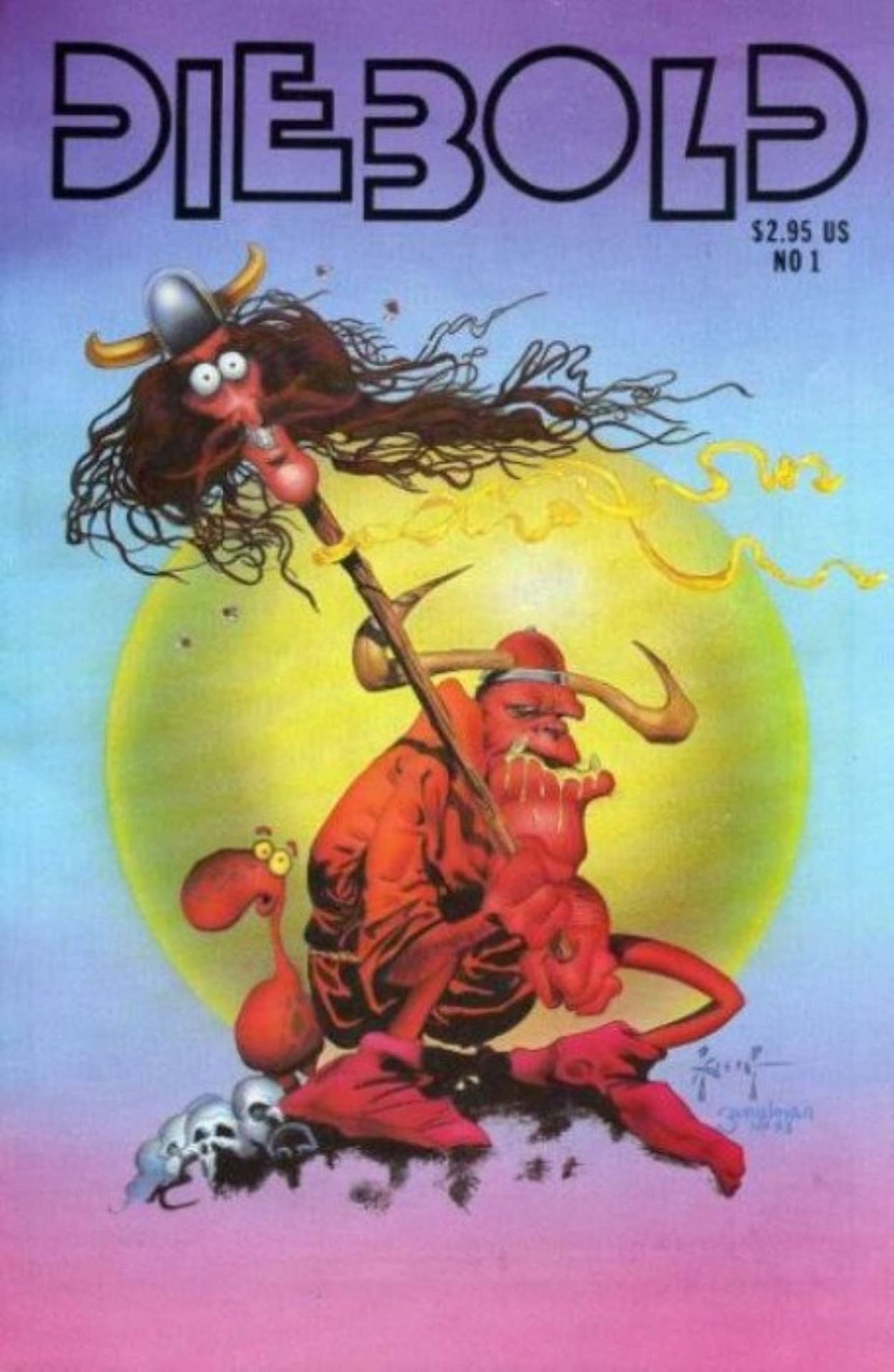
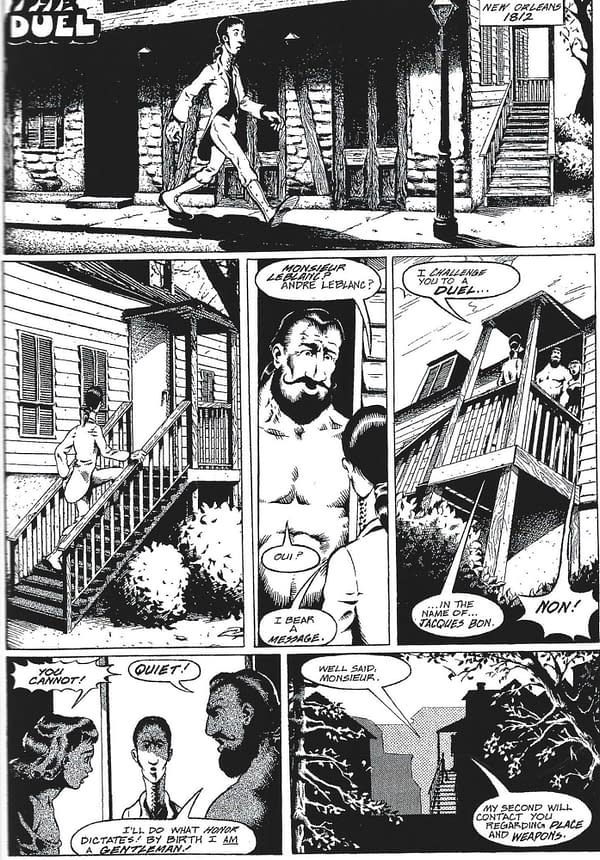
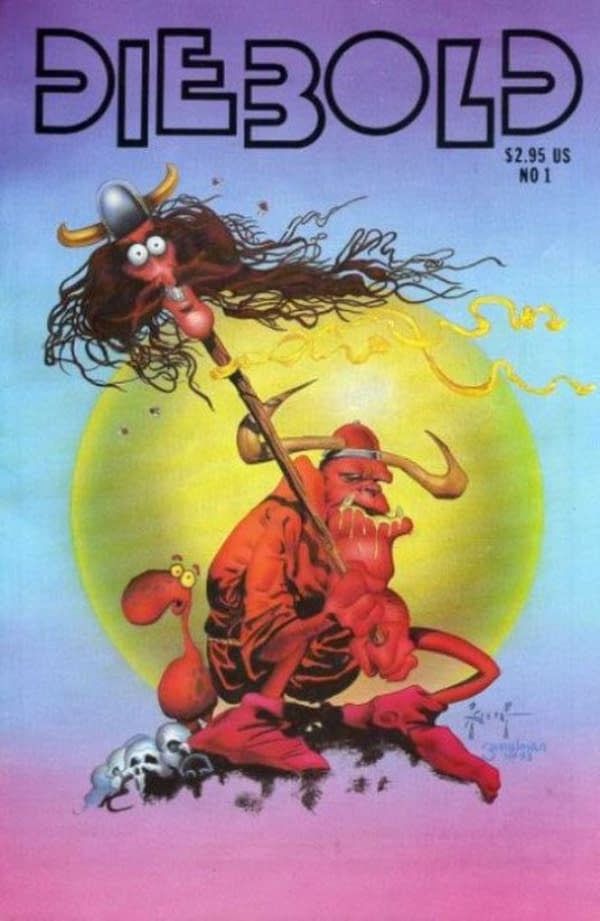
"We kept in touch. Not as much. We did a few more short stories, that mostly appeared in Kitchen Sink's DEATH RATTLE. One of the stories Dave Garcia drew and Sam inked. And he did the cover to the first issue of DIEBOLD by myself and Brian Clifton. I'm not going to try to claim that Sam and I were best friends. We hadn't talked in years. But he was a friend. One of my first friends in the industry. And we spent months together trying to break into this industry, working on ideas. He was a good guy and a great artist and I'm sorry that I didn't know how sick he had been and never tried to reach out. Sam, you will be missed."
-
- The First Mist-Ery by John Holland and Sam Kieth
-
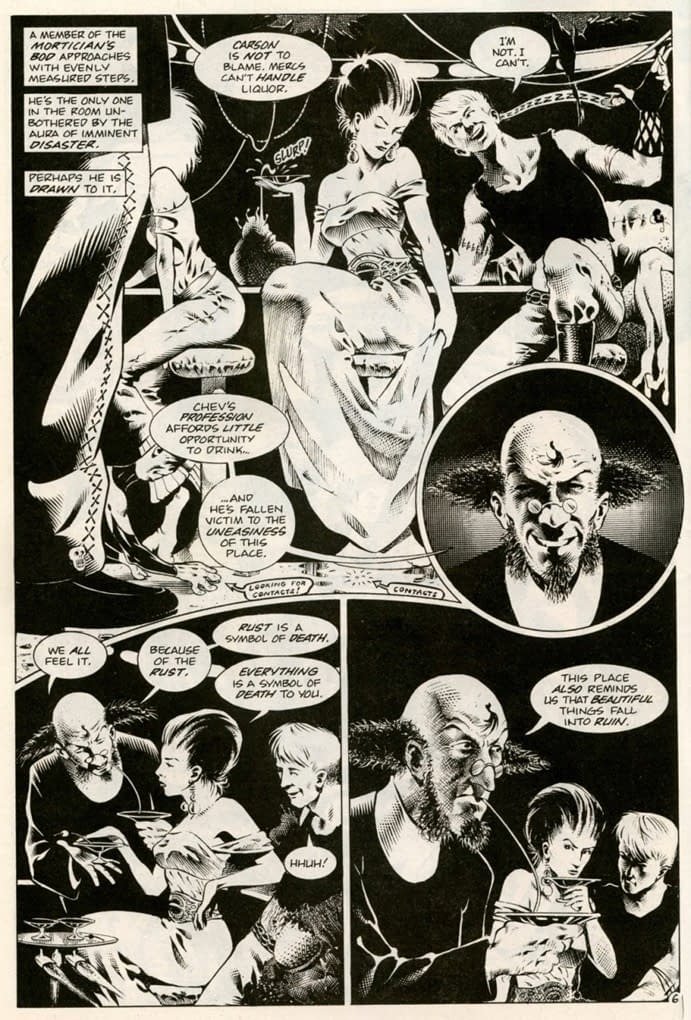
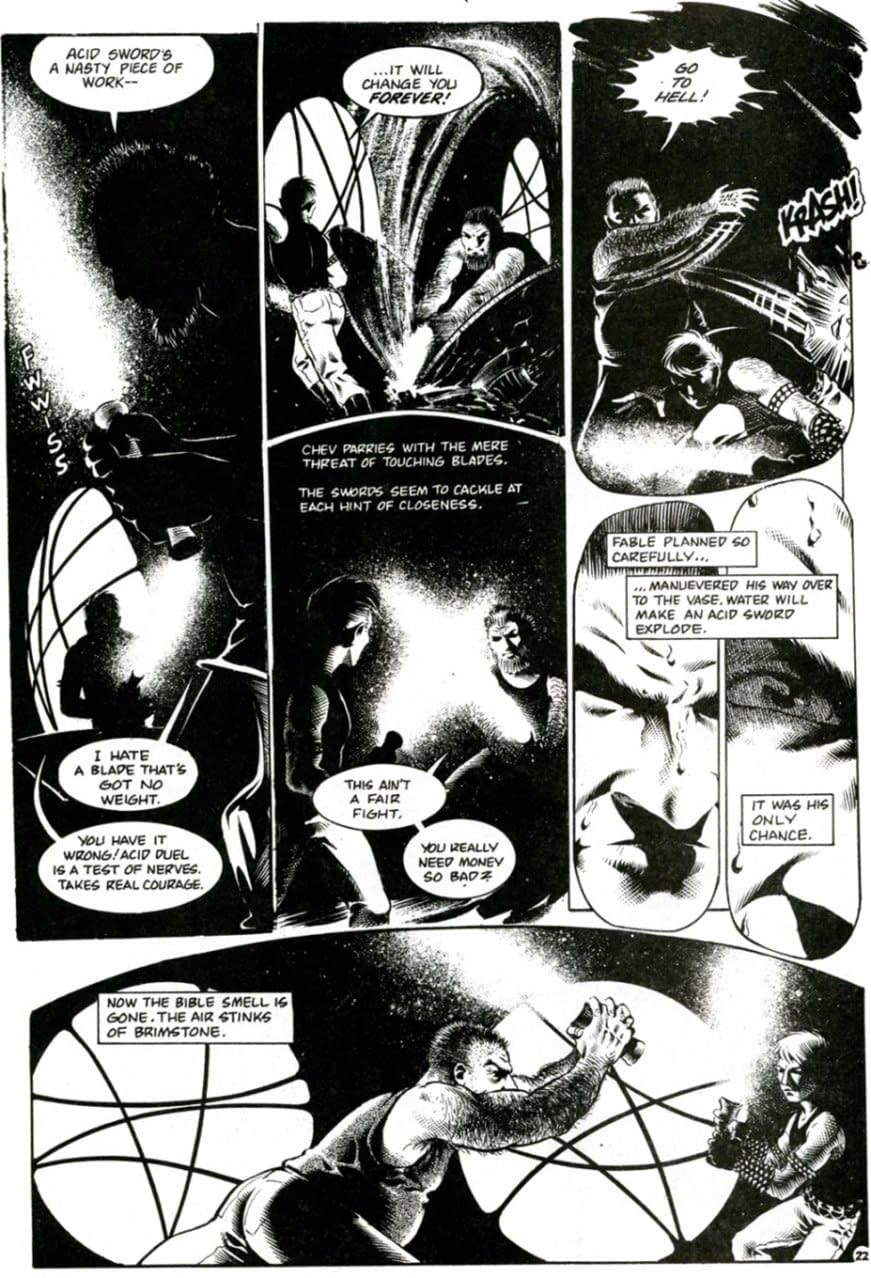
- The Duel by John Holland and Sam Kieth
-
- Diebold cover by Sam Kieth
Writer Don Chin, of the Adolescent Radioactive Black Belt Hamsters, which Sam Kieth drew three issues of in the early eighties, wrote, simply "My friend is gone too soon. Thank you for being such a cool human being, Sam Kieth", and shared some original art from those days.
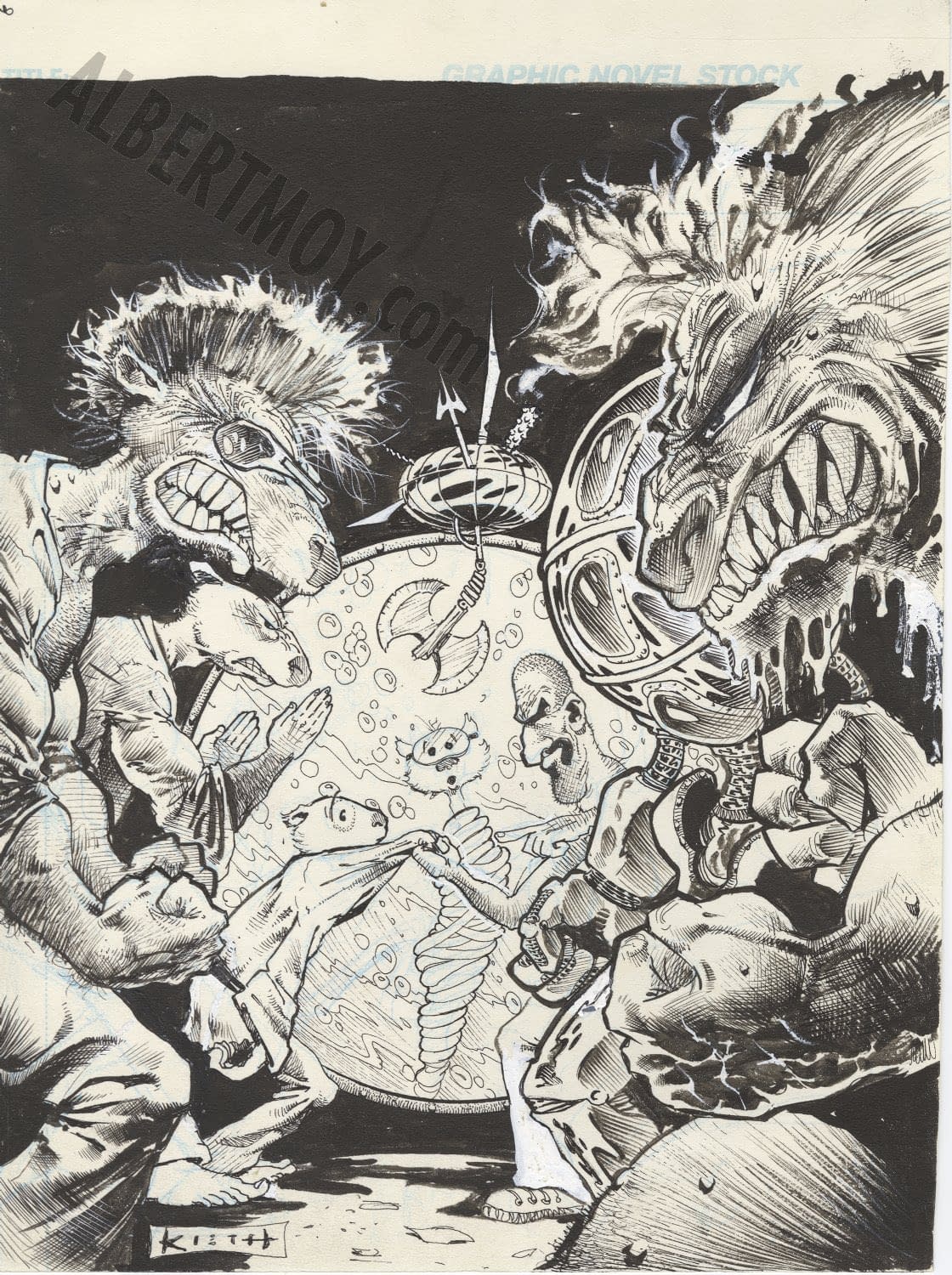
And on behalf of William Messner-Loebs, who wrote much of The Maxx with Sam Kieth, and also wrote my favourite of their collaborations, Epicurus The Sage, and was his longest collaborator, who is in poor health these days, Mike Jones of his fan group posted,
"I just got off the phone with Bill. He was not having a good day, and discovering the news about Sam wasn't any help. He wasn't sure what to say other than how young Sam was. They did some amazing things together, and Bill will miss him. This is a page of Bill's autobiography, "WANDERLAND" that mentions Sam."

Scott Ian of Anthrax, who worked with Sam on Lobo Highway To Hell, posted,
"I got the news today that Sam Kieth has moved on. Sam was brilliant. Fantastically, surreally, illogically, mind-shatteringly brilliant. Some years back, I was given the green light by the then-powers that be at DC Comics to write a Lobo story. Dream come true territory for me. When they asked me who I wanted for an artist, Sam was my man. He broke down my story into pages that took me on a ride I didn't even know existed. He made my ideas shine. He made what I'd written better. He held my hand through the whole process of getting my story on the pages. He was so generous as an artist and a total genius of a creator. Sam opened my mind to explore ideas from every possible dimension, and then go even further, across the threshold of the event horizon, because even if you end up nowhere, you always have your original concept to bring you back to reality."

Comic book artist and Marvel inker Joe Rubinstein, of The Official Handbook of the Marvel Universe and the 1982 Wolverine series, wrote,
"Sam Kieth was doing a multi-part Wolverine story where at some point Wolverine got naked. When Sam handed in the pages, there was no effort to cover anything up. The editor pointed out that it was a comic book, and he had to hide the genitalia with shadows or something. Sam's response was, I wish they had made that clear in the script."
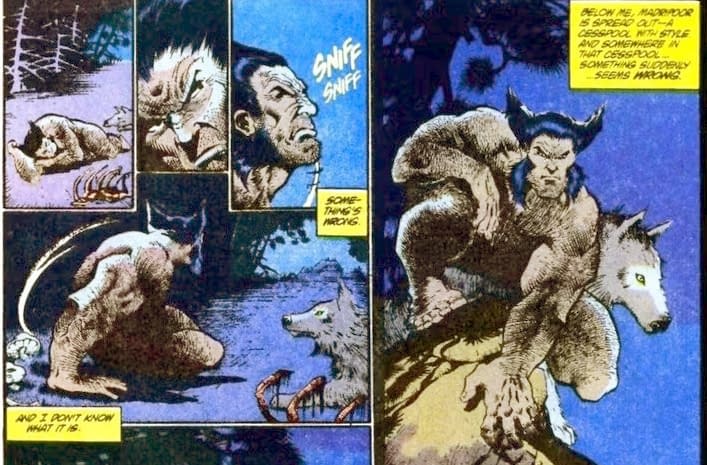
To be fair to Sam Kieth, I totally get where he was coming from. Gen 13 creator and Mary Jane Watson muse J Scott Campbell recalled his earliest days with the man.
"Sam had a distinction he was probably never aware of. That of being the very first working comic book professional I ever met and talked with. It was at a small comic con held in a Holiday Inn ballroom in Denver, Colorado, with a handful of dealers, and he was the talent flown in to anchor the event. I was thrilled to go meet the up-and-coming superstar, hot off his explosion in Marvel Comics Presents, drawing Wolverine. He couldn't have been more gracious and accommodating of a young guy like me talking his ear off about what pens he uses, what it was like drawing for Marvel Comics, and who knows what else. It was only a short year or two later that I was in the comics business myself, but early interactions like these were monumental in giving me the confidence to pursue a career in drawing comic books."
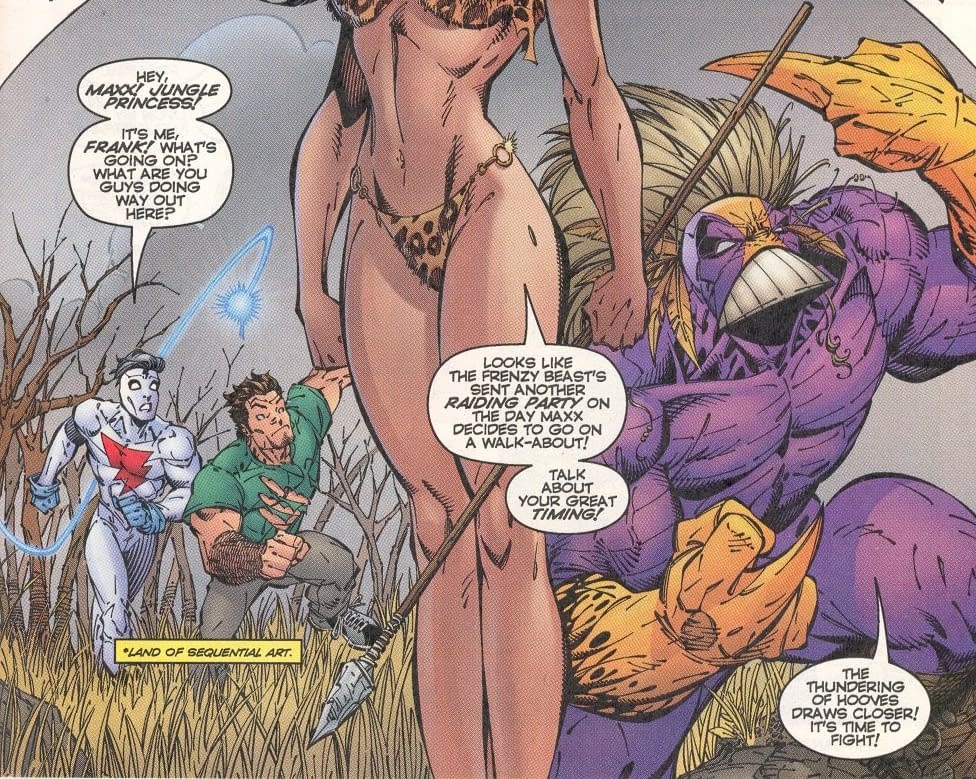
That was from Gen-13 #13C, in which Grunge, Madman, and Tinker Fall come across Jungle Princess, The Maxx, Lady Death, Shi, Hellboy, and even Wolverine. Sam Kieth was happy to let The Maxx turn up anywhere, big or small. I should really, really have asked him to appear in Dirtbag. To be fair, I kinda did without asking, right? But that included comics such as Gay Comics #24 from 1996, at a time before any mainstream publisher was doing anything that gay. Editor Andy Mangels wrote in the editorial at the time;

"Since I became editor of Gay Comics, I have attempted to make the book more a part of the mainstream and accessible to a wider audience.. Which brings us to Sam Kieth. The Maxx crossover story in this issue is the largest mainstream crossover we've done. The Maxx is on MTV, and Paramount is planning a feature film, not to mention there's the best-selling comic series from Image. Since the first time I asked him about contributing to Gay Comics, Sam Kieth has been supportive of the crossover, and it's only because of time commitments that he's unable to provide the full story and art. Sam is straight, but he is supportive of the goals of the series: to provide good comic entertainment that gay and straight people can both enjoy. Because of The Maxx story, this issue of Gay Comics will probably be seen and bought by a substantial amount of new readers. To those newcomers, I welcome you, and hope you'll check out some of our back issues (and future issues) for work by some of the best cartoonists (you may have never heard of… plus many you have)."

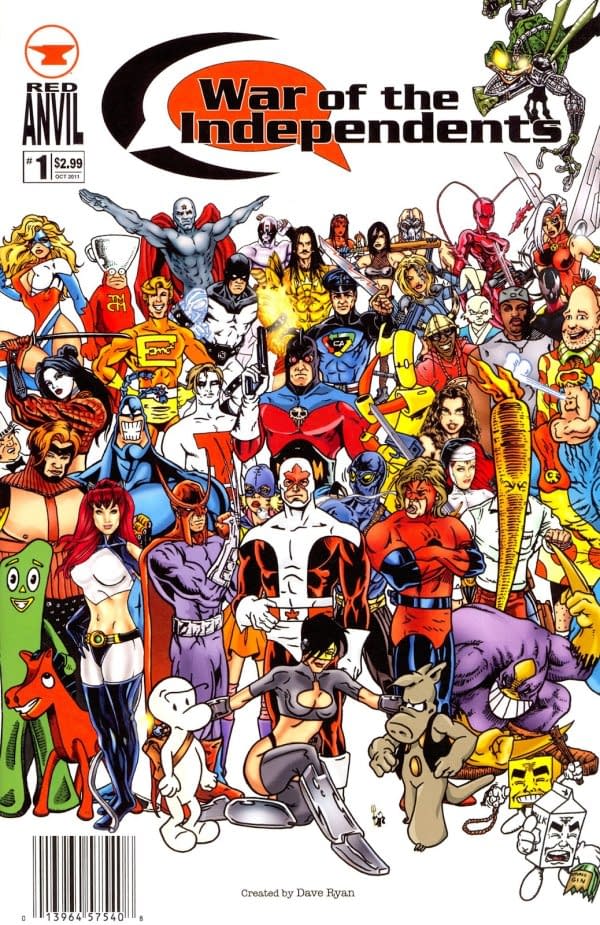
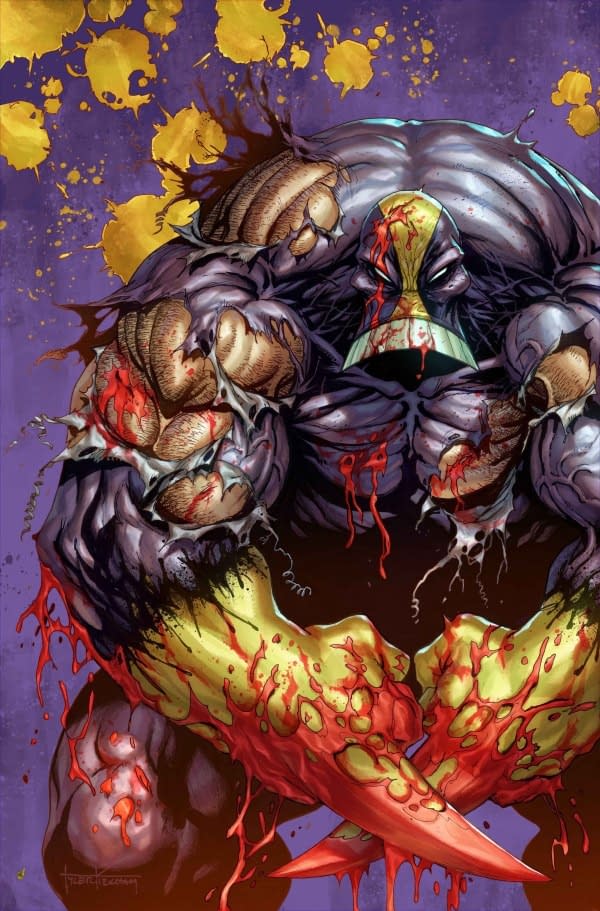
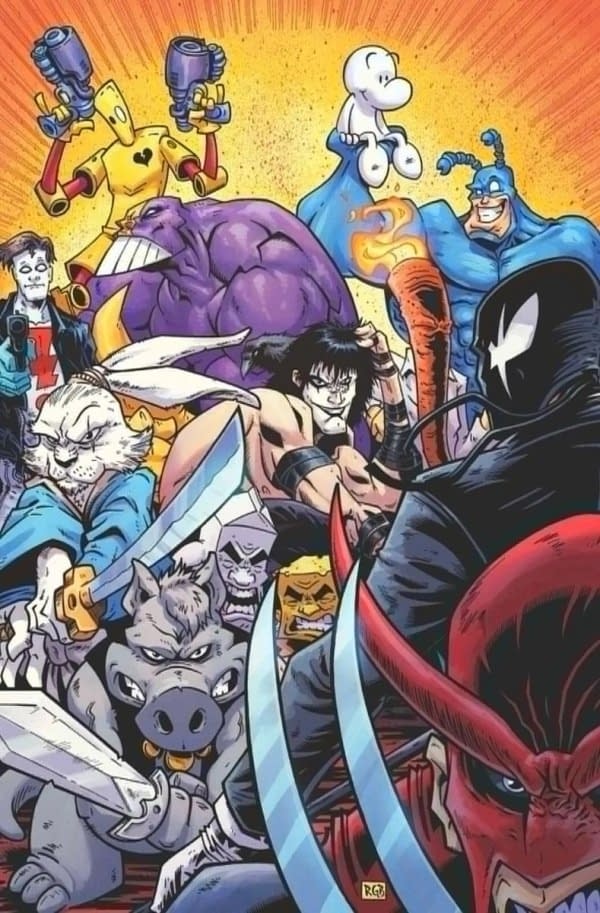
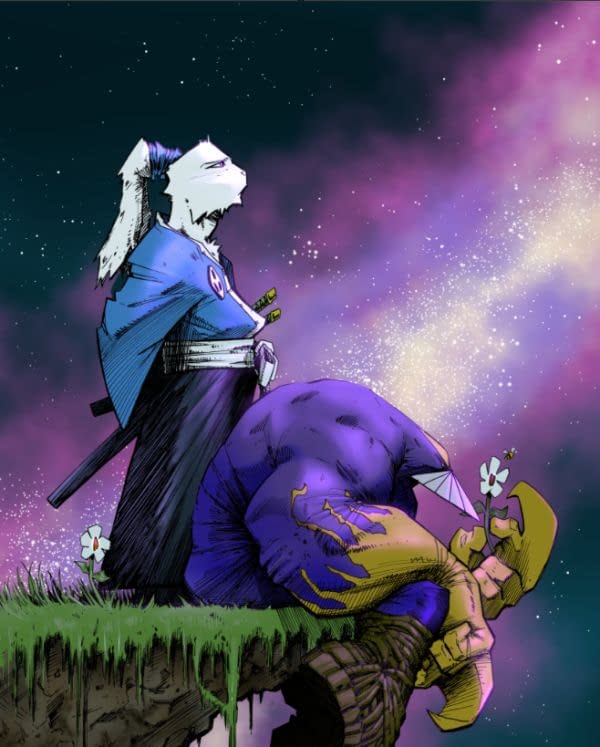
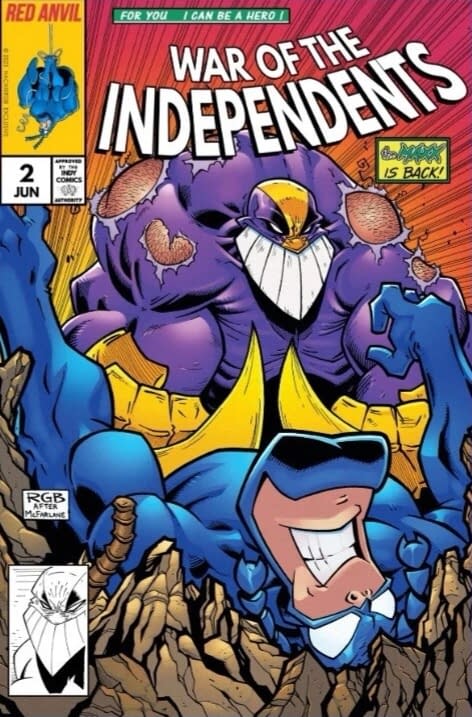
And Dave Ryan posted about his own crossover event comic, War Of Independents from Red Anvil, from almost twenty years ago, which mashed up independent creator owned characters from the smaller presses and which had some early publicity in the likes of Wizard The Magazine.
"Back in 2007, I was living in NYC, and my cell phone rang. It was Sam Keith. I still don't know how he got my number, but he asked me if I'd want to include The MAXX in the War of the Independents. I was pretty stunned and, of course, agreed."
-
- War Of The Independents
-
- War Of The Independents
-
- War Of The Independents
-
- War Of The Independents
-
- War Of The Independents
-
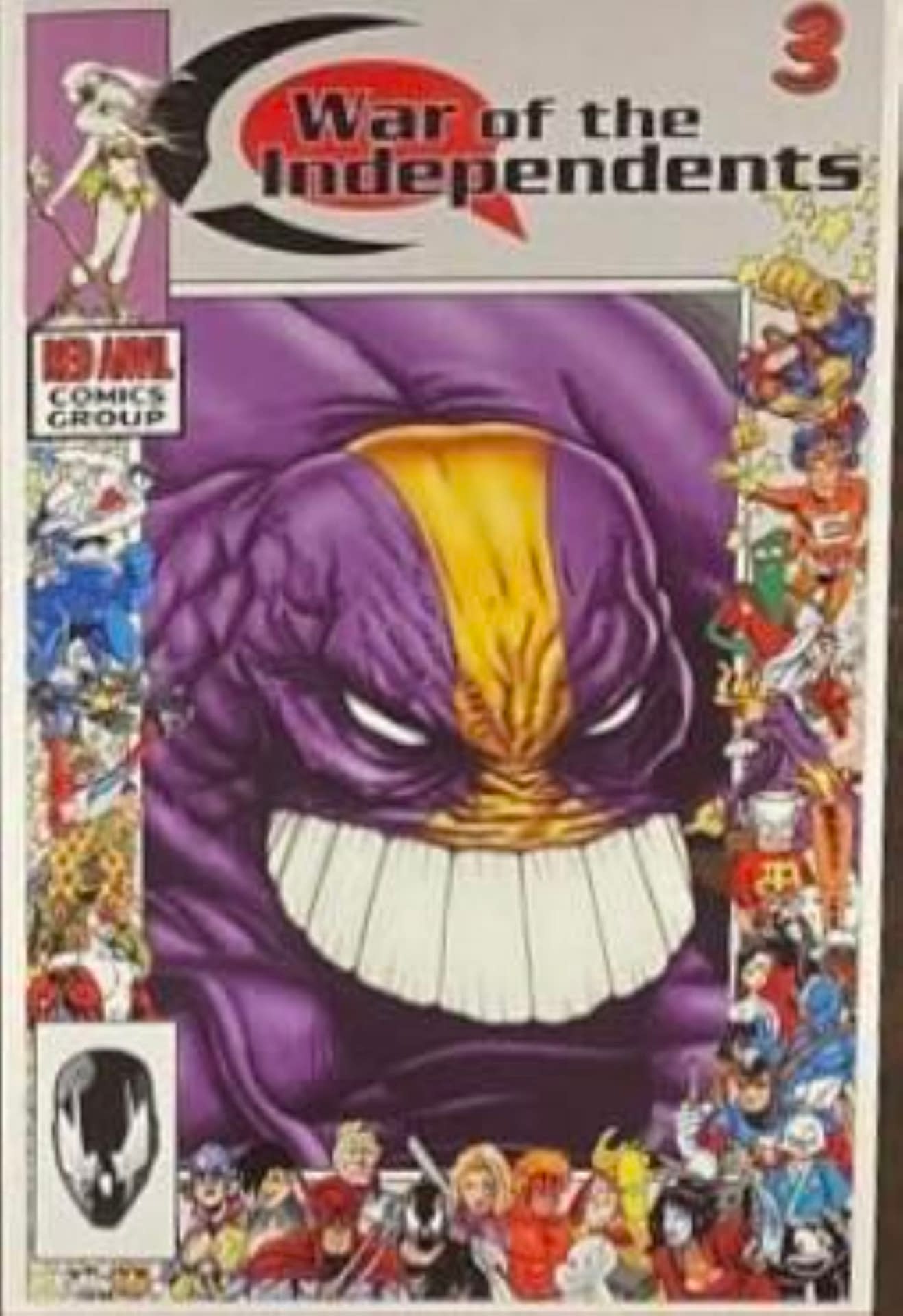
- War Of The Independents
Not the only such phone call that changed things. Steven Scott posted,
"I once received a phone call from Sam Kieth. It was completely unexpected, and he was in a chatty mood, and couldn't have been friendlier. For a little context, I was running PR for IDW at the time, and we had just launched an Indie Comics Humble Bundle, which included original comics from IDW's library, including THE MAXX. I had helped curate the bundle, and in order to ensure its success, had emailed every single creator whose work was represented, giving them instructions on how to best educate their followers about what the digital, pay-what-you-want bundle was and how it worked. Within minutes of launching the bundle, my phone rang. Little did I know that Sam Kieth was on the other end of the line, grateful for being included in the bundle, and in great spirits. We chatted for at least 30 minutes, with him doing most of the talking. I thanked him for his support with the bundle, and he then, completely unprompted, proceeded to tell me the story about how THE MAXX was first pitched and bought by MTV, and how Mike Judge was in the room and gave it his seal of approval. He even did his best Judge impersonation. It was awesome."
-
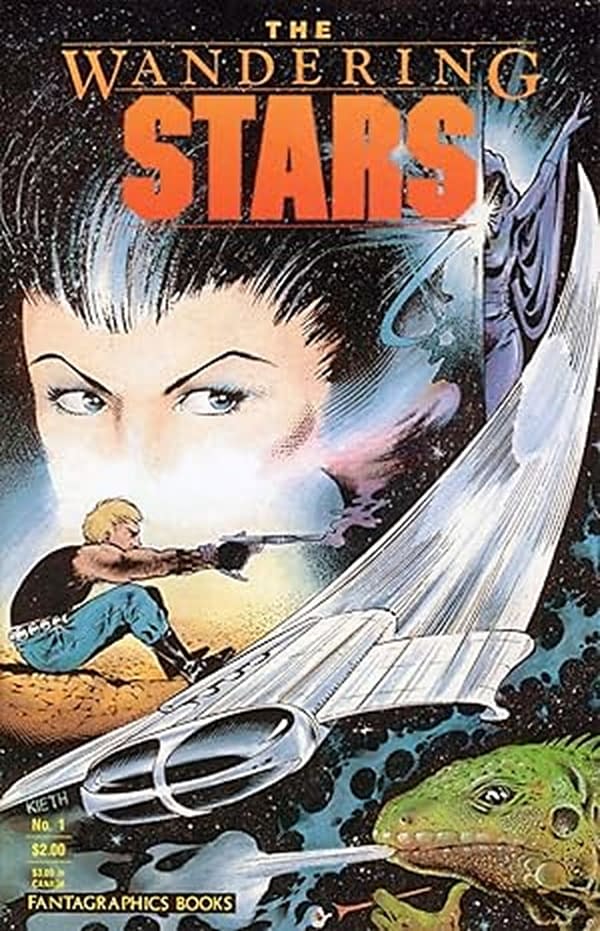
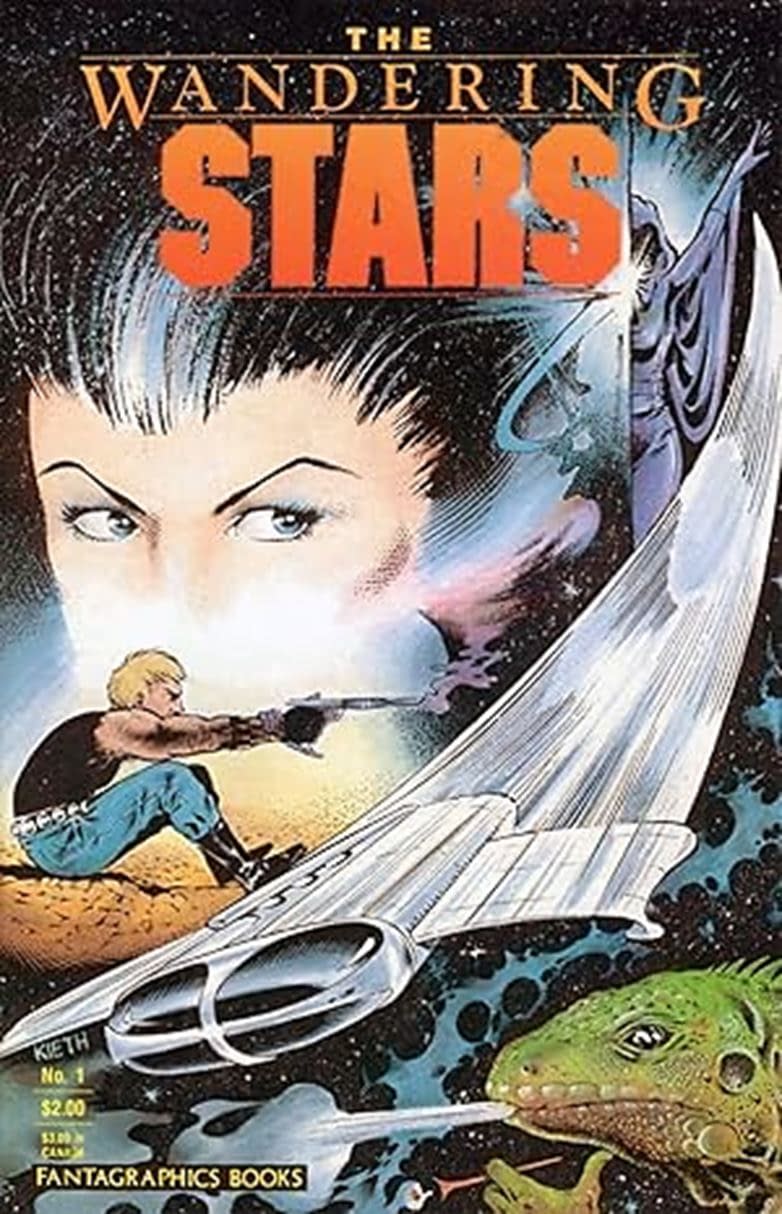
- The Wandering Stars by Stuart Hopen and Sam Kieth
-
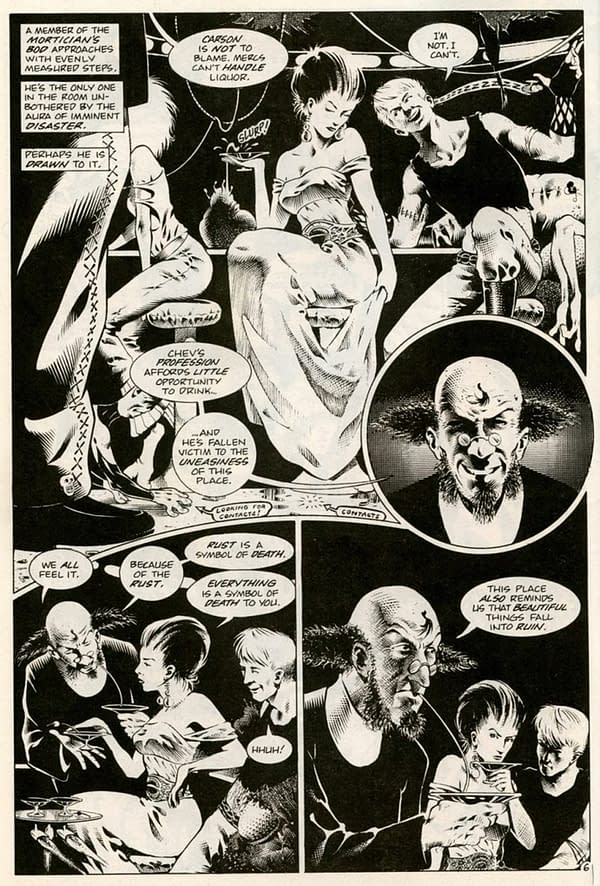
- The Wandering Stars by Stuart Hopen and Sam Kieth
-
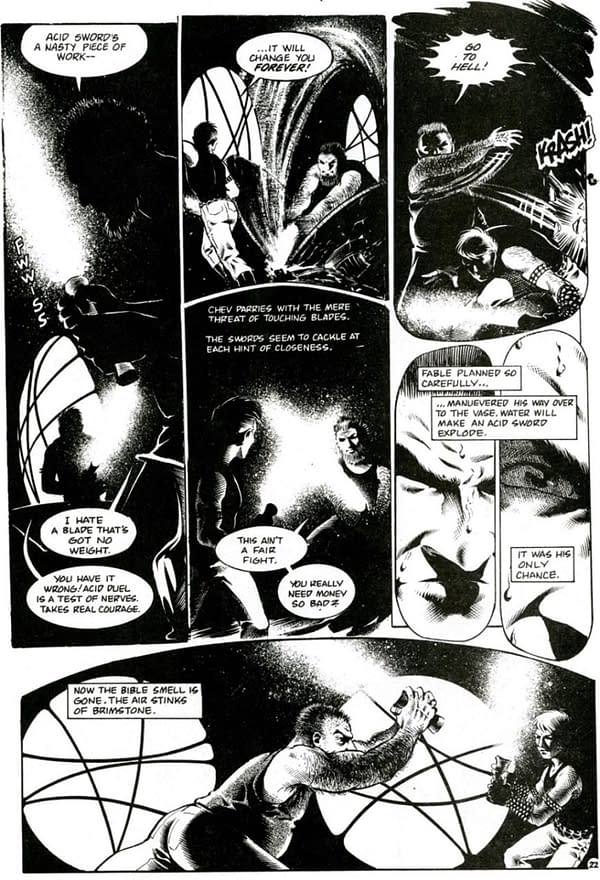
- The Wandering Stars by Stuart Hopen and Sam Kieth
And another early collaborator, Stuart Hopen wrote,
"We never met face to face, though we spent hours talking over the phone while he illustrated my comic script for Fantagraphics, 'The Wandering Stars." It also seems to be one of his most obscure comics as well, not even listed on Kieth's Wikipedia entry. In 1987, when the comic appeared in its first and only printing, Sam Kieth, already had won recognition for his fine inking, but this was his first effort at complete art chores on a full length book. Later, he would later achieve fame as the co-creator of Sandman, and the creator of the Maxx. Kieth worked very slowly on this, taking a full six months to complete 32 pages. The results were spectacular. In a way, they were too spectacular. Sam Kieth quit after the first issue, after laying groundwork so unique and meticulous, no one else could build upon it." I got my copy! Stuart then took that one issue and novelised it, and the entire planned science fiction series as the novel Warp Angel, originally published by Tor Books, and currently available from Misenchanted Press.
And then there was Rob Liefeld was the first to publish The Maxx at Image Comics and wrote;

"Darker Image #1 was designed to showcase the debut of 3 new characters in 3 separate stories by Jim Lee, myself and Sam Kieth. It was your first introduction to Deathblow, Bloodwulf and The Maxx. Jim and I were excited to share the stage with Sam as we were tremendous fans of all the he had done at Marvel & DC. Sam was game to join our little showcase and he provided such a stunning cover that neither Jim or I figured we needed to offer variants of our own. This was Sam's official debut with Image. Jim and I would almost always have covers for #1 issues that we participated in but once I saw Sam's and Jim saw it, we figured that we didn't need to contribute. This was more than enough. Darker Image #1 debuted in Jan. 1993 a whopping 1 million copies. With one single cover by Sam. It's a great book and the fun we each had jumps out from every story. Proud to have shared this experience. Why no Darker Image #2 you ask? Because audience reaction to each character was so positive that each received his own series as a result. Fun, fun memories."
It remains remarkable that Sam Kieth, a man with such a cartoony and indie sensibility, could then become such a mainstream success, with huge hits, without compromising his style – even leaving Sandman because of it, as Mark Wheatley recalled. It is a credit to his character and to his art that, even to the end, he remained so loved by those who knew him, or just knew his work.
Enjoyed this? Please share on social media!



Stay up-to-date and support the site by following Bleeding Cool on Google News today!