
 About
About 

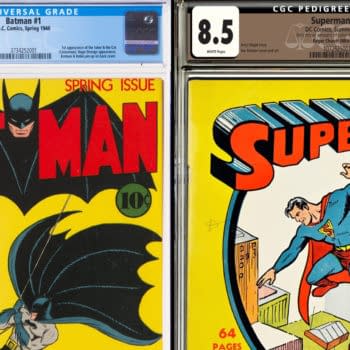
The highest graded Batman #1 CGC 9.4 has sold for a record $6,000,000, while the second-highest-graded Superman #1 CGC 8.5 has sold for $7,000,000.
Posted in: Comics, Heritage Sponsored, Vintage Paper | Tagged: cat-man
Saboteurs and Siberian Wolves in Cat-Man Comics #14, Up for Auction
Charles Nicholas and future Marvel legend Sol Brodsky deliver a war-era saga directly inspired by the Operation Pastorius saboteurs earlier that year.
Released around September 1942, Cat-Man Comics #14 hit newsstands at a moment when American wartime paranoia was arguably at its peak, and not for no reason. That July, the FBI announced that the U.S. government had thwarted the plans of Nazi agents captured during Operation Pastorius, a failed plot to destroy American industrial targets. Six of these sabatuers were executed on August 8. While many comics of the era dabbled in spy-smashing fiction, parts of this issue from Holyoke read almost like a direct transcript of such headlines.
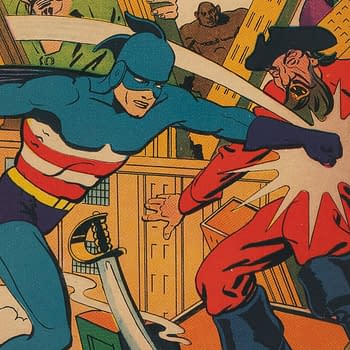
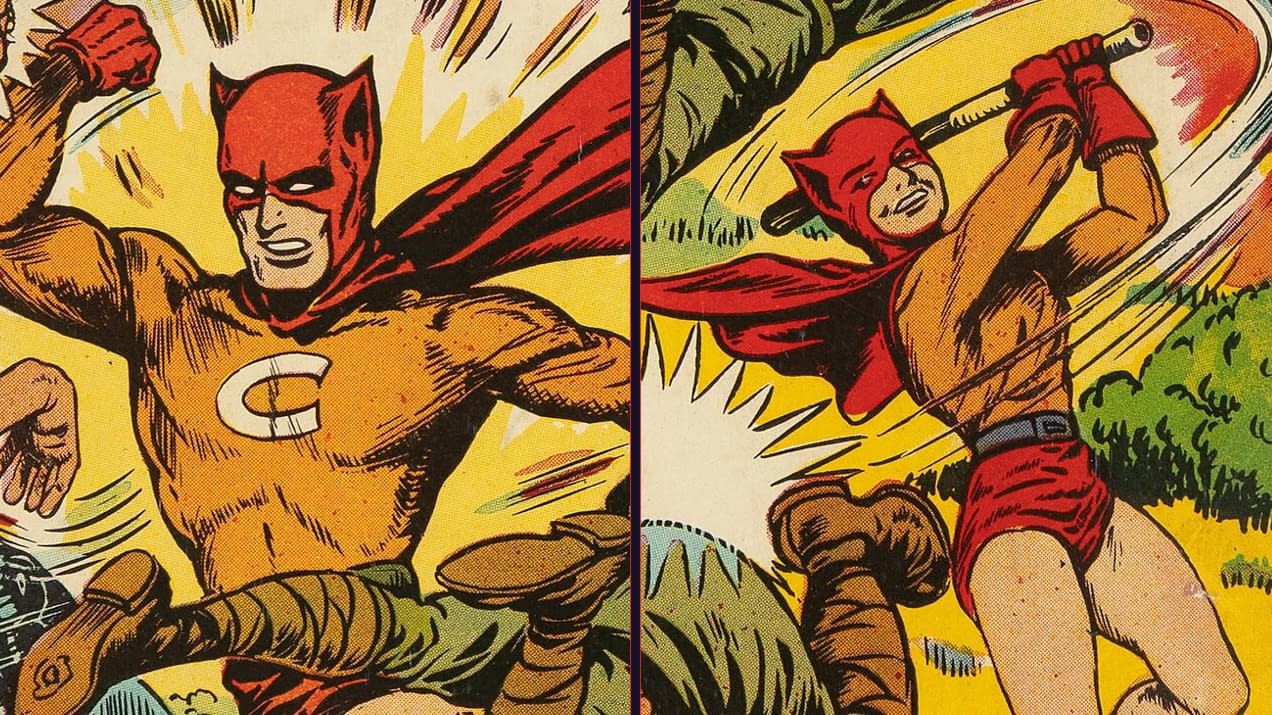
The "Little Leaders" feature in this issue is particularly on the nose. Drawn by Charles Nicholas with inks by a 19-year-old Sol Brodsky (future Marvel production manager), the story sees kid heroes Mickey and Katie stumbling upon a Nazi hideaway and recovering a list of targets, including dams and power plants. These were exactly the type of target lists carried by the actual Operation Pastorius saboteurs. The Cat-Man and Kitten cover by Charles Quinlan, a prolific artist who defined the series' look during its Holyoke era, depicts the tensions and mindset of that time with a brutally caricatured depiction of their brawl with Japanese soldiers.
From Camp Shelby to Siberia
Cat-Man Comics #14 goes beyond standard wartime Golden Age superheroics to ground its stories in specific military realities. The Hood feature, "The Vulture's Claw," is set explicitly at Camp Shelby, Mississippi, a major training base active at the time, where the hero fights a prosthetic-clawed Nazi ace named Baron Von Tug. Elsewhere in the issue, great effort was taken to turn the Reich's own propaganda against them, as The Deacon story features an antagonist named Wessel, an almost certain reference to the Nazi martyr Horst Wessel, whose "Horst Wessel Song" had become a staple of German propaganda.
Perhaps the most fascinating inclusion is found in the "Personal Adventure" text section. Amid the expected profile of General "Vinegar Joe" Stilwell, the editors included a strange "true adventure" tale titled "Wolves Nearly Got Me!", recounting the exploits of the U.S. 31st Infantry Regiment in Siberia during 1919. In this deep cut of military history, the Polar Bear Expedition to intervene in the Russian Civil War was resurrected here to remind 1942 readers that American soldiers had faced bleak odds and hostile environments before. Whether intended as a parallel between fighting Bolsheviks in the past and Fascists during WWII, or simply a testament to American determination, it's the kind of obscure historical detour that makes Golden Age comic books so fascinating to study and collect.
Cat-Man Comics #14 Scarcity and Market Data
Like many Holyoke books and this series in particular, Cat-Man Comics #14 is genuinely tough to get. The CGC census has entries for only 32 graded copies in total. This rarity, combined with the intense demand for "war covers," and this series in general, has driven prices significantly upward. A CGC 8.5 copy sold in October 2024 for an impressive $14,950, while mid-grade copies have also seen strong results, demonstrating that for books with this level of historical significance and low survival rates will always be in demand. An unexpectedly fascinating entry from the World War II era, there's an Cat-Man Comics #14 (Continental, 1942) CGC VG 4.0 Off-white pages copy up for auction at the 2025 December 11 Golden Age Comics Century Showcase Auction IV.

Affiliates of Bleeding Cool buy from and/or consign to Heritage Auctions.
Enjoyed this? Please share on social media!



Stay up-to-date and support the site by following Bleeding Cool on Google News today!