


 About
About 


The Drama star Robert Pattinson has revealed that filming for The Batman: Part II will begin later this month, and he praises the script, calling it "so, so good."
Posted in: Kaitlyn Booth, Movies, Review, Sony | Tagged: 28 years later: the bone temple
28 Years Later: The Bone Temple Review: Horror With a Sense of Hope
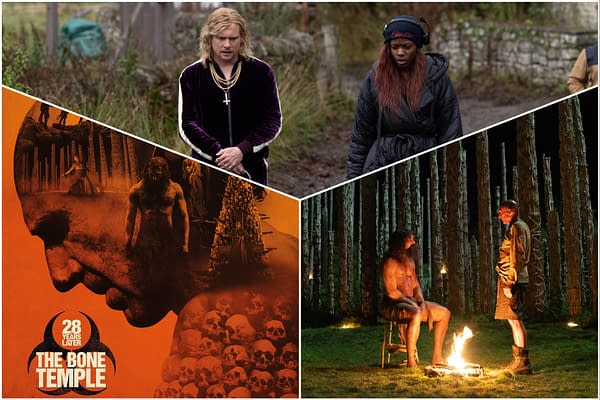
28 Years Later: The Bone Temple might not bring back the fans who disliked the first return to this world, but it continued to unflinchingly explore how humanity would adapt and evolve if it were simply left to fend for itself.
Article Summary
- 28 Years Later: The Bone Temple delivers a haunting yet hopeful look at survival after the rage virus outbreak.
- Nia DaCosta expertly balances intense human horror with moments of dark humor and unexpected hope.
- Performances from Chi Lewis-Parry and Erin Kellyman provide emotional depth and fresh perspective.
- The film focuses more on human threats and religious zealotry than the infected, deepening the series' themes.
28 Years Later: The Bone Temple is another welcome entry into this world, and it manages to balance reminding us of the atrocities humanity is capable of with a surprisingly funny sense of hope extremely well.
Director: Nia DaCosta
Summary: As Spike is inducted into Jimmy Crystal's gang on the mainland, Dr. Kelson makes a discovery that could alter the world.

28 Years Later: The Bone Temple Explores Both Hope And Horror
Less than a year after 28 Years Later showed us what happened to Britain following the rage virus and how the world managed to contain it, we're back to exploring this world and all the good and bad that comes with it. The previous film was a coming-of-age story for Spike (Alfie Williams) as he started to realize that not only was his father not what he expected, but the mainland wasn't what he expected either. Spike made the decision at the end of the first film to stay behind, and when we last met him, he had just crossed paths with Sir Jimmy Crystal (Jack O'Connell) and his gang of Jimmies. That is one of the two stories we follow in the second film, 28 Years Later: The Bone Temple. Within minutes of the second film beginning, it becomes very apparent that while Jimmy and his "fingers," as he refers to his minions, might have saved Spike's life, he is very much still in danger and, in some ways, might have been better off dealing with the infected.
Jimmy and how he moves through this world is an angle that is often explored when we look at any film set in a world where societal expectations have collapsed. From the moment the first zombie appeared on screen, it was the regular people who ultimately proved to be the most dangerous, and Jimmy shows that cruelty to its extreme. The film doesn't shy away from what Jimmy and his fingers are doing to the people around them. We saw a glimpse of it in the first film, the infected person hanging from the ceiling with a bag over their head has Jimmy's name carved into their stomach. When we see what Jimmy does when he comes across others later in the film, director Nia DaCosta doesn't flinch, but you will.
The juxtaposition with what is happening with Dr. Kelson (Ralph Fiennes) and the alpha Samson (Chi Lewis-Parry) is likely to throw some people off because they could not be more different. While Spike is being put through hell and being carted around by a Satanist, Kelson is going on as he usually does and is making a new friend. In the previous film, Kelson was the one who really hammered home the idea that these are not zombies, they are not undead, they are people who are very sick, and we see that in this film. We see more of Samson's point of view and explore what exactly is happening within the human body when it contracts the rage virus. Kelson's story is where the sense of hope and the film's funniest moments are found, which is made even funnier when they occur within a massive monument to the dead. DaCosta and Alex Garland's script do an excellent job of balancing these two stories until they come together in an absolutely buckwild third act.
Chi Lewis-Perry And Erin Kellyman Are The Quiet MVPs
All eyes are going to be on Fiennes and O'Connell when it comes to The Bone Temple and rightfully so. They're both fantastic in their respective roles. Kelson comes across as weirdly well-adjusted, but with a lingering air of being out of his mind in a way that only this world can bring. O'Connell turns Jimmy into one of the most horrifying characters on screen, maybe one of the worst we have seen in this series, because his madness is remarkably human despite the world they all live in.
However, it's Lewis-Parry and Erin Kellyman as Jimmy Ink that really make the difference here. Samson was rather one-note in the previous film and the subject of some jokes, but the performance Lewis-Parry is giving here is wild. The infected are non-verbal, so any range of emotions we see from him comes purely from his physical movements and facial expressions. It's not easy to pull off, and he does it rather flawlessly. Kellyman has one of those performances that's going to sneak up on you. The various Jimmies that we meet are all different in various ways, but she's the one who connects with Spike. To get into all of the reasons Kellyman makes Jimmy Ink work would spoil some reveals about her, but she's the other quiet MVP of this movie.
Those who had problems with 28 Years Later might have some problems with The Bone Temple as well, because the infected are really only here to serve as a problem that needs to be solved and a secondary threat. The primary threat in this film is a human one, and that was very much the case in the first film in this trilogy as well. In the first one, the very human threat was the weakness of Spike's father and a disease that had nothing to do with the virus killing his mother, a disease that kills countless in a world without the rage virus.
-
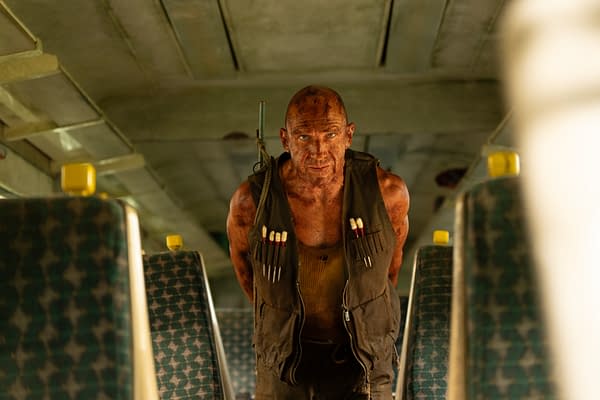
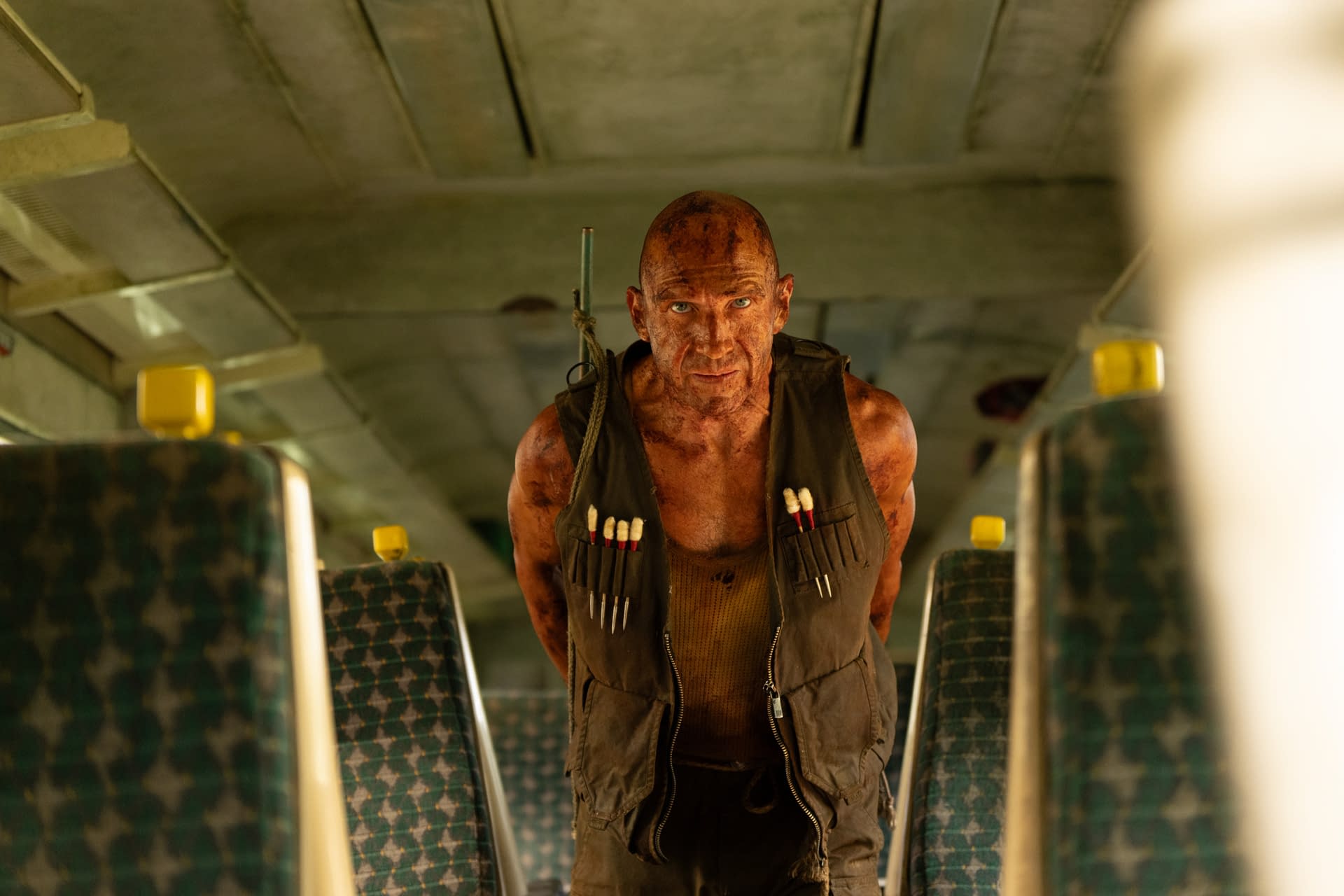
- Dr. Kelson (Ralph Fiennes) in Columbia Pictures' 28 YEARS LATER: THE BONE TEMPLE. Photo By Miya Mizuno © 2024 CTMG, Inc. All Rights Reserved.
-
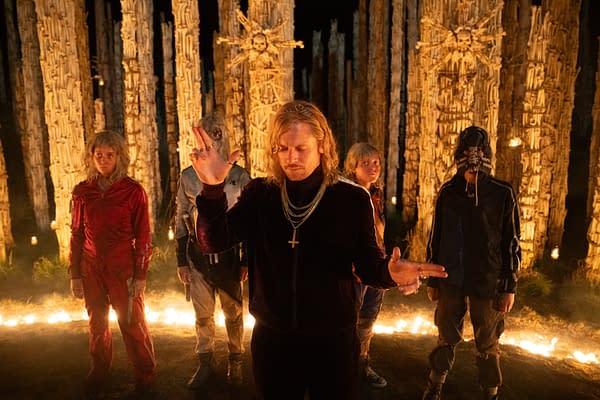
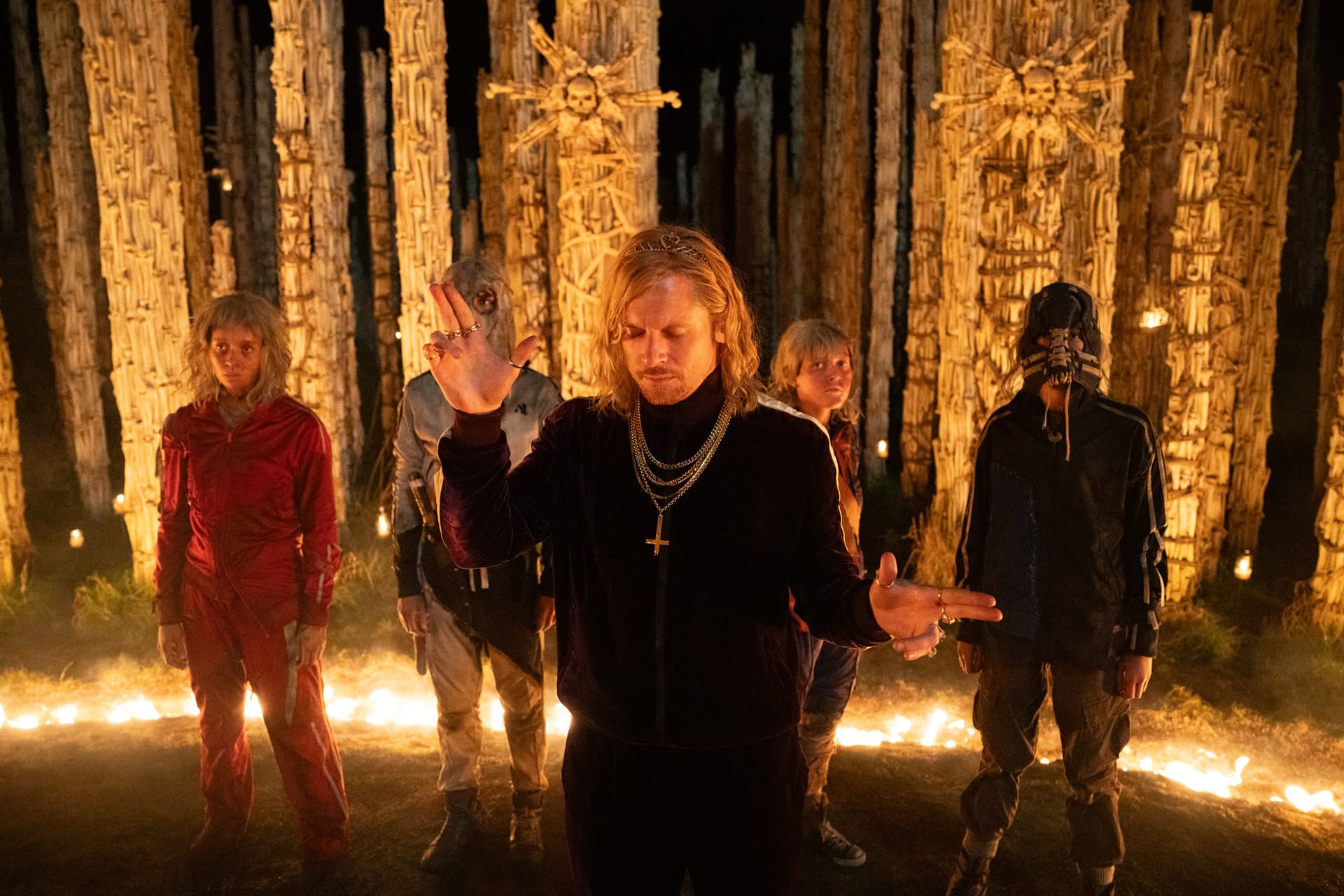
- Sir Jimmy Crystal (Jack O'Connell) with the Jimmies in Columbia Pictures' 28 YEARS LATER: THE BONE TEMPLE. Photo By Miya Mizuno © 2024 CTMG, Inc. All Rights Reserved.
-

- Dr. Kelson (Ralph Fiennes) in Columbia Pictures' 28 YEARS LATER: THE BONE TEMPLE. Photo By Miya Mizuno © 2025 CTMG, Inc. All Rights Reserved.
-
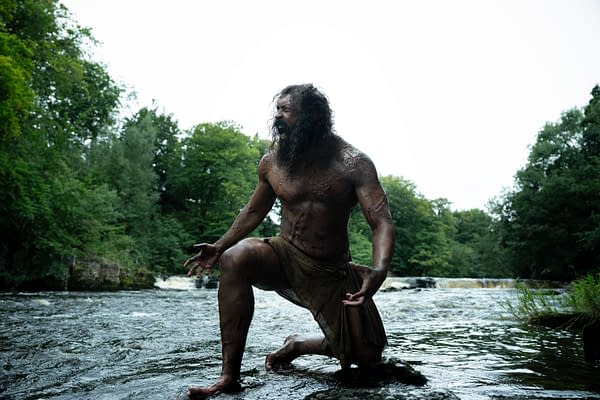
- Samson (Chi Lewis-Parry) in Columbia Pictures' 28 YEARS LATER: THE BONE TEMPLE. Photo By Miya Mizuno © 2024 CTMG, Inc. All Rights Reserved.
This time, the threat is human violence and religious zealots. It lends itself to a different kind of horror, and one that some horror fans might not gel with. These last two movies have had some frightening moments, but even for someone who isn't a fan of horror. They're not scary like a ghost story. They're horrifying, but not horror. The pacing and structure might throw people off a little, though it is a much more traditional three-act structure compared to the first one. The time we spend with each group is longer than you might expect, but that was a decision made during the scriptwriting process (as revealed by DaCosta in an interview we'll be sharing soon), so it's deliberate. DaCosta did an excellent job of making this her own distinct film, yet it still flows rather seamlessly from the previous entry as well.
28 Years Later: The Bone Temple might not bring back the fans who disliked the first return to this world, but it continues to unflinchingly explore how humanity would adapt and evolve if it were simply left to fend for itself. The theme of "the cruelty of humanity in a world full of monsters" isn't a new one, but that doesn't mean it's not worth exploring again. From the use of the Jimmy's to show how cruel people can be when they are pushed to madness by religious beliefs and trauma, to the hope that Kelson starts to have when he sees the glimmer of recognition in Samson's eyes, this is a world with many different angles still worth exploring. The third film is officially happening, so the cliffhanger at the end of this one can be forgiven. There are many different ways to survive, and they all change how you see the world; it appears this third film is looking to explore some more.
28 Years Later: The Bone Temple
8.5/10
28 Years Later: The Bone Temple is another welcome entry into this world, and it manages to balance reminding us of the atrocities humanity is capable of with a surprisingly funny sense of hope extremely well.
Enjoyed this? Please share on social media!



Stay up-to-date and support the site by following Bleeding Cool on Google News today!