
 About
About 


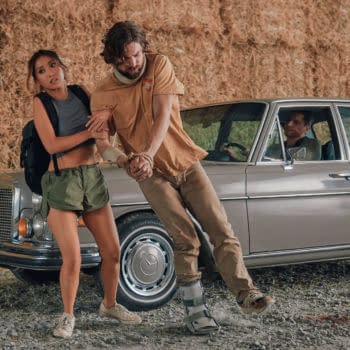
Dustin Milligan (Rutherford Falls) spoke to us about Chroma's buddy sci-fi comedy, Operation Taco Gary's, ensemble cast & favorite scenes.
Posted in: Exclusive, Interview, Lionsgate, Movies | Tagged: Turbulence
Turbulence Director Claudio Fäh on VFX Space, Influences & More
Director Claudio Fäh (No Way Up) spoke to us about the VFX, influences, and "stage play" nature of Lionsgate's survival thriller, Turbulence.
Article Summary
- Director Claudio Fäh reveals the challenges of filming Turbulence’s hot air balloon scenes on a sound stage.
- Fäh discusses using VFX and blue screens to create realistic wilderness backdrops and tension in the film.
- Influences include classics like Dead Calm, Knife in the Water, and The Aeronauts for survival storytelling.
- The cast’s performances were shaped by the tight, stage-play environment and a focus on character dynamics.
Claudio Fäh is always looking to challenge himself as a director, his actors in the most extreme circumstances, and audiences who share in his tension from his thrillers. His latest is Lionsgate's Turbulence, which follows a married couple, Emmy (Hera Hilmar) and Zach (Jeremy Irvine) as they embark on a hot air balloon ride with a mysterious stranger (Olga Kurylenko) who joins them on board, and tensions rise, putting their journey at risk. Fäh spoke to Bleeding Cool about syncing the scenic shots of the wilderness from mountains and forests to the intense action taking place on the hot air balloon, figuring out pacing, and his thematic inspirations for the film.
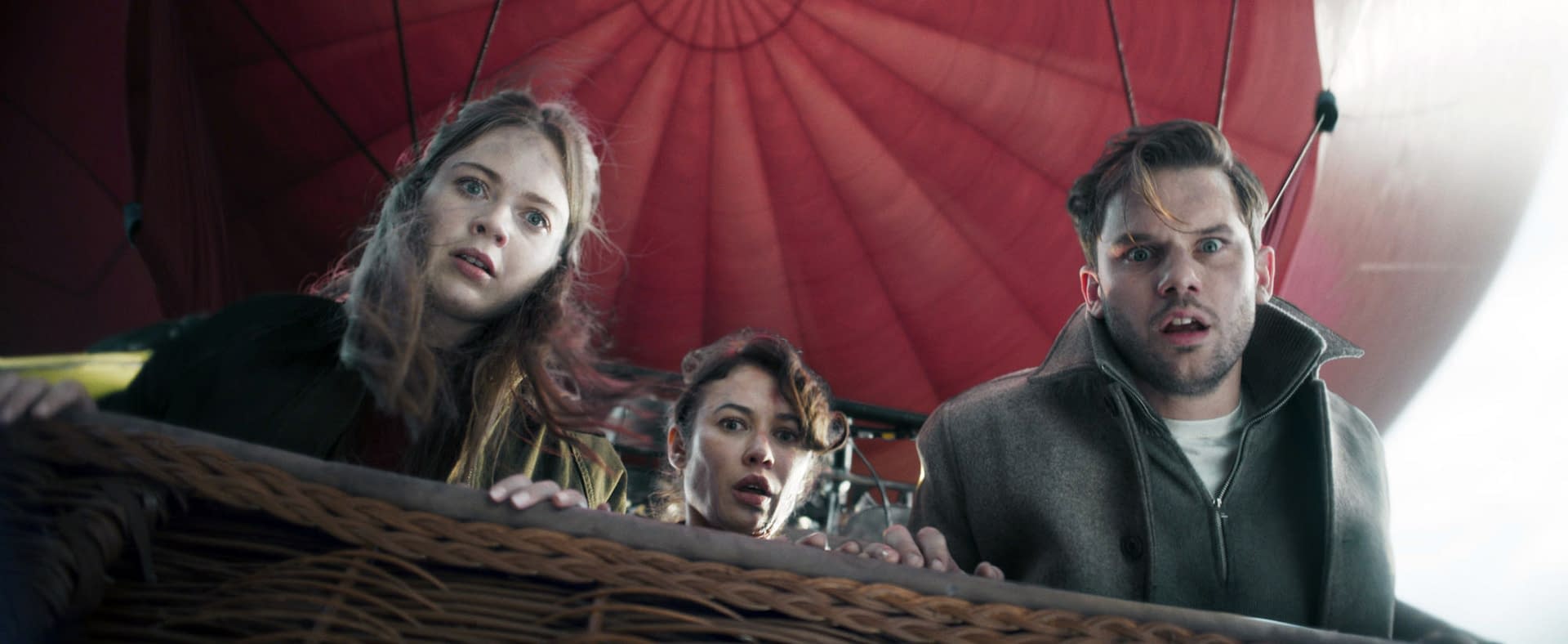
Turbulence Director Claudio Fäh on Crafting His Dangerous Journey Through VFX, Planning, and the Films That Inspired The Survival Thriller
Did you film the scenes on a sound stage as well, or did it not fit the atmosphere of the film?
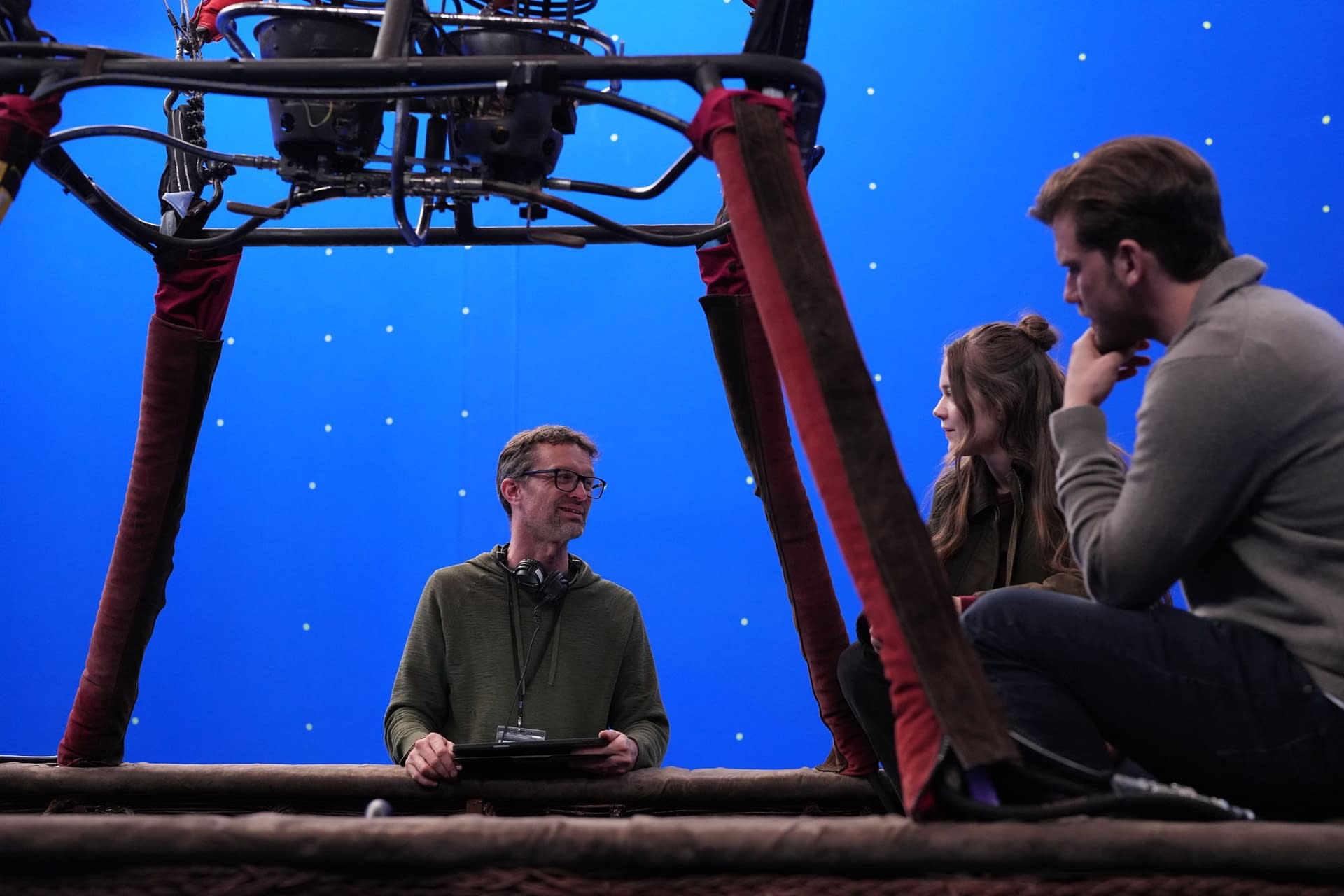
The actual scenes with them (in the hot air balloon) were shot on the sound stage. Every shot is against a blue screen on the sound stage.
What was the most difficult part about navigating in that space and those sequences? How did you get to those pacing challenges as well?
That's a great question. What you said was the most difficult thing [laughs] to figure out, pacing with the right kind of intensity, because inevitably, you find yourself in a very artificial way. You must rely on people's imaginations being in sync in terms of what it is that the blue screen is going to be replaced with, how fast we travel, what the weather is like, how high we are, how close we are to the wall, and how big it is. All that stuff matters that informs an actor's performance, so I ran around like crazy with my iPad showing the backgrounds that go in, trying to give them a sense of the three-dimensionality of it all.
Having said that, if you think about it, the movie is like a stage play between these four characters, right? It needs to work irrespective of whether they're up in the air or not. It needs to work as a story and needs to be intriguing enough for us. That is the process these actors know more about than I do. Handing it over to them, being part of that process, making it work almost like a stage play was necessary, and also the setting of the sound stage facilitated that too, because it enabled and forced us to focus on what's going on between these four characters in the basket, and not be distracted with what might or might not work outside of that. I felt so fortunate to have those four guiding us through this journey.
Were there any influences that helped in the making of this from films and filmmakers?
Absolutely, there's always a multitude of influences that I don't even know about that might be in the thing, right? Perhaps in my consciousness or subconsciousness, maybe? Specifically, I would compare it to a movie like Dead Calm (1989) by Philip Noyce, which is a remake of Roman Polanski's Knife in the Water (1962), which is all about three or four characters in that case on a sailboat. They're "not getting along that well," let's put it that way, and how that is being put through the story.
Polanski has made a number of movies like that. Death and the Maiden (1994) is another one where it just takes place in one cabin mostly, and we find out secrets about these characters, and [Ben Kingsley's Dr. Roberto Miranda] is a master at keeping things very fluid, interesting, and intriguing all the way through. I would study those and go, "Well, these are the masters. These are what we're aspiring to wherever we can," and then we looked at movies like The Aeronauts (2019), which is comparable in terms of the set piece and how they went about shooting this particular thing. We also looked closely at the movie like Fall (2022), which played with vertigo and all that, so those are the cornerstones of inspirational movies that we looked at.
The confrontational nature of Turbulence reminded me a little bit of (Joel) Schumacher's Phone Booth (2002).
I see that. That's a good one. I never thought of that. That's very true.

Turbulence, which also stars Kelsey Grammer, is in theaters.
Enjoyed this? Please share on social media!



Stay up-to-date and support the site by following Bleeding Cool on Google News today!