
 About
About 


The Future of Batman and The Joker teased today in Batman #10 by Matt Fraction and Jorge Jimenez (Spoilers)
Posted in: Comics, DC Comics | Tagged: Alan Moore, alex ross, kingdom come, mark waid, marvelman, miracleman, twilight of the superheroes
Alex Ross On Kingdom Come, Alan Moore & Miracleman
Alex Ross speaks out on Kingdom Come, Alan Moore, Twilight Of The Superheroes, Miracleman, Mark Waid and DC Comics
Article Summary
- Alex Ross dispels rumors that Kingdom Come was directly based on Alan Moore's Twilight of the Superheroes.
- Kingdom Come was conceived in 1993 as a reaction to 1990s trends, not as an adaptation of Moore's proposal.
- Ross credits Alan Moore's Miracleman as the stronger influence on Kingdom Come's key story structure.
- Collaboration issues, creative credit, and Ross's admiration for Moore are explored in candid detail.
In a recent YouTube video, Alex Ross directly addresses one of the most persistent rumours in superhero comics: the alleged connection between his 1996 miniseries Kingdom Come, co-created with writer Mark Waid, and Alan Moore's Twilight of the Superheroes.
Twilight of the Superheroes is an unpublished 1987 crossover proposal by Alan Moore for DC Comics, envisioning a dystopian future where superheroes have effectively become a new ruling class after society crumbles. Key elements include feuding houses/factions, such as the House of Steel led by Superman and Wonder Woman, the House of Thunder with the Marvel Family, a planned dynastic marriage between Superboy and Mary Marvel Jr. that could consolidate overwhelming power, opposition from Batman-led non-powered heroes and alien alliances, and a massive engineered apocalyptic battle that kills off most superpowered characters, ultimately freeing humanity from their dominance. It was pitched and paid for, but Alan Moore walked from DC Comics, and that was that. In 1995, Alan Moore agreed that I could publish the proposal in print, which led to me receiving DC Comics' very first e-mail Cease And Desist letter from DC VP Bob Wayne as a result. Alan admitted that since DC had actually paid for it, maybe they had a point. I later ran it on Bleeding Cool anyway with some Don Simpson illustrations, and DC printed it in the DC Through The Decades.
-
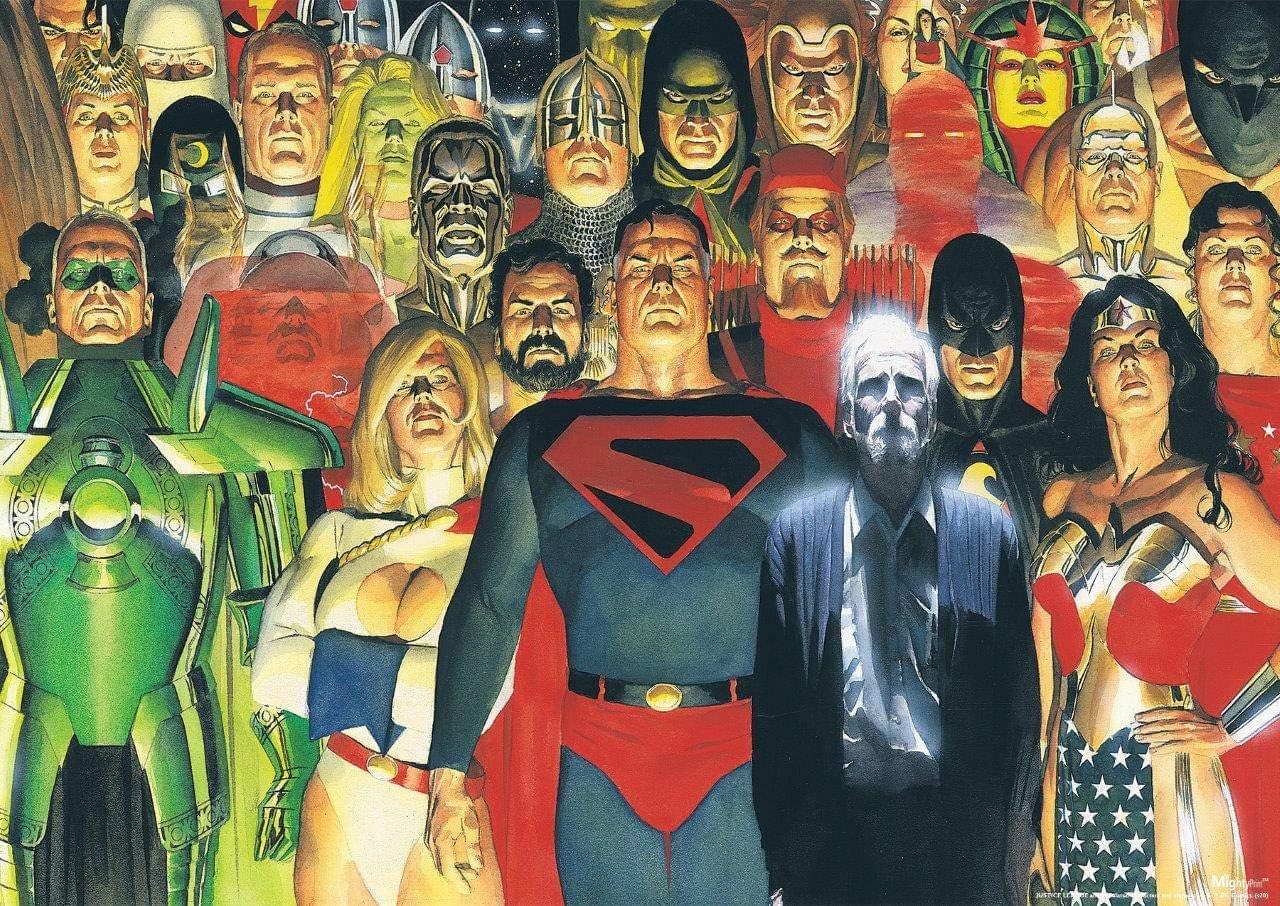
- Kingdom Come by Alex Ross
-
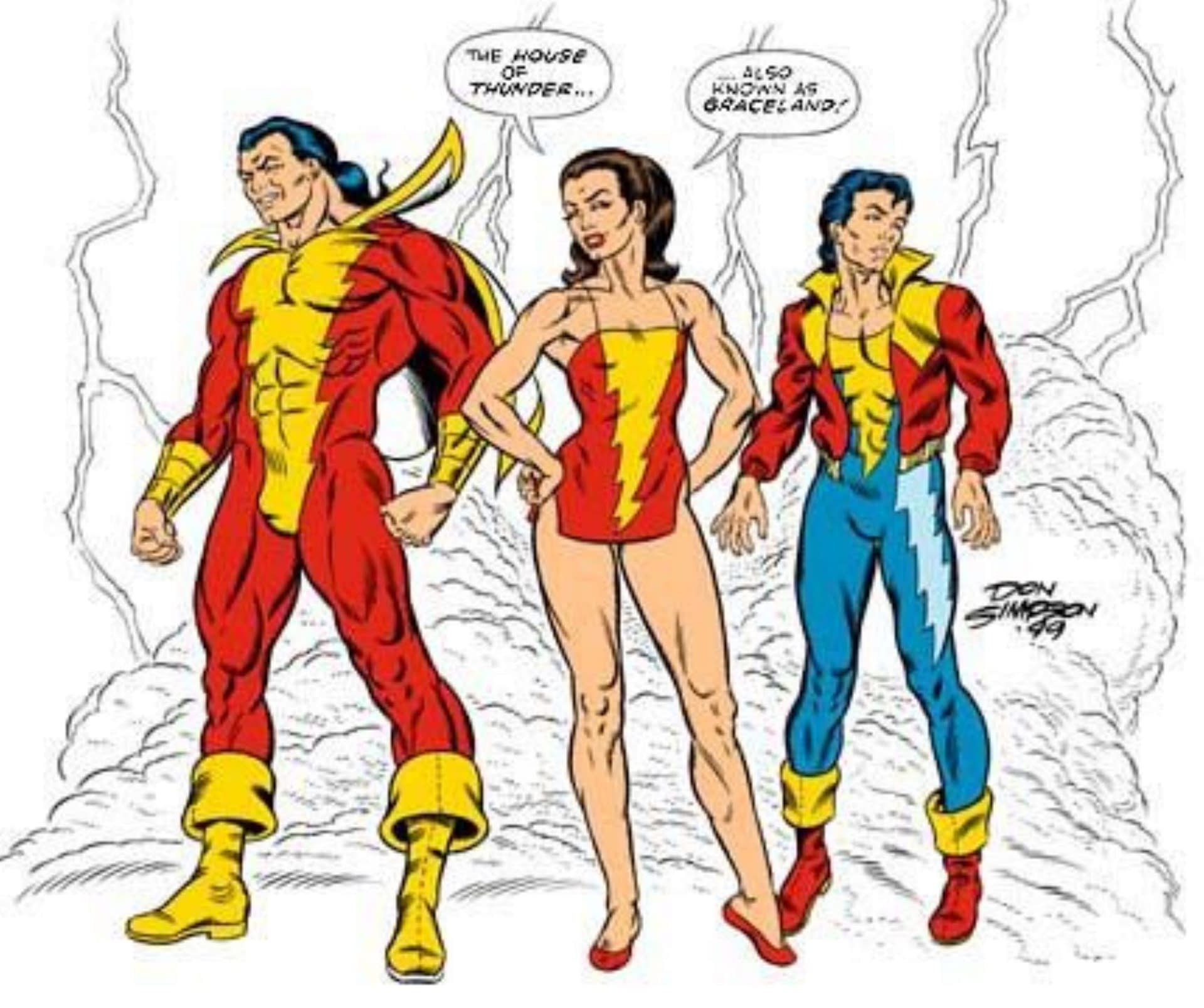
- Twilight Of The Superheroes by Don Simpson
Kingdom Come by Mark Waid and Alex Ross was published in 1996, and depicts a near-future where the classic Golden/Silver Age heroes have retired or withdrawn, while a new generation of reckless, violent "metahumans" causes chaos and collateral damage. Older icons like Superman, Batman, and Wonder Woman return amid growing public fear and a catastrophic conflict, with themes of legacy, morality, faith (heavily drawing from the Book of Revelation), and the need for responsible heroism. Captain Marvel plays a pivotal role, and there's a climactic confrontation involving Superman. Both build toward a huge, devastating battle involving multiple hero/villain groups. Twilight has warring "houses", dynastic superhero clans, and Kingdom Come features a rift between legacy heroes and aggressive newcomers, escalating into widespread destruction with heavy casualties. A notable shared plot beat is Superman facing off against Captain Marvel/Shazam in a climactic, symbolic showdown that carries major stakes for the conflict's resolution, and both focus on what happens when superheroes persist across generations, as tyrants or relics.
"There are a lot of theorised proposed ideas out there that this was a direct causal relationship between one and the other," Alex Ross explains. "And I can guarantee you there is a direct causal relationship between Alan Moore and the work that I've done in my adult life because of his influence on me as a creator. But I didn't know anything about his pitch." Alex Ross traces the true origins of Kingdom Come back to 1993, when he first developed the concept. "I came up with the initial thing that would mature into Kingdom Come to bring to DC, and I pitched that not first to DC but to James Robinson… I'd never heard of Twilight of the Superheroes."
He situates the project firmly in its historical context: the mid-1990s comic market, flooded with new characters and grimdark trends. Kingdom Come, in contrast, emerged as a deliberate response and celebration of classic heroism. Alex Ross describes it as "the first reconstructionist superhero book. It's a celebration." However, a major influence Alex Ross highlights, and one often overlooked in such comparisons, is Alan Moore's earlier work on Marvelman/Miracleman. Alex Ross credits it with shaping key structural and thematic elements. "It was loaded with influence from things like Miracleman, which had a huge effect upon the structure of Kingdom Come. I created a story to react to that. I actually was cloning that piece and putting Billy Batson into the place of Kid Miracleman so that Superman has the moment where he can either kill the human counterpart of Captain Marvel and end the story, or he can go another way."
The irony of ironies is, of course, that Marvelman/Miracleman were created entirely to replace Captain Marvel and the Marvel Family in UK reprints after the US version ceased publication. "Superman's the focus of our thing. It's more like a Dark Knight of Superman and Mark, and I were both obsessed with Superman. That's what guides us. That was our guiding star."Ross contrasts the two projects explicitly: "If Alan had made his, it would be the definitive mark on this subject, and there never could have been a Kingdom Come if he had written the final thing he had proposed… Very different projects, very different subtext except the big picture." He also reflects on a personal meeting with Moore, describing it as positive and free of any bitterness. "I've met Alan Moore, and he was kind enough to me that he brought me lunch once, and we talked about this. He didn't accuse me of any of this… I didn't get the sense that he thought anything related to a fault on my part or DC's part for making my book."
Alex Ross also addressed a separate but related frustration, credit issues with DC over plotting contributions. "I didn't get the credit that I deserved for having written a percentage of the thing or plotted it… It clearly was co-plotted. Mark wouldn't deny this… But the problem is the system comes in eventually, the printing of the book will eventually just assign 'written by' and 'art by' credits." Ultimately, Alex Ross pushes back against conspiracy narratives that insist on direct derivation. "The only people I'm at war with over this history thing are the sense of conspiracy theory that emerges in the world where clearly one thing proves actual intent when these things look like they're connected, but they're not… Somebody's going to tell a story like this. It wound up being us."
DC Comics has recently republished Kingdom Come in a Compact Comics format. DC Through The Decades: The 80s is also still available.
Enjoyed this? Please share on social media!



Stay up-to-date and support the site by following Bleeding Cool on Google News today!