
 About
About 

If you expected Knicks fans to let Trump hear it during tonight's NBA Finals Game 3, you will be happy to know that you weren't disappointed.
Posted in: Comics, Current News, Movies, Opinion, TV, TV | Tagged: Marvel Comics, Marvel Studios, opinion
Marvel Studios/Marvel Comics Fallout: Thoughts on Monday's Big News
As that huge Marvel Studios/Marvel Comics news continues to sink in, we look at what it could all mean, why it wasn't a shock, and much more.
Article Summary
- Marvel shake-up: Brad Winderbaum now oversees comics, publishing, and franchise, with David Abdo joining in a key role.
- Disney’s layoffs, efficiency push, and cost-cutting made major Marvel changes feel inevitable, even if the timing shocked.
- Marvel Comics faces sales, acclaim, and relevance issues, raising big questions about strategy, canon, and creator impact.
- DC Comics and DC Studios look stronger by contrast, and copying Marvel’s restructure would be a mistake for Warner Bros.
On Monday, major game-changing news hit both Marvel Comics and Marvel Studios: Brad Winderbaum, the current head of television and animation, was announced as taking comics/publishing and franchise under his wing. In addition, Disney Music Group's David Abdo will take on the position of Marvel's general manager, comics and franchise, directly reporting to Winderbaum. Dan Buckley, head of Marvel Comics and the franchise, is expected to stay on through the middle of 2027 to help facilitate the leadership transition (with Marvel Comics Editor-in-Chief C.B. Cebulski reporting to Winderbaum). It's pretty clear that this is a massive story that's going to keep making headlines as Winderbaum and Abdo roll out their "big picture" plans, but we've got some early thoughts on what it could all mean, why it wasn't as much of a shock as some might think, and what DC Comics and DC Studios should do in response (spoiler: nothing).
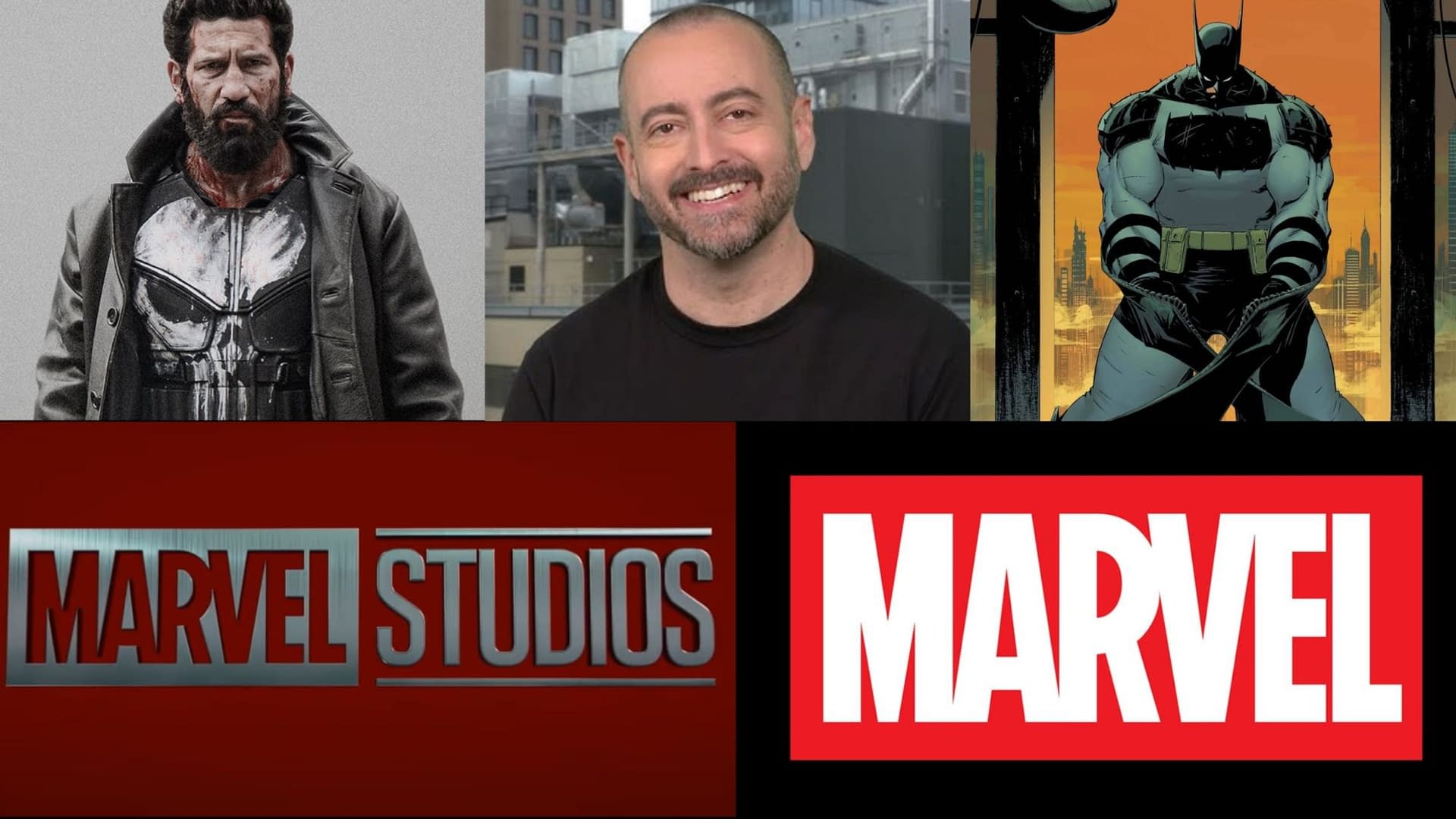
Shocking But Not Surprising: Less than a month after Josh D'Amaro assumed his new role as The Walt Disney Company's CEO, the word hit in April that approximately 1,000 positions were being eliminated – with New York's Marvel Entertainment and Burbank's Marvel Studios bearing the brunt of the cuts. A month later, during Disney's quarterly earnings call with Wall Street analysts, D'Amaro and CFO Hugh Johnston were asked by call moderator and investor relations chief Ben Swinburne if they were looking at this moment to "take a fresh look" at how the company operates and what areas had the most room for improvement. While D'Amaro spotlighted an increased focus on how AI can benefit the creative process and the company's theme parks, Johnston focused on how decisions have and could continue to impact the company directly.
"These are always difficult exercises for the organization, but let me assure you, this management team is acutely focused on this," Johnston shared. Noting that the company was eyeing a stronger financial focus on content and technology to help drive growth, Johnston said that last month's staff reductions demonstrated "a deliberate shift toward a more agile, technologically enabled and resilient workforce." As for how that could translate when it comes to additional layoffs or areas of the company feeling the hit, Johnston noted that Disney's drive to streamline and be more technologically efficient is "an ongoing exercise and a muscle we're [Disney] building."
It was clear that D'Amaro and Johnston were looking to drive home the point that Disney is looking to (in Johnston's words) "build a culture of efficiency and we want to fund growth opportunities from within the existing expense base." The CFO continued, "Across the company, where aligning structures, capabilities, and talent to what the business needs next, we're simplifying where we can while investing where it matters most, and we're using technology to fundamentally change how work gets done. We have been and will continue to look for these types of opportunities to redeploy capital, both financial and human, to areas we see driving the highest returns for shareholders."
Though the company is "focused across several areas" when it comes to evaluating any additional cuts or changes, Johnston offered one example. "One of the ones I find particularly interesting is an initiative to implement precision labor demand forecasting across our theme parks. We think that one has the potential to create a better guest experience, a better employment experience, and also better cost management for the company. So we're very excited about that," Johnston shared.
While those are two recent examples of the warning signs that were in place heading into today's announcement, they were there during Bob Iger's latest run as well. During a May 2024 earnings call, Iger made it clear that Marvel Studios would be scaling back to no more than three films and two series per year moving forward – a move that Iger believed would allow for more of a focus on the quality of what was being released and not just the quantity (though financials were also a primary factor). Noting "that's particularly true with Marvel," Iger added during the call, "We're slowly going to decrease volume and go to probably about two TV series a year instead of what had become four and reduce our film output from maybe four a year to two, or a maximum of three, and we're working hard on what that path is." Iger's comments came a year after Disney would ultimately cut more than 8,000 jobs (after initially reporting the number would be 7,000), and would continue downsizing and consolidation into 2024, 2025, and 2026.
MCU (Marvel Cinematic Universe) Meet MCU (Marvel Comics Universe): There's been speculation for some time now that Kevin Feige had been eyeing having publishing – especially Marvel Comics – under the Marvel Studios banner. Whether that's the case or not, it's hard not to see how a "perfect storm" was in place for the trigger to be pulled on the move. With Winderbaum, you have someone who's had some surprising and impressive successes during his run, taking some creative leaps (like with Werewolf by Night and Moon Knight) and flexing the MCU's animation muscle with shows like X-Men '97 and Your Friendly Neighborhood Spider-Man along the way. Was everything a hit? No, but Marvel's live-action and animated shows have kept the MCU feeling relevant, even as the cinematic side has dropped the ball (and we're including you in that, Sony). Quietly growing his power base within Marvel Studios, we're not surprised to see Winderbaum wanting to see what he can do to make Marvel Comics matter again. That said, comic creators are understandably questioning what Abdo will bring to the table, given his lack of experience in publishing.
And that's the other aspect of this. Marvel Comics is hurting on multiple levels. Because when you talk Marvel Comics, you have to also talk DC Comics – and it's a tale of two comic book companies right now. It's not just that DC is beating Marvel in sales; it's also overshadowing Marvel in the eyes of critics (just look at the recent Eisner Award nominations). Adding to an already brutal situation is that DC has a serious coolness factor going for it that Marvel sorely lacks. Scott Snyder and his team's "Absolute" Universe has broken into mainstream pop culture at such a rapid pace and with such saturation that Snyder should teach a course on marketing comics to a new generation. We've seen pop culture figures praising the "Absolute" line in interviews, and a whole lot of "Absolute Batman" logo t-shirts out there on a lot of famous folks' bodies.
Unfortunately, that kind of buzz isn't something you can manufacture. As it should be, the focus should be on the characters and titles. Discussing reducing the number of titles is never easy, because it means putting people out of work and reducing opportunities for writers, artists, inkers, and other creative talent. Unfortunately, we can't see this not being an option in play. In addition, I think we could end up with an MCCU (Marvel Cinematic Comics Universe), where the Marvel Studios live-action and animated shows continue with adventures or other stories told in comic book form. We could see something like this working, but the comics would have to actually matter (translation: be in canon) to the MCU (Marvel Cinematic Universe). DC pulled this off with 2022's comics-based Arrowverse crossover, "Earth-Prime." It will also be interesting to see whether having Marvel Comics under the Marvel Television & Animation banner will open the floodgates to more available characters. Those "Special Presentations" (like The Punisher: One Final Kill) would be a great way to test how viewers respond to the DCU's deep bench of characters. Just look at what James Gunn did with Peacemaker.
Is DC Studios/DC Comics Next? Unless someone over at Warner Bros. Discovery is looking to go scorched earth before the merger with Paramount Skydance is potentially approved, trying to fix something that's not only not broken but purring like a kitten would be righteously stupid. Gunn has made it clear in the past that he wasn't looking to have DC Comics under the DC Studios banner, and that seems to be working just fine. Along with the "Absolute" hysteria we discussed earlier, DC Comics and DC Studios have also mutually benefited by promoting each other's projects. When he's not writing, directing, and/or producing, we've seen Gunn turn his social media into a DC Comics promotional machine.
Enjoyed this? Please share on social media!



Stay up-to-date and support the site by following Bleeding Cool on Google News today!