
 About
About 



Illumination has released a new TV spot and poster for The Super Mario Galaxy Movie ahead of the final trailer, which will debut during the Nintendo Direct on Monday.
Posted in: Exclusive, Interview, Movies, Sony | Tagged: 20 years later: the bone temple
28 Years Later: The Bone Temple Interview – Nia DaCosta
28 Years Later: The Bone Temple director Nia DaCosta chats Final Fantasy, how Danny Boyle is a bonkers filmmaker, and how different lenses were used throughout the film.
Article Summary
- Nia DaCosta discusses stepping into the 28 Years Later franchise and collaborating with Danny Boyle and Alex Garland
- Insights into DaCosta's directing style, use of new camera tech, and pushing the film's intensity to new heights
- Final Fantasy influences and behind-the-scenes anecdotes add fresh layers to the filmmaking process
- Exclusive interview explores thematic juxtapositions and how DaCosta's creative instincts shaped The Bone Temple
There are a lot of expectations that fall on a director when they take over or step into a beloved franchise. For director Nia DaCosta, she was also coming into this as the second director in a two-film back-to-back production schedule. That kind of shift is bound to throw anyone off, but if the reviews and the responses are anything to go by, DaCosta not only survived but thrived. We got the chance to interview DaCosta, and we spoke about how Danny Boyle is a bonkers filmmaker, Final Fantasy, and so much more. Here is the complete transcript of our audio-only interview.
Kaitlyn Booth: You have called Danny Boyle a bonkers filmmaker. As broadly or as specifically as you want, what details have you added here to make this a bonkers Nia DaCosta film?
Nia DaCosta: In the film, the character says, 'let's turn this up to 11.' I think it's following my instinct to do that. I didn't have to try very hard. The script had all these elements that were such a gift for me, because I'm always wanting to just like push it, push it, and push it. And there's so many [other?] Filmmakers that I love, and we all find our own way to do it. I think it was really just about making sure I didn't shy away from the intensity that the script asked for.
Kaitlyn Booth: You've mentioned being a massive fan of the original film growing up. What was it like to break down and build something new and different on something connected to such a seminal film for you?
Nia DaCosta: I think what was so great about this experience and what was so unique about it is that Alex and Danny, in the subsequent 25 or so years since that movie came out, have had storied, stunning, amazing careers as directors and, for Alex, as a writer and a director. And neither of them had to make this movie, you know what I mean? They could have just left it where it was, and that would have been beautiful for everyone. But they had a story to tell, Alex had a story to tell, and I'm so glad he did. Knowing that this wasn't about anything other than the world and visiting the world the way that they wanted to makes it so compelling to me. That's what makes it feel so rewarding as like someone who's been waiting for a return to this world, to do it with them. It was really great.
-
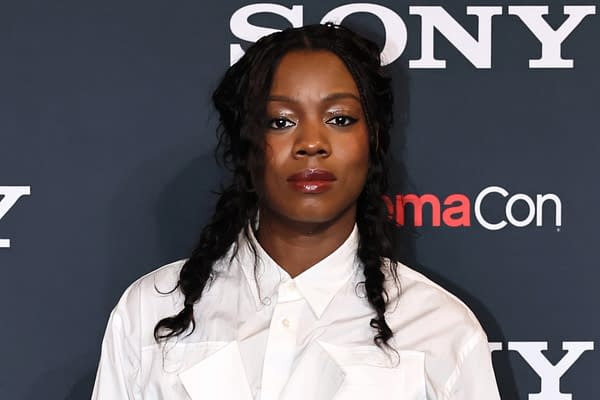
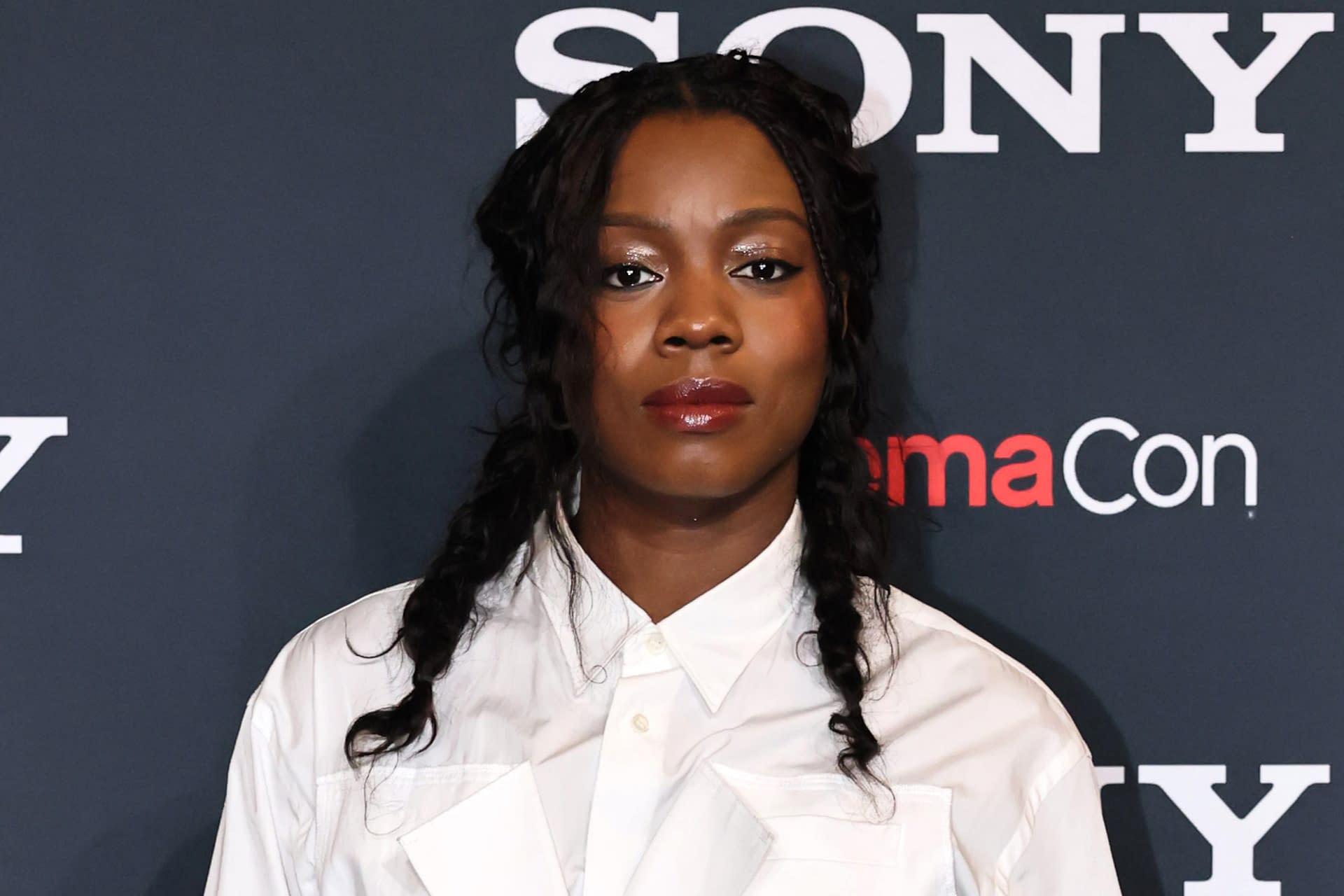
- Las Vegas, NV Ð March 31, 2025 – Nia DaCosta (director, 28 Years Later: The Bone Temple) at CinemaCon 2025 for Sony Pictures at The Colosseum at Caesars Palace on March 31, 2025 in Las Vegas, Nevada. (Photo by Eric Charbonneau/Sony Pictures via Getty Images)
-
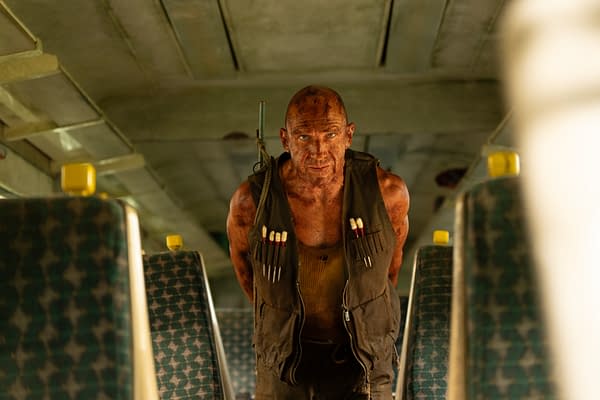
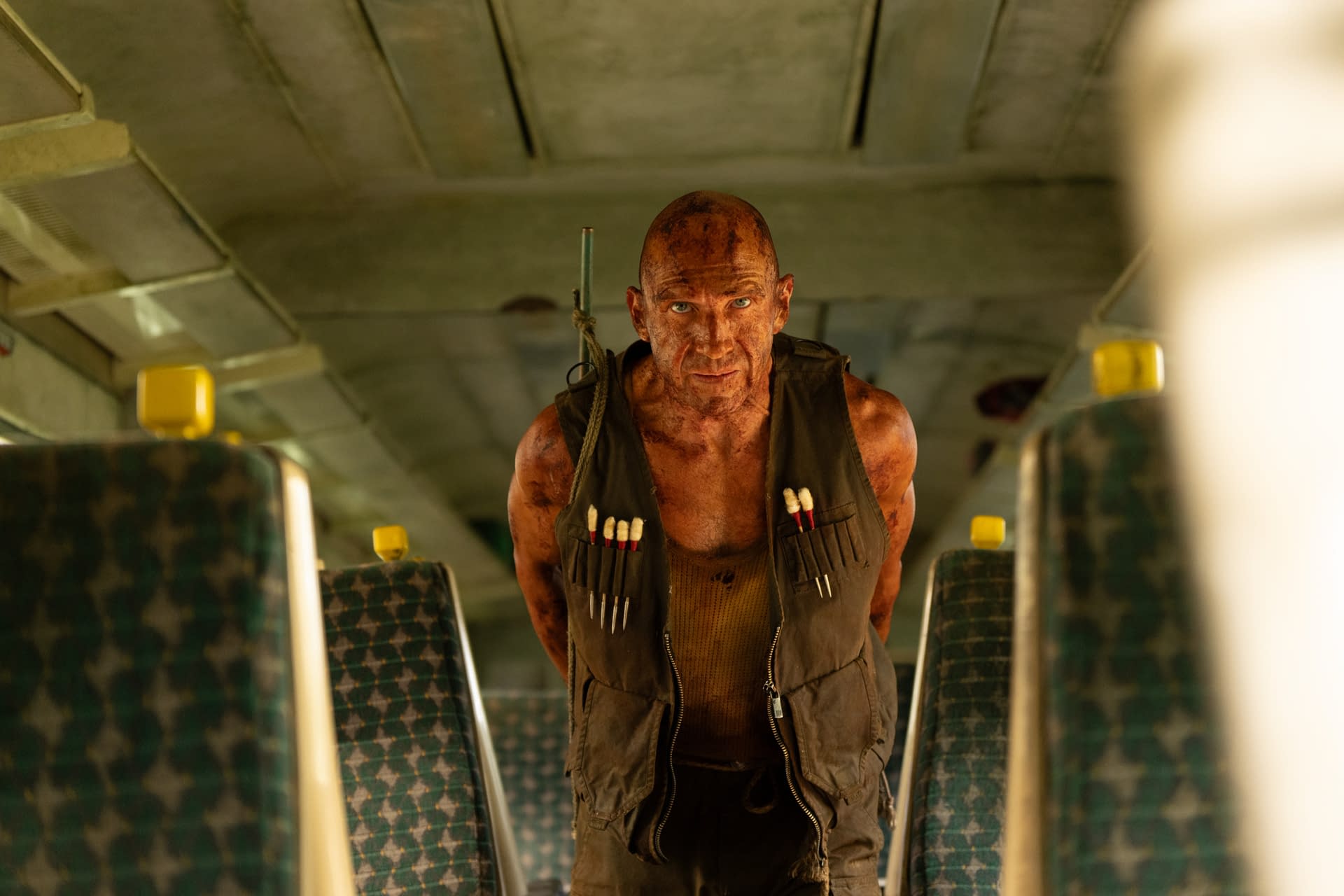
- Dr. Kelson (Ralph Fiennes) in Columbia Pictures' 28 YEARS LATER: THE BONE TEMPLE. Photo By Miya Mizuno © 2024 CTMG, Inc. All Rights Reserved.
-
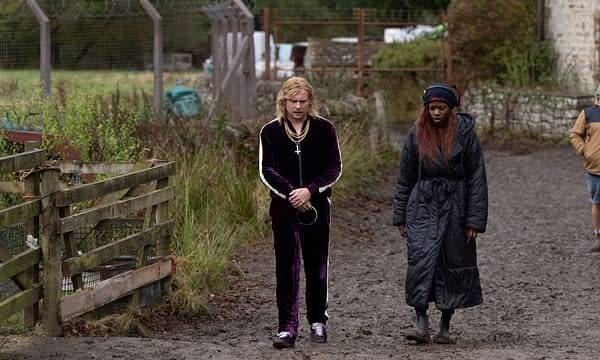
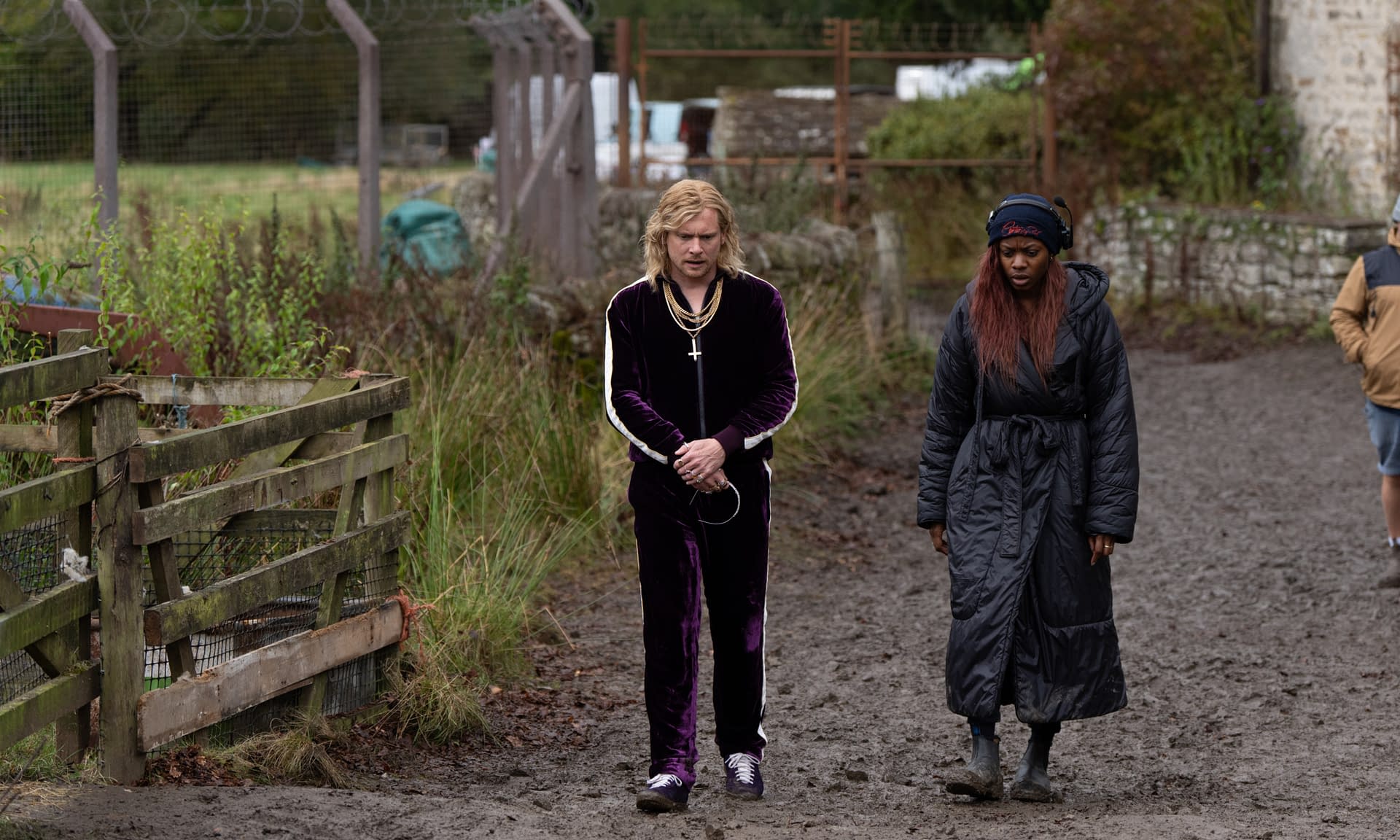
- Jack O'Connell and Director Nia DaCosta on the set of Columbia Pictures' 28 YEARS LATER: THE BONE TEMPLE. Photo By Miya Mizuno © 2024 CTMG, Inc. All Rights Reserved.
-
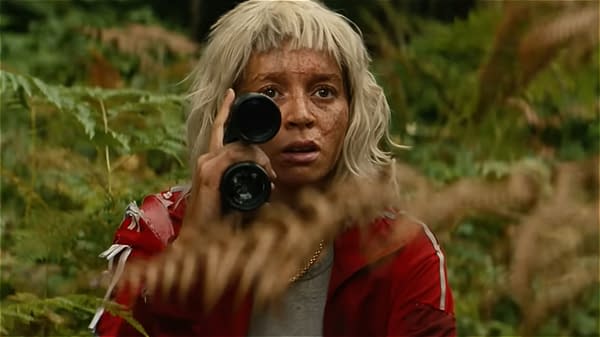
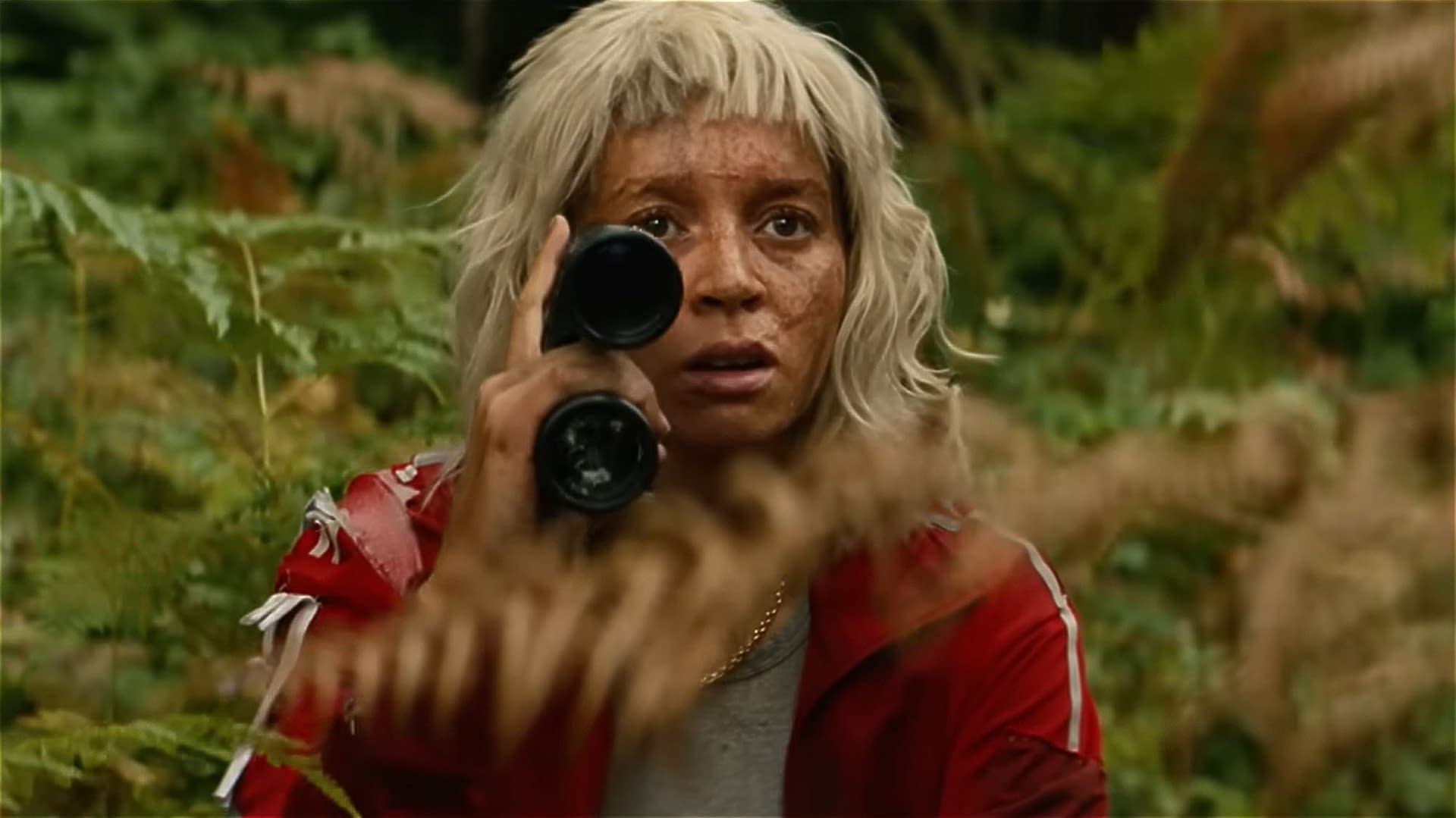
- Erin Kellyman as Jimmy Ink in In 28 Years Later: The Bone Temple, screencap.
Kaitlyn Booth: You've spoken a bit about the cameras and the techniques you use to create the contrast between the different various parts of the film. When we talked to Danny Boyle, he got really excited to tell me about this new drone that they got to use. Did you get to play with any new film equipment or gadgets on your film?
Nia DaCosta: We have the same drone operator. He's so good. It was amazing. We did some time-lapse. I don't think I've ever used time-lapse before. We use the Lensbaby, which is a lens that kind of creates a crazy image. The glass is so inconsistent, it was really fun. We modded one of our Trinity rigs, and we called it the Simón because Simon [Simon Whyman, Stunt Rigger] , our Trinity operator and steadycam operator, and that created a really unique, interesting movement. It was funny because we were sort of in beta, because we'd have to kind of keep adjusting things to make it work. And then by the end of the shoot, it was just perfect. Every job, I just love finding new ways to do what's in my head.
Kaitlyn Booth: So, I'm also a Final Fantasy girlie. I saw you mention that. Seven is also a massive, massive inspiration and has such a special place in my heart.
Nia DaCosta: That was my first one.
Kaitlyn Booth: Oh, yeah, me too, me, too, absolutely. Is there anything in this movie that is inspired by the games like there was on The Marvels?
Nia DaCosta: Ooh! Not consciously. I'm sure subconsciously somewhere, because all that stuff is always swirling around in my head. You know, maybe… I mean, in terms of like a light-haired villain–
Kaitlyn Booth: Hahaha
Nia DaCosta: –who is whimsical and terrifying. You know maybe, you know Jimmy is the Sephiroth of the 20 Years Later universe, I dunno.
Kaitlyn Booth: [giggling her face off] [Editor Note: Thanks, managing editor Mark for this description]
Nia DaCosta: That's so funny. Yeah, not consciously, but I'm sure somewhere in there.
Kaitlyn Booth: He's certainly got the parental issues, too, you know. Just daddy issues versus mommy issues.
Nia DaCosta: Exactly.
Kaitlyn Booth: So you said you're drawn to making terrible things happen in beautiful places. How did you approach that from like a filmmaking perspective? How did you handle that juxtaposition? So it clashes in the way it's supposed to, but it also, you know, comes together cohesively as a scene?
Nia DaCosta: Yeah, I think you just wanna make sure everything's vibrating at the same frequency. You have to modulate that with the performances, make sure everyone's in the same movie. Even the colors you're choosing specifically, like the color of the blood. You know, what color is that? I think blood is actually much lighter when it's fresh, lighter in life. But I think filmically it looks better and more grounded, darker. So literally to that level of minutiae. I think every decision you make, you want to make sure everything's vibrating at the same frequency. Because there is beauty in darkness. And I think finding that is really important. But also, there's beauty in the film that's very light. This relationship between Kelsen and Samson, the nature that's erupted since humans have been made slightly irrelevant. All that's really beautiful. But the reason why I think it works is because it's thematically what needs to happen for the story to make sense. And so that's sort of how I try to follow things and make sure everything's on the same level.
Kaitlyn Booth: You mentioned Alex's script, and he's such an incredible writer. Is there any element of Alex's writing, whether it's the dialogue, the story structure, or how he approaches complex films, that really inspires you as a filmmaker?
Nia DaCosta: Absolutely. What I love about Alex, he just follows his instincts. He has an incredible grasp of craft and structure and all those things, and character. Because he has an incredible grasp of those things, he'll also know how to break the rules and how to do something different and interesting. So in this film, the structure is slightly unconventional in that you spend a long time with one character, and then you spend a long time on another character, and then they come together. As opposed to, what you [usually] do is intercut the whole time. I love that he was like, 'Let's just try this.' I think for me, it makes the film really, really special.
Kaitlyn Booth: Yeah, I was just thinking back to that, and I did not even really, I don't want to say I didn't notice because that seems like it's doing a disservice to it, but it flowed so well that I didn't even notice that we were doing something so totally different.
Nia DaCosta: It was really fun to do and it was so funny because no one's really talked about that, which not that I thought anyone should or would, But in the beginning we were so nervous like 'ohare people going to be like where are those guys', you know, but actually I think you want to spend time with Kelson and Samson, you want spend time at the Jimmies, and then you really want to see them come together.
Kaitlyn Booth: Yeah, it almost elevates the tension because you don't know what's going on with each person. Were there any specific techniques that you learned or developed on Candyman? You mentioned how you're always bringing stuff from previous films over that you applied here, and then likewise, was there anything from the Marvels that you put over and brought over here, since that is like 'here's one genre of filmmaking and here's a completely different one?'
Nia DaCosta: The thing that always gets refined is process and learning how to trust myself and my instinct and also learning just how to execute on that and get it done. The thing I bring from each movie, the most important thing I have, especially from The Marvels, that I brought was my crew, like Sean Bobbitt [director of photography], my grip [key grip Jem Morton], my camera operators. B camera, like bringing them from movie to movie, and especially the people I met on the Marvels who went from that huge film into… Hedda that came out last year, and then onto this. That is so meaningful to me. So it was really nice to bring them, and that to me was the biggest thing.
Kaitlyn Booth: Would you say that having a consistent crew like that really makes all the difference when it comes to these bigger productions where you're juggling so much stuff at once?
Nia DaCosta: For sure. Yeah, the shorthand is key. And also when you really have to hold onto people who get you creatively and instinctively, because it just makes everything flow better. And it makes everything you want to do better.
28 Years Later: The Bone Temple – Summary, Cast List, Release Date
Expanding upon the world created by Danny Boyle and Alex Garland in 28 Years Later – but turning that world on its head – Nia DaCosta directs 28 Years Later: The Bone Temple. In a continuation of the epic story, Dr. Kelson (Ralph Fiennes) finds himself in a shocking new relationship – with consequences that could change the world as they know it – and Spike's (Alfie Williams) encounter with Jimmy Crystal (Jack O'Connell) becomes a nightmare he can't escape. In the world of The Bone Temple, the infected are no longer the greatest threat to survival – the inhumanity of the survivors can be stranger and more terrifying.
28 Years Later: The Bone Temple, directed by Nia DaCosta, stars Ralph Fiennes, Jack O'Connell, Alfie Williams, Erin Kellyman, and Chi Lewis-Parry. It will be released in theaters on January 16, 2026.
Enjoyed this? Please share on social media!



Stay up-to-date and support the site by following Bleeding Cool on Google News today!