
 About
About 


Spider-Noir star Nicolas Cage explains what it was about Vince Gilligan's Breaking Bad that convinced him to give a television series a try.
Posted in: Documentary, Movies, Star Trek, TV | Tagged: Beam Me Up Sulu, george takei, star trek
Beam Me Up, Sulu: George Takei on Fan Film, Star Trek Legacy & More
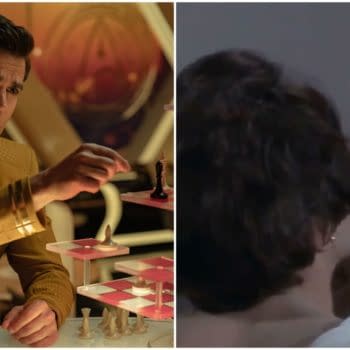
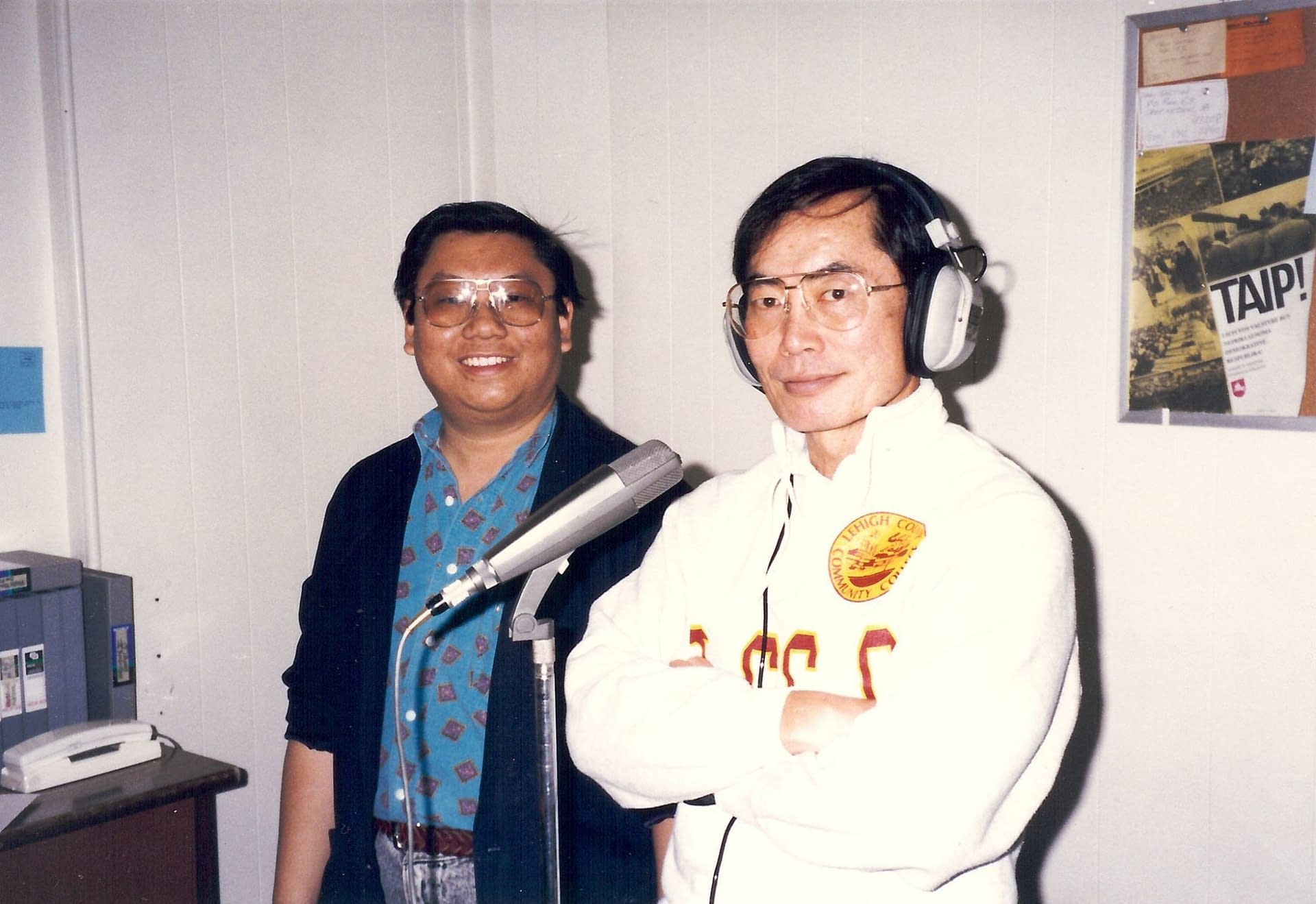
George Takei spoke with us about the documentary Beam Me Up, Sulu, and his involvement in the 1985 Star Trek fan film, Yorktown.
Article Summary
- George Takei discusses the making of Beam Me Up, Sulu and his return as Sulu in the Yorktown fan film
- Takei reflects on Star Trek's lasting impact and Gene Roddenberry's vision for on-screen diversity
- He shares insights on the evolution of fan culture from early Star Trek days to its current global following
- Takei opens up about his childhood in internment camps and the legacy of Japanese American imprisonment
There's no question that George Takei remains a byproduct of the utopian world Star Trek creator Gene Roddenberry was striving for, infinite diversity in infinite combinations, as the Vulcan adage goes. Born in 1937, the actor saw firsthand the cruelty of racism as it became policy for those all too familiar today, as he and his family were forced into Japanese internment camps due to xenophobic policies against the Japanese and Japanese Americans during World War II stemming from the bombing of Pearl Harbor that triggered United States involvement. From there, he would embrace acting with a life on the stage and on screen when Gene Roddenberry provided a golden opportunity for him to be part of an ensemble and member of an international and intergalactic crew onboard the USS Enterprise as helmsman, Hikaru Sulu, on Star Trek when it premiered on NBC in 1966.
Not only did the franchise inspire generations of fans long after The Original Series ended in 1969, but it also spawned a cinematic run for the cast spanning six films, multiple spinoffs, video games, and a deluge of fan-created content as Star Trek celebrates its 60th anniversary. During Star Trek's cinematic run, Takei decided to take part in superfan Stan Woo's student short film Yorktown in 1985 and reprise his role as Sulu and the legend spoke to Bleeding Cool about his involvement in Beam Me Up, Sulu, attitudes on fan culture then compared to now, working with directors Timour Gregory and Sasha Schneider, Roddenberry's ambitious casting for TOS, whether he consider being involved with a biopic of his life, and reflecting on the day he and his family were legally kidnapped by the US government and forced into an internment camp.

Beam Me Up, Sulu: George Takei Reflects on Joining Stan Woo's 'Yorktown' Fan Film, Getting Cast in Star Trek, and More
BC: Thank you for joining me.
You're wearing the wrong color. Red is engineering or security.
True, true. It's all I had. All right, so prior to doing Stan's film, how did your view of fan culture change before doing his film, Yorktown, and then afterward?
It grew, and grew, grew. Stan did it while we were just a television series, not a series of feature films with spin-offs now ad nauseam. This is the 60th anniversary of Star Trek. We first aired in 1966, and here it is, 2026, 60 years later. So yes, it has grown.

What was it like working with Timour and Sasha as creatives when they approached you to do this documentary?
They're both charming, engaging people. He is, to me, seven feet tall. He's lean and tall, and Sasha is, I'd say, probably 5'6" or 7, thereabouts. They're an eye-catching couple. He's handsome, she's gorgeous, and they're charming. They're very engaging people.
Part of the film tells your story and how you came up in Hollywood as an actor, and I was remembering an interview I read with actor Kal Penn, in which he spoke about an audition for Van Wilder, and he was competing with a white actor in brownface. Did you have a similar experience auditioning for an ethnically Asian role, and you had to compete with a white actor in yellowface?
Well, the idea that Gene Roddenberry, the creator of Star Trek, wanted to show is that this story takes place in the 23rd century. We're now in the 21st century, but when he was creating this show in the middle of the 20th century, it was pure, imaginative, positive, aspirational science fiction. By that time, we've come to recognize that diversity can be a great positive if we can learn to come together, respect each other's diversity, and work together. But diversity can also be dangerous, because the human animal has that ego, at all costs, greed, destructiveness, and jealousy. That quality, too.
If we can recognize the diversity that can work together and enrich our society, but mindful of the time that we also have within us, the dangerous, destructive quality, then we will live long and prosper [does Vulcan salute]. [Gene] wanted specifically people who have diverse backgrounds. He wanted to find an Asian/Asian American to play this Asian character, and he had an African woman as our communication officer. We even had a half-alien, Spock's mother was an Earthling, but his father was a Vulcan, pointy-eared, green-blooded, completely rational, and totally devoid of a sense of humor.
Again, by mixing opposites, you get people who have qualities reflecting both parents, adding to an even more diverse form of life, so he was looking for an actor of Asian background, but he had a problem with the name for this Asian character, because Uhura has an African name, Uhura, that's taken from or adapted from Swahili, "Uhuru," which means freedom. Asia, particularly in the middle of the 20th century, has not only diversity within our diverse group, but a turbulent history. Mid-20th-century Asia had wars, conquests, and colonization. Asian nations had different surnames, so he had the problem of finding a name for this Asian character. Tanaka was Japanese, Wong is Chinese, Kim is Korean, and as I said, they had this turbulent relationship in the mid-20th century. He didn't want to suggest that. He wanted to suggest that Asians find enrichment from each other and see themselves as Asians, but how to find a name that suggested Pan-Asia? So, he had a map of Asia pinned on the wall, and he was staring at it, trying to get some inspiration, and he found the Sulu Sea off the coast of the Philippines.
He thought the waters of the sea touch all shores: China, Japan, Korea, and the Philippines, and that's how he came up with the name "Sulu", suggesting all of Asia, but he cast a Japanese American to play that role. He found the Japanese first name, Hikaru, which means the shining one, and that's how the character I played was named "Hikaru Sulu."
The documentary touched upon your life, and it's a very inspirational story, and it's a constant reminder of where people came from and how far we've come in this country. I wonder if anybody ever approached you about maybe doing a dedicated biopic or a series that chronicles your life? Do you have a preference for who would play you in your real-life story?
You mean, based on me, George Takei?
Yes.
There is a writer whom [Brad and I] permitted to write that story. However, there have been television series, as well as movies, about the imprisonment of Japanese Americans during the Second World War, but those are fictional characters. I've written three books, one of which was a children's book, on my imprisonment as a child simply because we looked like this. We had absolutely nothing to do with Pearl Harbor, but Pearl Harbor was such a horrific event. Something like 2,000 people were killed, and eight battleships were sunk.
It was a horrific bombing, and this country was swept up in war hysteria. We're Americans who happened to be of Japanese ancestry who were looked at as the same as the people of Japan who bombed Pearl Harbor. We could be walking down a sidewalk as a family, and cars would slow down, and we would be called horrible names, "the Jap," or "the enemy," and drive off, or graffiti would be painted on our homes, garage doors. It was a horrible time.
I was four years old at the time of Pearl Harbor. Still, when I turned five, that was a month after President (Franklin) Roosevelt signed Executive Order 9066, which ordered all Japanese Americans on the West Coast, 125,000 plus people, to be summarily rounded up at gunpoint, and I remember that. I was five years old, my brother was four, and my baby sister was an infant, but my parents were packing, and they told my brother, Henry, and me to play in the living room. There was nothing to do in the living room. We were just standing by the front window, just gazing out at the neighborhood.
Suddenly, we saw two soldiers marching up our driveway. They carried rifles with shiny bayonets on them. They stomped on the front porch and, with their fists, began banging on the front door. My father came out to answer, and he said, "We're packing right now. I need just a bit more time," and the soldiers raised their rifles at my father's face. They said, "No, come right now, right now!" My father said, "Just five more minutes." They said, "OK, five," and so my father went back. One of the soldiers came into our house and followed my father into my parents' bedroom to keep an eye on them. Henry and I were standing there by the door. That was the beginning of our imprisonment, and I will never be able to forget the terror of that morning.
We were taken away to the horse stables at Santa Anita racetrack, where we were assigned a horse stall to sleep in because the camps were being built and three months later, we were put on a train with armed soldiers at both ends of each car and taken to the farthest east of the camps almost by the by the Mississippi River and the swamps of Arkansas. I have very real, vivid memories, not understanding why, because I learned about that later as a teenager, but I wrote three books, one of which was a children's book on the experience. There have been movies and television shows made on the imprisonment of Japanese Americans, innocent people who had nothing to do with Pearl Harbor, other than just looking like this [points to his face]. It's one of the fragile aspects of our democracy.
Tribeca and Giant Films' Beam Me Up, Sulu, which also features appearances from Christina Chong, Alexander Siddig, Ian Alexander, and Garrett Wang, is available on digital.
Enjoyed this? Please share on social media!



Stay up-to-date and support the site by following Bleeding Cool on Google News today!