
 About
About 


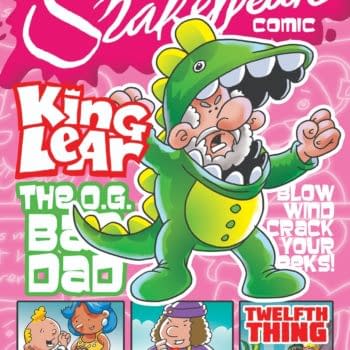
A Shakespeare anthology kids comic with Macbeth, Hamlet, A Midsummer Night's Dream, Richard III, Romeo And Juliet, King Lear & Twelfth Night
Posted in: Comics | Tagged: graphic novel, jeffrey epstein
Jeffrey Epstein's "Suicide Note" Reportedly Found In A Graphic Novel
Jeffrey Epstein's "suicide note" was found inside a currently unknown graphic novel, but this isn't the first time a piece of art has been tainted by association with heinous crimes.
It has been reported that a so-called suicide note from rape trafficker Jeffrey Epstein, allegedly written before his death in August 2019, was found by his cellmate, Nicholas Tartaglione, left inside the graphic novel that Epstein was reading. The graphic novel in question has not been named, but the note is said to have read, "It is a treat to be able to choose one's time to say goodbye. Watcha want me to do – Bust out cryin!! NO FUN – NOT WORTH IT." Reportedly, Tartaglione's lawyers verified that Epstein had written the note, but it was sealed to protect attorney-client privilege and was not made available to investigators.

It might not be the worst thing that we don't know which graphic novel it is. Several works of art and literature have been associated with heinous crimes over the decades. Most famously, J.D. Salinger's The Catcher in the Rye from 1951 was carried by John Lennon's murderer, Mark David Chapman, who bought a copy earlier that day and wrote "To Holden Caulfield, From Holden Caulfield, This is my statement" on the inside, the name of the alienated protagonist in the novel.
When making his court statement, he read a passage from the book. John Hinckley Jr, who attempted to assassinate President Ronald Reagan in 1981, had a copy of the book in his hotel room. And Robert John Bardo, who stalked and murdered the actor Rebecca Schaeffer in 1989, also carried a copy and referenced it.
Other books, such as Anthony Burgess's A Clockwork Orange from 1962, were linked to copycat crimes in the 1970s, especially after Stanley Kubrick's 1971 film adaptation, including several assaults and murders. John Fowles's The Collector from 1963, about a lonely man who kidnaps and imprisons a woman, has been connected to multiple real abductions and murders, including those committed by Leonard Lake of the Lake-Ng serial killings.
The Columbine killers referenced the film Natural Born Killers from 1994. Other movies, such as Taxi Driver from 1976, were also seen as inspired by Hinckley's attempt on Reagan's life. Music too, Charles Manson twisted Beatles songs from the White Album, particularly Helter Skelter, Piggies, and Blackbird, to start a "race war". He believed the Beatles were speaking directly to him as the "four angels" of Revelation, with the songs encoding instructions for his followers to commit the brutal 1969 Tate-LaBianca murders, including actor Sharon Tate. And serial killer Richard Ramirez drew from AC/DC's Night Prowler and left band paraphernalia at the murder scenes.
Regarding comic books, the 1950s moral panic in the USA, led by psychiatrist Fredric Wertham, saw his book Seduction of the Innocent blame crime and horror comics for youth violence, contributing to the Comics Code Authority, though evidence was scarce. But far more directly, the graphic novel Syndrome by writer Blake Leibel and current Uncanny X-Men artist David Marquez, published by Archaia/Boom Studios in 2010, was seen as a blueprint for the crimes that Blake Leibel would later commit, He was convicted in 2018 of the brutal torture and murder of his fiancée and prosecutors explicitly argued that Leibel patterned the crime after the graphic novel, which sees a neuropathologist studying evil through a sadistic serial killer, and includes gruesome depictions of extreme violence, which prosecutors argued were mirrored in the crimes. While Bleeding Cool has noted links between the Zodiac murders and certain classic comic books.
Certain crimes have brought attention to works of art, generally unwanted by the creators or publishers, even if attention and sales increase. Right now, graphic novel publishers will be praying that it won't be revealed that one of their graphic novels contained Jeffrey Epstein's suicide note. Because with all the examples above – aside from Syndrome – finding meaning or inspiration from such works for crimes that were never intended or perpetrated by the authors is meaningless. And as ever, as the details of Jeffrey Epstein's death continue to fascinate the media, we should always remember the very real victims of his crimes, including those who are a lot closer to us in the comic book industry than we may have thought.
Enjoyed this? Please share on social media!



Stay up-to-date and support the site by following Bleeding Cool on Google News today!