
 About
About 

Simon Birks and Willi Roberts talk about adapting HP Lovecraft's The Thing on the Doorstep for Top Cow Comics with an updated approach
Posted in: A&E, Amazon Studios, Books, Pop Culture, TV | Tagged: Andrew Child, lee child, Reacher
Reacher Authors on Their Writing Process, Fans Believing Jack Is Real
With a new Reacher story out, authors Lee Child and Andrew Child discuss their writing process and getting lost behind the character.
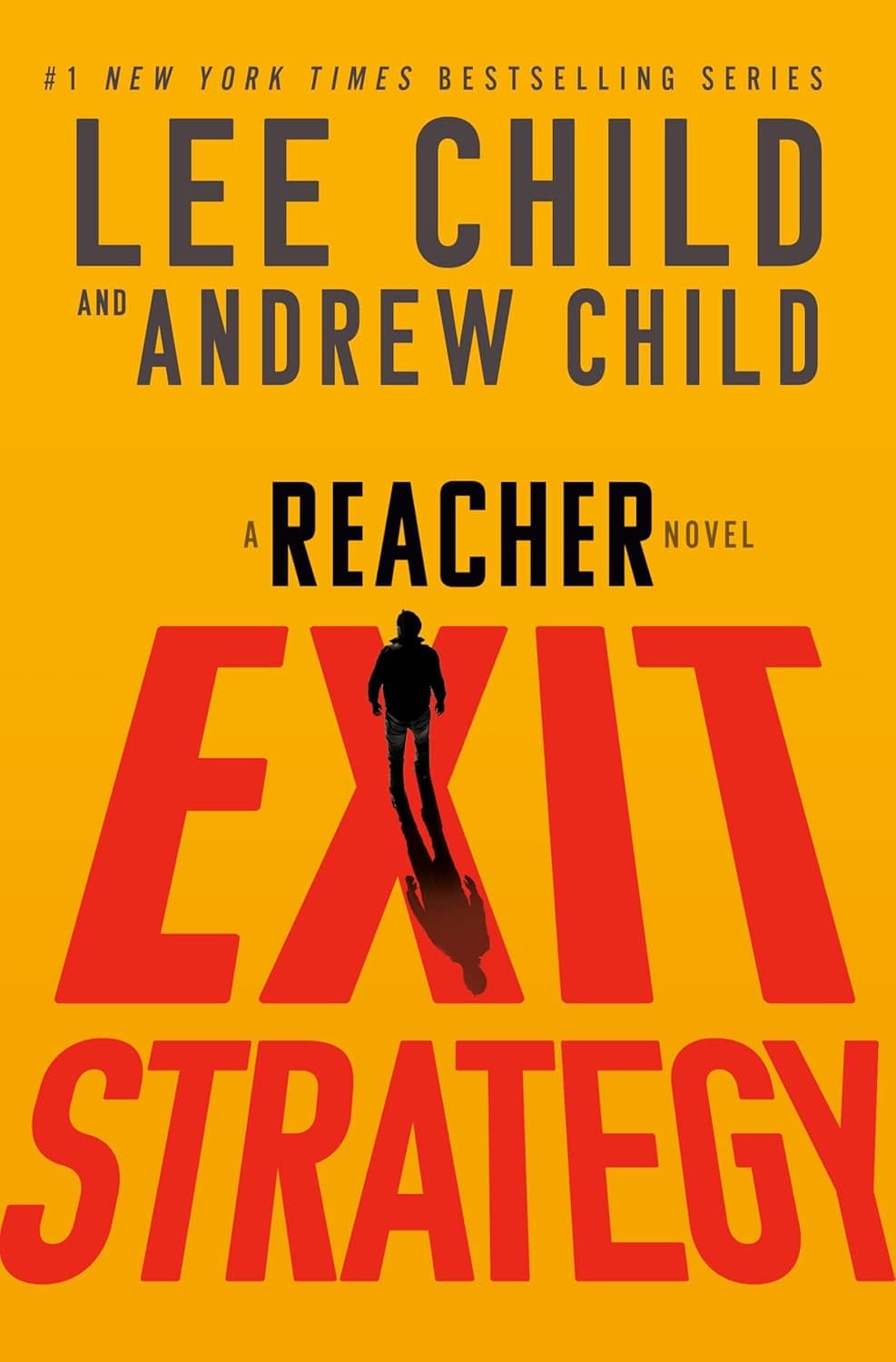
The upcoming season of Reacher may not be released until next year, but the latest Jack Reacher novel, "Exit Strategy," is out this week, as always, in November. This is the 30th novel in the series and the sixth written by Andrew Child, the brother of creator Lee Child, who stepped back from writing the books and now oversees the TV series, as well as collaborates with his brother on the plot of the new books. The brothers had a wide-ranging and insightful interview with Esquire, and one thing they talked about was how they wrote each book without a plan or outline.
Jack Reacher: No Planning Ahead
"No plan" could be a title to a Reacher novel. Like Elmore Leonard, the brothers said they would just start writing, but it's not the same as winging it or making things up as they go along. It's a lot more nuanced than that.
"I think," said Lee Child. "That we have no plan ahead of time, no outline, no fixed destination, no idea where it's going to go. But between us, we've probably read 30,000 thrillers or mysteries or suspense books, so we do have a subconscious, inbuilt database of 30,000 examples of how stories go—and they don't go all that differently one from the other. So even without an overt, front-of-mind outline, if you've been a reader all your life, you do have a solid, generic outline in the back of your brain. Of course, the character doesn't take over, but the front of your mind is constantly calibrating against this inbuilt generic outline, and you just come to understand, where does there need to be a cliff-hanger? Where is the end of this chapter? What is the punchiest way to end it? It is not overtly planned, but it is covertly planned through a lifetime of reading."
"It's a headline-grabbing thing to say," said Andrew Child. "No plan, no outline, no preparation! And that's not strictly true. You see a lot of writers who will do all of that part of the work up front. They'll have detailed notes or Post-it notes stuck all over their walls. Some people have it in a spreadsheet or whatever—Lee certainly never did that. But that doesn't mean there's no planning.
"I would call it distributed planning. The planning takes place after each scene is completed. Then there's planning that goes into it. Well, what is the next scene going to be? What is Reacher going to do? What are the bad guys going to do? What else is happening in the background? So the planning is there, but it's broken up into pieces along the way. It's more efficient. Once you're down in the weeds telling the story, you very often find that what you thought made sense from a distance doesn't make sense anymore. And if you stay wedded to that original plan, and if each decision you made originally is now one degree off, pretty soon you're heading in completely the wrong direction. It's a cumulative thing. And you can find yourself locked into this express train heading the wrong way."
"Also, if you've got an outline and you know that you've done A-B-C and now you've got to do D-E-F, if something popped into your head while you're doing C, you can't exploit it, you can't use it. And I've done that numerous times in the books, where some random thing, some of it literally just there to fill a line or a paragraph—about 20 pages later, I think, Damn, that's great. We can use this! We can go here, we can go there. I love that."
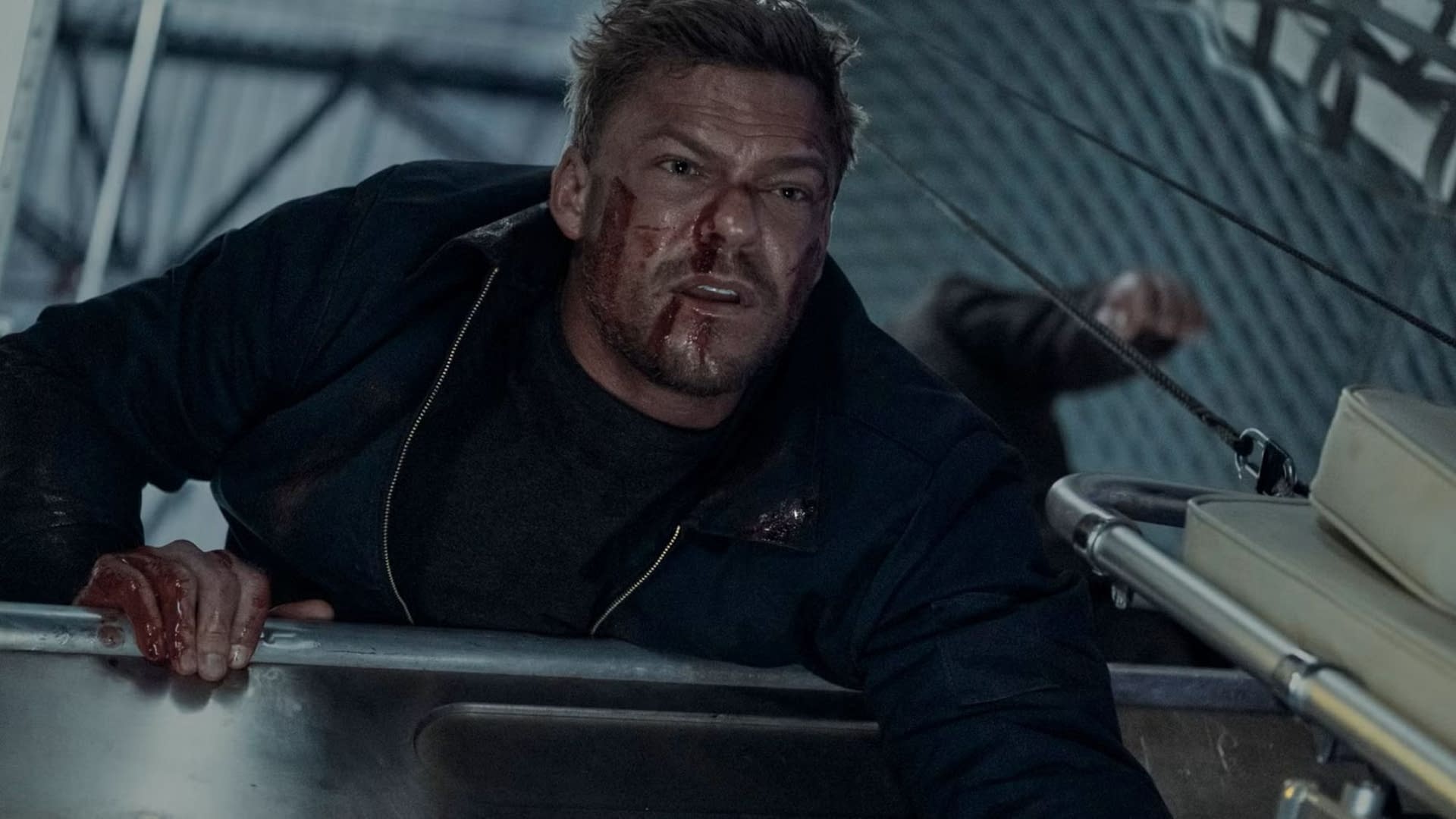
Two Minds, One Reacher
"We're very similar and we react to things in the same way," said Lee Child. "Do you remember a few years ago, there was a rash of well-dressed, prosperous Russian businessmen mysteriously falling to their deaths from high-floor windows? I read that story and I thought, Damn, that's a story. When I saw Andrew the next day, I was about to say, "Hey, did you—" And he said to me, Hey, did you see that story? We were so on the same wavelength that that was a nailed certainty that we were going to use that, which we did in The Secret. It's been a really fine collaboration. No arguments, no major differences, no corrections to be made. It's been like watching a version of myself doing what I used to do, but doing it in exactly the same way with the same result."
Lee Child also shared some interesting insights into how he views himself in comparison to his successful character. "Anecdotally, that's something I've noticed in my career. I'm a super-prominent author, sell tens of millions of books, and yet nobody is interested in anything I do except Reacher. I've tried. I've done side projects, I've done a little bit of nonfiction. I've done this and that. And nobody cares. Nobody buys it, nobody wants it, nobody reads it. All they want is Reacher," he shared.
"At the very beginning, my agent and I were talking about leaving the author's name off the book altogether. Just a Reacher story. Does it matter who wrote it? It's about Reacher. I don't like to be patronizing about it, but you meet people who think he's real," Lee Child continued. "The bookkeeper at my agency once was in an airport book stall and standing behind a woman buying my book, an old lady. And he nudged her—couldn't help himself—and said, I work for the agent that represents this author. And she said, What do you mean? And he said, I work for Lee Child's agent. And she said, 'Oh, no, this is a Jack Reacher book.' And he said, 'Well … it's written by Lee Child.' And the lady said, 'What, Jack tells him the story and he writes it down?' I was so glad about that. I don't mean to be in any way negative about this woman. That is exactly what we want. That the character lives. The author is irrelevant."
Exit Strategy: A Jack Reacher Novel is now available.
Enjoyed this? Please share on social media!



Stay up-to-date and support the site by following Bleeding Cool on Google News today!