
 About
About 
The scheduled trial in the WWE-Endeavor merger lawsuit has been canceled. No settlement confirmed. McMahon, Khan & Levesque were to testify.
Posted in: AEW, Sports, TV | Tagged: cm punk, Cody Rhodes, pat mcafee, randy orton, Wrestlemania, wrestling, wwe smackdown
WWE's Pat McAfee Problem: When the Heel Is the One Telling the Truth
WWE is turning real fan criticism into WrestleMania storyline fuel with Pat McAfee's heel turn, but what happens when the villain makes the most honest argument?
Article Summary
- Pat McAfee's WWE heel turn is making the villain's arguments uncomfortably persuasive, creating a serious narrative problem heading into WrestleMania.
- McAfee's corporate promo exposed CM Punk's anti-establishment persona as potentially hypocritical, and fans may already agree with the heel.
- WWE is recycling real fan criticism about ticket prices and celebrity saturation as storyline fuel, a gambit history says rarely pays off.
- Without a concrete authority figure reveal, like a Rock return, this meta-narrative risks collapsing into self-parody before WrestleMania arrives.
The professional wrestling industry has long understood that the most effective villains are those who operate with a kernel of truth embedded within their malevolence. A heel who lies transparently is merely a nuisance; a heel who articulates uncomfortable realities while wearing a smirk is a genuinely dangerous narrative proposition. It is this latter category that World Wrestling Entertainment (WWE) appears to have stumbled into, perhaps deliberately, perhaps recklessly, with the Pat McAfee angle on this week's edition of WWE SmackDown, and the implications for WrestleMania and the broader creative trajectory of the company deserve serious examination.
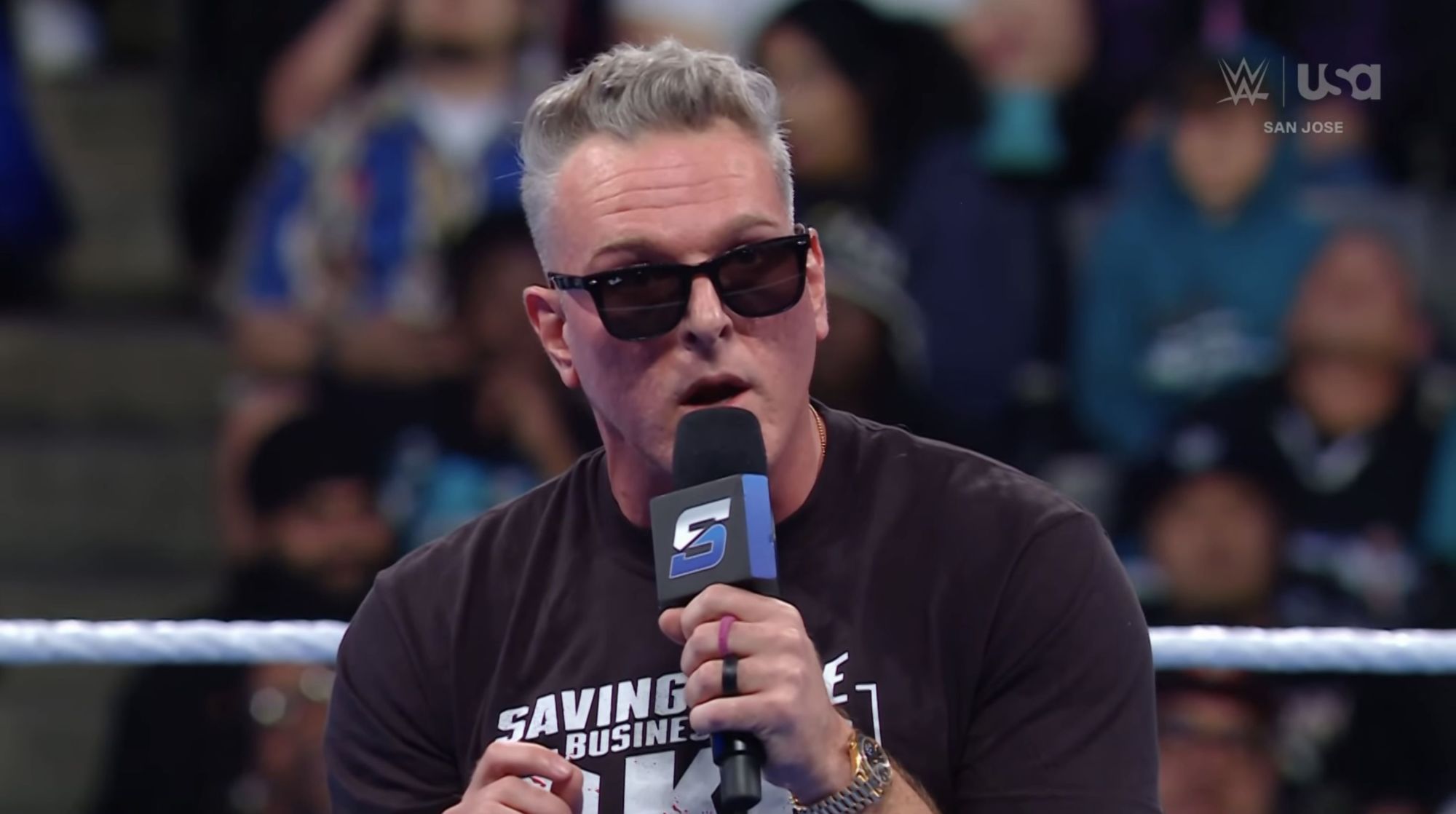
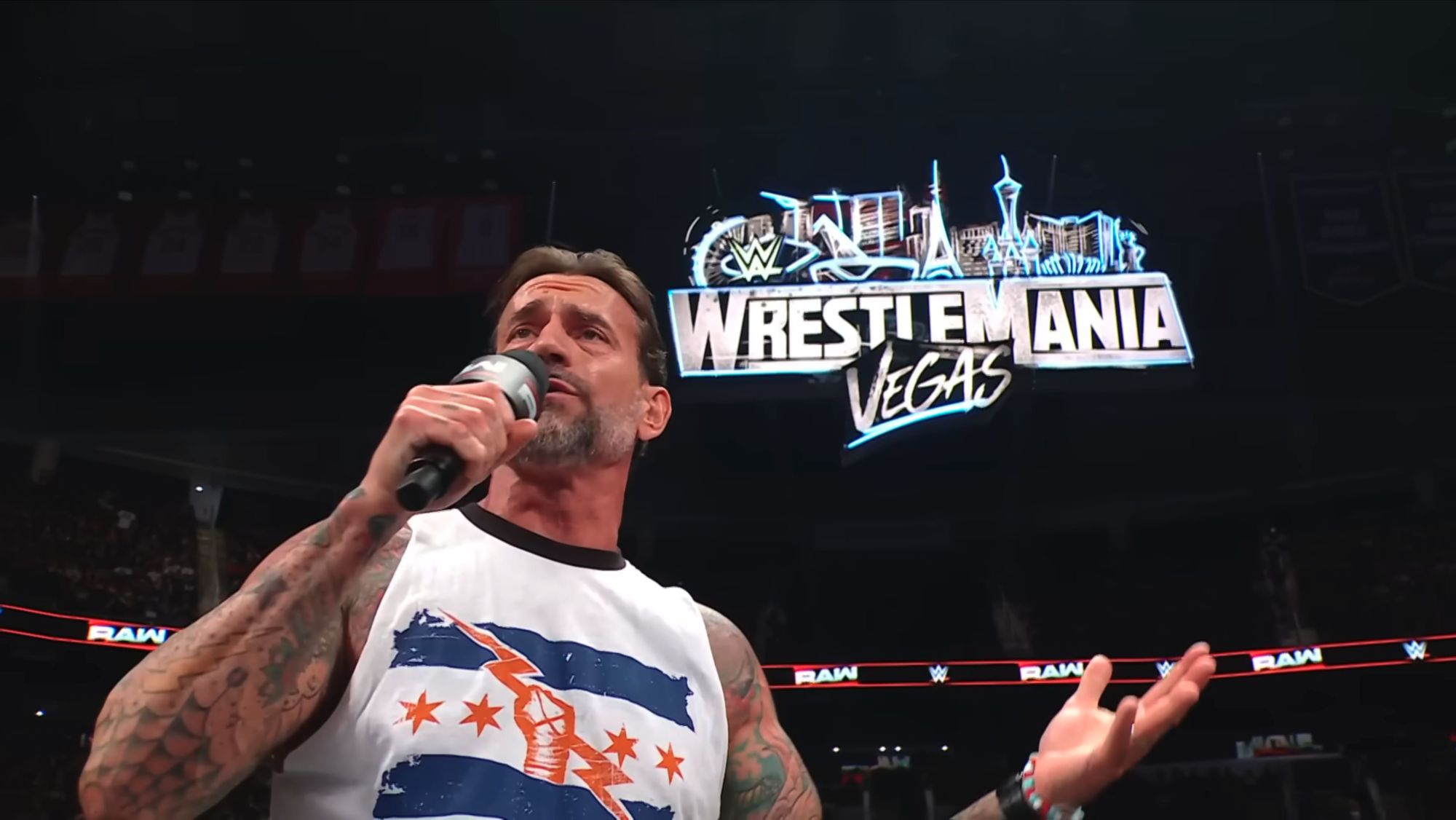
For those requiring context, the situation has escalated rapidly over the past two weeks. Last Friday's SmackDown revealed McAfee as Randy Orton's mystery co-conspirator, with the former football punter and media personality physically assisting Orton in a beatdown of WWE Champion Cody Rhodes. The angle carried an unmistakable institutional flavor. McAfee did not appear to be a lone rogue but rather someone operating with protection from above, a corporate emissary dispatched to ensure a particular outcome. Earlier this week, CM Punk escalated matters considerably with a "Pipe Bomb"-style promo on Monday Night Raw that transcended his feud with Roman Reigns and became a broadside against the WWE machine itself: ticket prices, celebrity saturation, TKO Group Holdings (TKO) executive Ari Emanuel, McAfee, and the general corporate calcification of WrestleMania as a cultural product. Punk did not merely attack his opponent. He attacked the apparatus.
And then came this Friday's SmackDown, where WWE, rather than retreating from the considerable fan backlash that had dominated online discourse throughout the week, elected to lean into the conflagration with both hands and a conspicuous absence of a fire extinguisher. McAfee took to the ring and delivered a performance that was simultaneously a heel promo, a corporate advertisement, and a meta-textual provocation. He derided Rhodes as a "fraud." He dismissed Punk as "not worth the price of admission." He insulted the live audience. And then, in a moment that blurred the line between kayfabe and quarterly earnings call with almost surreal precision, he announced a twenty-five percent discount on WrestleMania Saturday tickets, transforming himself, in one breathtaking stroke, from villainous commentator into what amounted to a smug corporate spokesman reading promotional copy while the audience booed. The segment concluded with Orton and McAfee standing tall over both Rhodes and country music artist Jelly Roll, the latter of whom has been integrated into the WrestleMania storyline as Rhodes' celebrity ally.
My brother, Chad McMahon, has already written at some length about his belief that McAfee represents the WrestleMania hero WWE needs and that Punk's promo constitutes a masterstroke of creative genius. While this correspondent respects Chad's enthusiasm and his unwavering commitment to his particular editorial perspective, the present analysis arrives at a markedly different conclusion. What WWE is constructing with the McAfee angle is not necessarily brilliant. It is, however, necessarily dangerous, and the distance between those two descriptors may ultimately determine whether WrestleMania's main event stories are remembered as daring or as cautionary tales.
The Gambit: Turning Criticism Into Content
The fundamental maneuver WWE is executing here is not, in itself, novel. The company is taking real, organic criticism of its product (complaints about inflated ticket prices, about celebrity interlopers diluting the wrestling card, about corporate influence superseding creative integrity) and folding that criticism directly into its on-screen narrative. Punk voices the frustrations of the discontented fan. McAfee embodies the corporate cynicism those fans despise. Rhodes is positioned as the champion trapped within a system that appears to be working against him from the inside.
As a structural conceit, this is not without precedent or potential. The most commercially successful period in WWE history, the so-called Attitude Era of the late 1990s, was built upon a remarkably similar foundation. Vincent Kennedy McMahon, the company's chairman and real-life chief executive, cast himself as the tyrannical on-screen authority figure, and Steve Austin became the beer-swilling, authority-defying everyman who channeled the audience's contempt for corporate power into a phenomenon that generated hundreds of millions of dollars in revenue. The formula was elegant in its simplicity: evil boss, rebellious hero, cathartic confrontation. The audience understood it immediately and invested in it completely.
The critical distinction, however, and it is a distinction that WWE's current creative architects would do well to contemplate with considerable sobriety, is that the Attitude Era version of this story possessed a concrete, identifiable, physically present villain at its apex. McMahon was not an abstraction. He was not a "system" or an "institution" or a vaguely defined "machine." He was a specific human being with a specific face who could receive a specific Stone Cold Stunner on a specific episode of television while the audience erupted in specific, tangible satisfaction. The payoff was never in doubt because the villain was never in doubt.
The Villain Problem
WWE's 2025 iteration of the "company as antagonist" narrative lacks that essential clarity, and the absence is not incidental. It is structural.
McMahon himself cannot serve as the payoff. The former chairman resigned from TKO in January 2024 amid a sex trafficking lawsuit and the attendant public disgrace. He is elderly, estranged from the company, and carries the kind of radioactive reputational baggage that makes any on-screen return not merely impractical but almost certainly untenable from a corporate governance perspective. The simplest and most historically effective version of this angle, the evil owner revealed as the puppet master, is foreclosed by reality.
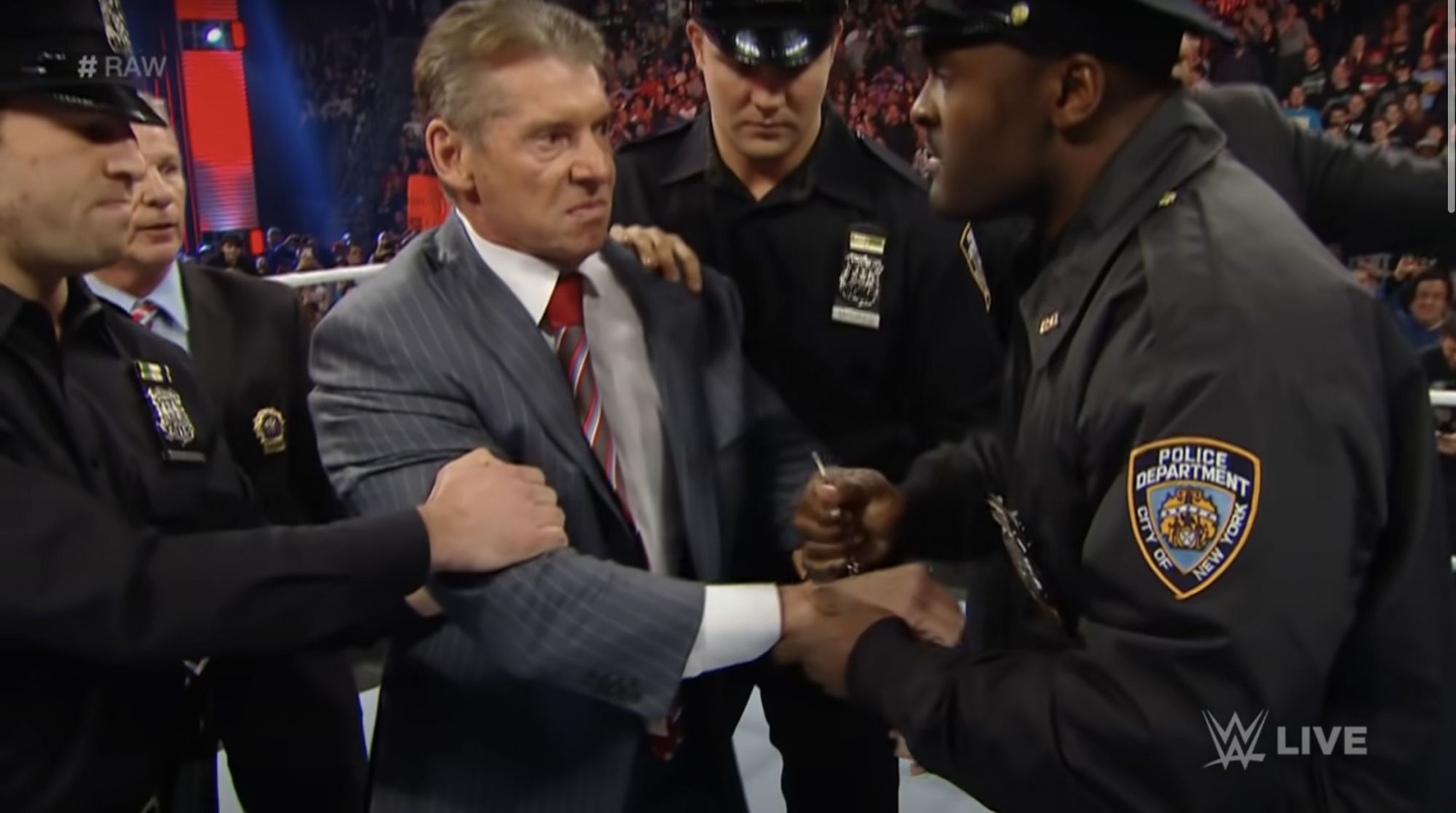
Paul "Triple H" Levesque, WWE's Chief Content Officer and the man widely understood to be steering the company's creative direction, represents a theoretically viable alternative but a practically diminished one. Levesque possesses legitimate executive authority and a decades-long history of on-screen villainy. However, he announced his retirement from in-ring competition in 2022 following cardiac surgery, which means he cannot function as the kind of physical final boss that this type of angle ultimately demands. An authority figure who can scheme and smirk but cannot take a finishing move is, in dramatic terms, a gun that cannot fire.
That leaves one obvious candidate capable of fulfilling the role with the requisite combination of executive mystique, legitimate star power, WrestleMania-caliber presence, and physical credibility: Dwayne "The Rock" Johnson. Johnson, a TKO board member and generational cultural icon, is the only figure in the current WWE ecosystem who could plausibly be revealed as the shadowy power behind McAfee's corporate villainy and deliver the kind of climactic confrontation that would justify the elaborate meta-narrative WWE is constructing. If the creative endgame involves a Rock reveal, if McAfee is merely the front man and Johnson is the architect, then the angle possesses genuine potential for WrestleMania-level payoff.
If, however, no such reveal is forthcoming, if McAfee himself is the ceiling of this storyline's ambition, then WWE is constructing an elaborate edifice of corporate villainy atop a foundation that cannot support its weight.
The McAfee Paradox
This brings us to what is perhaps the most vexing element of Friday's SmackDown and the angle at large: Pat McAfee, ostensibly positioned as the villain of the piece, is making arguments that are uncomfortably persuasive.
Consider the dynamic between McAfee and Punk. WWE's intended narrative framework is straightforward: Punk is the rebellious, anti-establishment truth-teller, the man willing to speak uncomfortable truths to corporate power. McAfee is the smug corporate stooge, the man shielding himself behind institutional protection while mocking the audience and the talent alike. The audience is meant to despise McAfee and rally behind Punk.
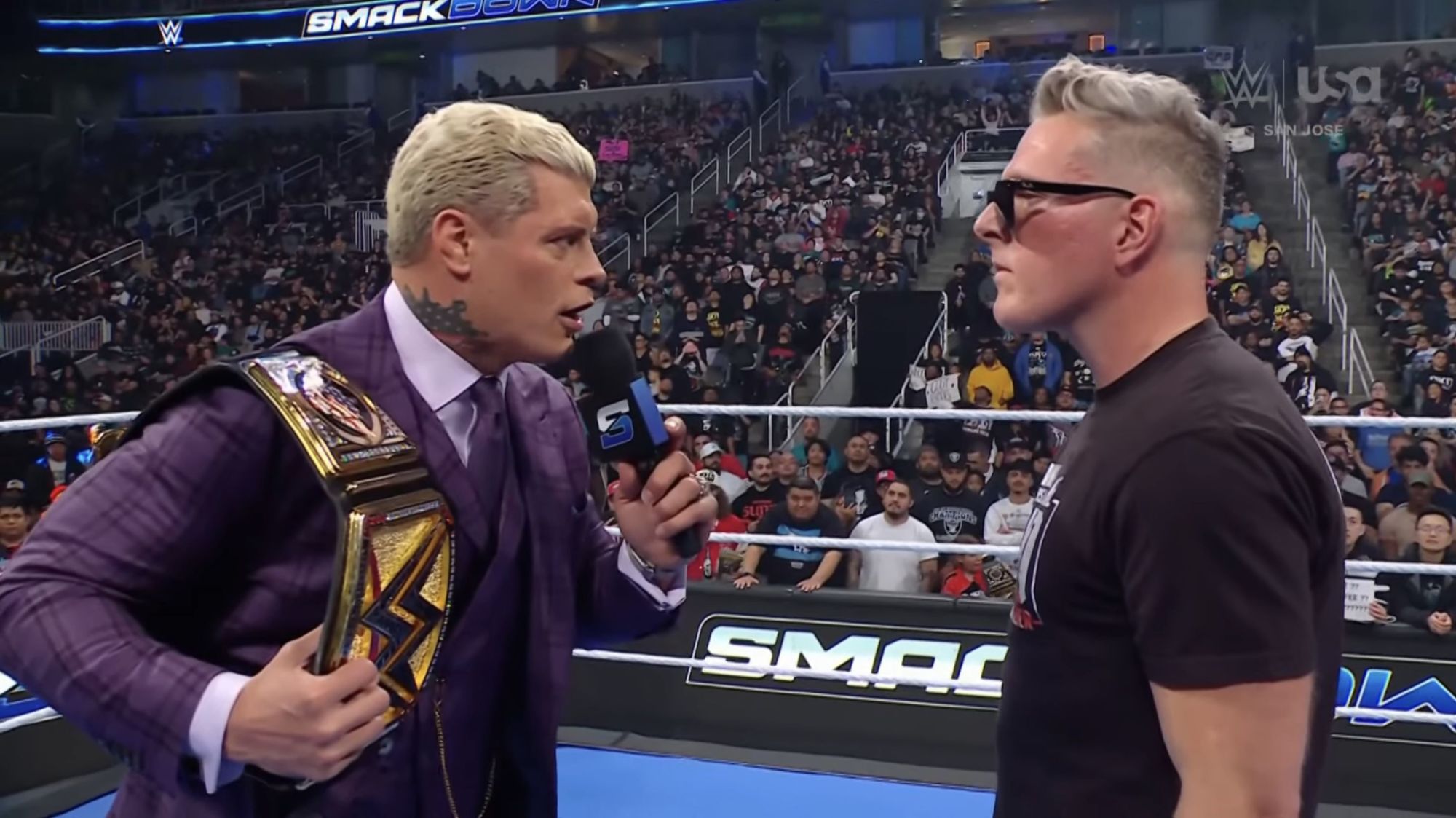
The difficulty is that McAfee's response to Punk's promo did not land as hollow heel bluster. It landed as a coherent, arguably irrefutable critique of Punk's authenticity. And the reason it landed that way is because the underlying factual premises are not easily dismissed.
Punk, in 2025, wants to be perceived as the last great anti-establishment voice in professional wrestling, the man who will say what no one else will say, who will challenge power structures that others lack the courage to confront. It is the same persona that made him a cultural phenomenon in 2011, and WWE is leaning into that iconography with evident enthusiasm. The company's own official profile of Punk continues to frame him in precisely these terms.
But the 2025 version of that persona requires the audience to overlook a considerable amount of countervailing evidence. This is the same Punk who publicly apologized in Saudi Arabia for his previous criticisms of WWE's relationship with the Saudi government, criticisms he had maintained for years as evidence of his principled independence from corporate influence. This is the same Punk who works for a company whose founding family maintains deep and well-documented ties to the Trump administration, with Linda McMahon currently serving as United States Secretary of Education. This is the same Punk who called McAfee "Pat MAGAfee" on Raw while cashing checks from an organization whose political entanglements with the very movement he was ostensibly criticizing are a matter of public record.
When McAfee paints Punk as a hypocrite, as a man performing rebellion while operating comfortably within the machinery he claims to oppose, the accusation does not register as heel fabrication. It registers as an observation that a substantial portion of the audience has already independently arrived at. And therein lies the fundamental problem: WWE has positioned its villain to articulate the most honest argument in the feud.
An audience can accept a villain who lies. Audiences have been accepting lying villains since the medium's inception. What is far more difficult to navigate, what introduces genuine narrative peril, is a villain who tells the truth. When the heel's argument is more intellectually coherent than the babyface's, the moral architecture of the story begins to erode. Punk does not look like a rebel in that exchange. He looks like a brand-managed approximation of the person he once authentically was, a corporate product wearing a countercultural costume, and McAfee is the one pointing at the price tag still dangling from the sleeve.
Historical Precedent: A Cautionary Catalog
WWE would benefit from a candid examination of the historical track record of heel authority angles in professional wrestling, because that track record, the McMahon-Austin paradigm notwithstanding, is overwhelmingly dismal.
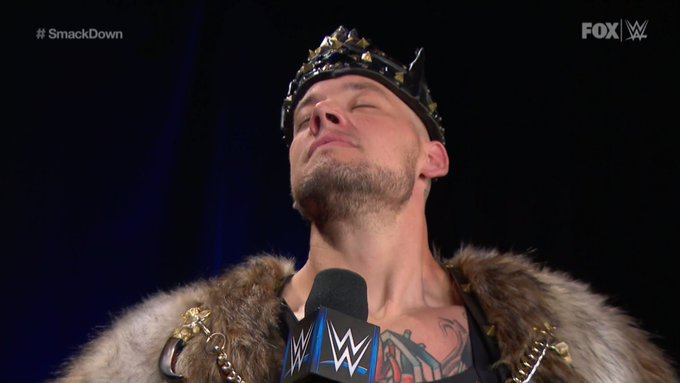
The Anonymous Raw General Manager (GM), a storyline in which an unseen authority figure issued directives via a laptop computer at ringside, became one of the most derided creative decisions in modern WWE history. As veteran performer Arn Anderson noted, the angle suffered from a fundamental absence of payoff; the audience was asked to invest in a mystery without a satisfying resolution, and the result was widespread apathy and ridicule. The Baron Corbin era, in which the former football player was installed as an on-screen authority figure on Raw, was widely recognized even at the time as an attempt to use a performer as a scapegoat for systemic creative deficiencies, a human shield absorbing audience hostility that was actually directed at the booking itself. Total Nonstop Action Wrestling (TNA) attempted its own version with Dixie Carter's heel authority figure run, which devolved into self-parody with remarkable efficiency. And the entirety of World Championship Wrestling's (WCW) final years served as a prolonged, agonizing demonstration of what happens when a promotion becomes so consumed with meta-narrative, internal politics, and self-referential booking that it forgets to tell stories the audience actually wants to see resolved.
The common thread connecting these failures is instructive: in each instance, the company mistook self-awareness for storytelling. Acknowledging a problem on screen is not the same as solving it. Writing the bad booking into the booking does not transform bad booking into good booking. It merely creates a recursive loop of diminishing returns, one in which the audience's frustration is simultaneously validated and exploited without ever being meaningfully addressed. The result, more often than not, is not catharsis but cynicism, a sense that the company is using the audience's own dissatisfaction as content while having no intention of actually remedying the underlying causes of that dissatisfaction.
There is, it must be said, a significant and consequential difference between using reality to sharpen a story and using reality as a crutch because the story is not strong enough to stand on its own merits. WWE, at present, appears to be straddling that line with the precarious balance of a man attempting to walk a tightrope in a windstorm.
The WrestleCrap Threshold
The website WrestleCrap, which has for over two decades served as professional wrestling's unofficial museum of spectacular creative misjudgment, has documented hundreds of angles that share a common taxonomy: concepts so misguided, overbooked, tone-deaf, or self-defeating that they transcend mere badness and achieve a perverse, accidental entertainment value. "So bad it's good" is the colloquial shorthand. The McAfee angle has not yet crossed that threshold, but it is flirting with the boundary in a manner that should concern anyone invested in the quality of WWE's WrestleMania product.
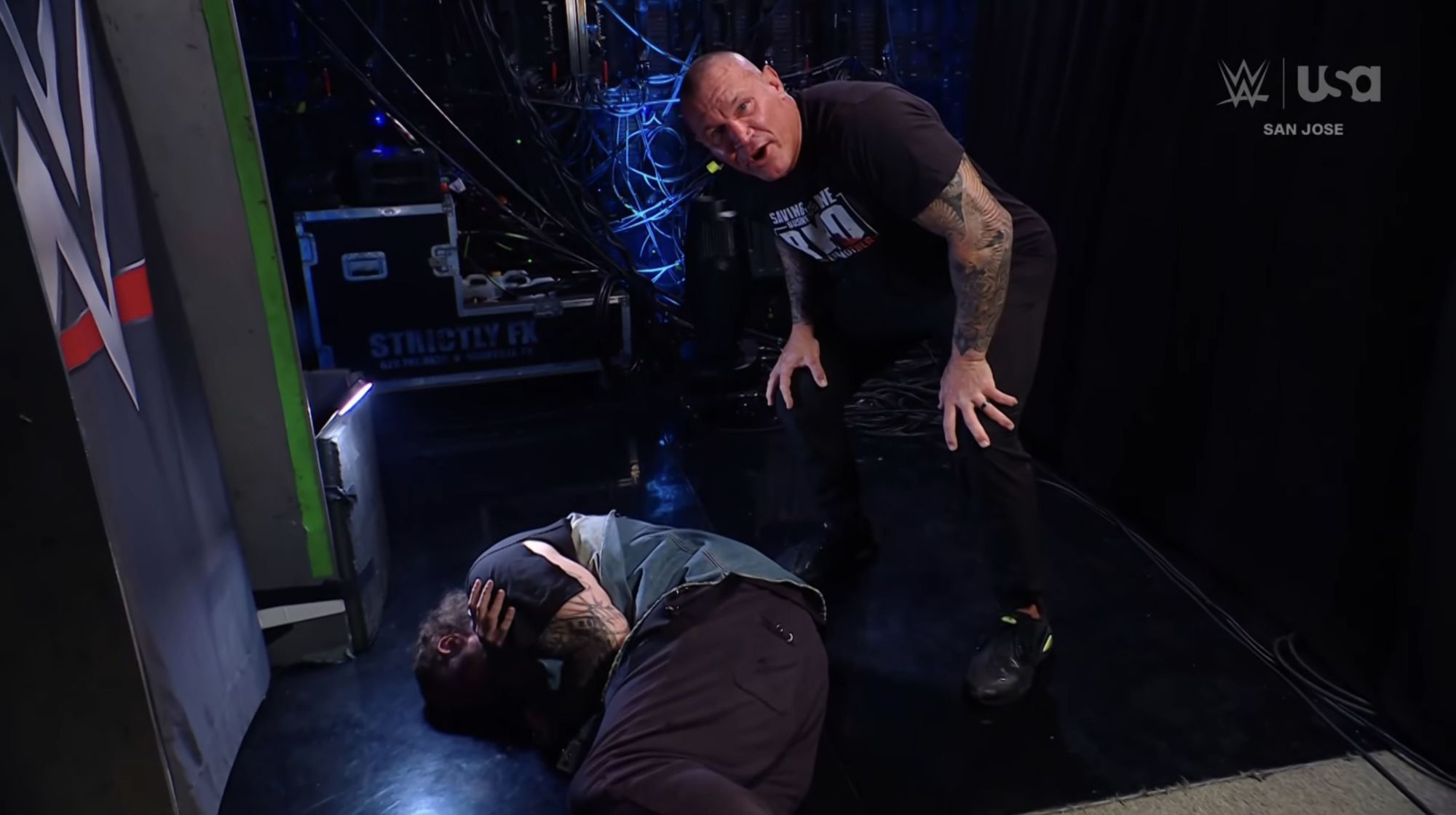
Consider the composite image: a heel commentator who insults the audience, derides the company's own champion, mocks the company's most prominent anti-establishment voice with arguments that are more persuasive than the babyface's rebuttal, announces a ticket discount on live television as though reading copy from a marketing department memorandum, and then stands tall alongside his ally over both the champion and a celebrity guest, all while operating under the implied protection of unnamed institutional forces whose identity remains conspicuously unspecified. That is either an audaciously layered piece of long-form storytelling or it is a spectacular collision of corporate damage control, meta-narrative indulgence, and heel heat generation that has lost sight of fundamental dramatic coherence. The difficulty, at this juncture, is that professional wrestling has historically demonstrated a remarkable inability to distinguish between those two possibilities until it is far too late.
As I noted in a recent examination of TNA's corporate entanglement with WWE, the current promotional landscape is one in which corporate maneuvering frequently supersedes creative integrity, and the performers and fans alike bear the cost. The McAfee angle, whatever its ultimate destination, exists within that same ecosystem, one in which the business imperatives of TKO, the political associations of the McMahon family, and the commercial pressures of a WrestleMania that may not be selling tickets at the pace the company would prefer are not merely background context but active ingredients in the story WWE is telling, whether it intends to tell that story or not.
Best Case, Worst Case
Intellectual honesty demands the acknowledgment that the best-case scenario for this angle is genuinely compelling. If WWE knows precisely what it is doing, if McAfee is the front man for a larger corporate villain reveal, if Rhodes and Punk are both ultimately positioned to confront the real power behind the interference, if the audience is granted a clear, concrete, satisfying payoff, then the company will have accomplished something genuinely rare: the successful transmutation of real criticism into legitimate dramatic heat and, subsequently, into revenue. That is the Austin-McMahon formula, updated for the streaming era, and it would represent a creative triumph.
The worst-case scenario, however, is considerably less sanguine and yet far more likely. If WWE is merely being self-aware for the sake of self-awareness, if McAfee is saying the quiet part out loud because the company believes that meta-textual acknowledgment is, in and of itself, edgy and sufficient, then the angle possesses no structural integrity beyond its own cleverness. If there is no larger authority figure reveal, no definitive confrontation between the babyfaces and the machine, no resolution to Punk's increasingly conspicuous hypocrisy, and no liberation for Rhodes from the narrative swamp of institutional interference, then the entire enterprise devolves into precisely the kind of recursive, self-referential booking that has historically preceded creative collapse rather than creative renaissance.

WWE is attempting to turn criticism into storyline heat. History teaches that this gambit occasionally produces greatness and far more frequently produces elaborate exercises in excuse-making. The more truthful McAfee sounds, the more perilous the angle becomes, because a villain whose arguments the audience secretly agrees with is not a villain the audience wants to see defeated. He is a villain the audience wants to see proven wrong, and that requires the story to actually prove him wrong.
If WWE has a payoff worthy of the foundation it is laying, the McAfee angle could be remembered as one of the more daring creative swings in recent WrestleMania history. If it does not, it is merely another heel-authority narrative marching with familiar confidence toward self-parody.
And if Pat McAfee is supposed to be the heel, WWE has a serious problem on its hands: right now, he is the one making the most honest case on television.
Enjoyed this? Please share on social media!



Stay up-to-date and support the site by following Bleeding Cool on Google News today!