
 About
About 


By Spencer Ellsworth Nick Roche got his start as a comics artist at IDW Publishing, illustrating and soon writing the company’s incarnation of
Posted in: Comics, Recent Updates | Tagged: Adam P Knave, Amelia Cole and the Unknown World, Andrew Losq, Artful Daggers, comixology, D.J. Kirkbride, dark horse, Dong Patrol, Editing, Grank Cvetkovic, idw, image comics, jamie mckelvie, kieron gillen, Monkeybrain Comics, Never Ending, Nick Brokenshire, phonogram, Popgun Anthology, Rachel Deering, Ruiz Moreno, Sean E Williams
"Music And Writing – It's the Same Thing" – The Bleeding Cool Interview with Adam P. Knave of Amelia Cole, Artful Daggers, Never Ending
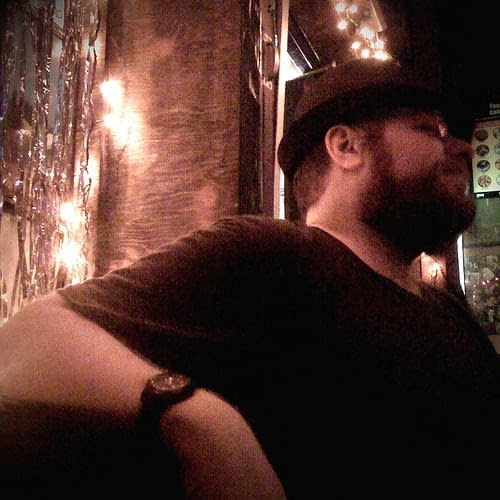 Adam P. Knave is an Eisner and Harvey Award-winning comics editor, a comics writer, a novelist, and until very recently, a New Yorker. But here in New York we'll still claim him even if he's taken off for an Amelia Cole colored house on the West Coast to apply himself to his writing. He's the writer on the all-ages comic Action Cats, part of a writing team on the all-ages fantasy-adventure series Amelia Cole, and also part of the writing team on the medieval techno spy story Artful Daggers. On top of that, Knave has a new series being published by Dark Horse starting on the 27th of November, Never Ending. His editing work includes Molly Danger and Image Comics' Popgun Anthology series, and he routinely works as an editor with new comics writers and artists to help them develop their ideas and bring them to fruition.
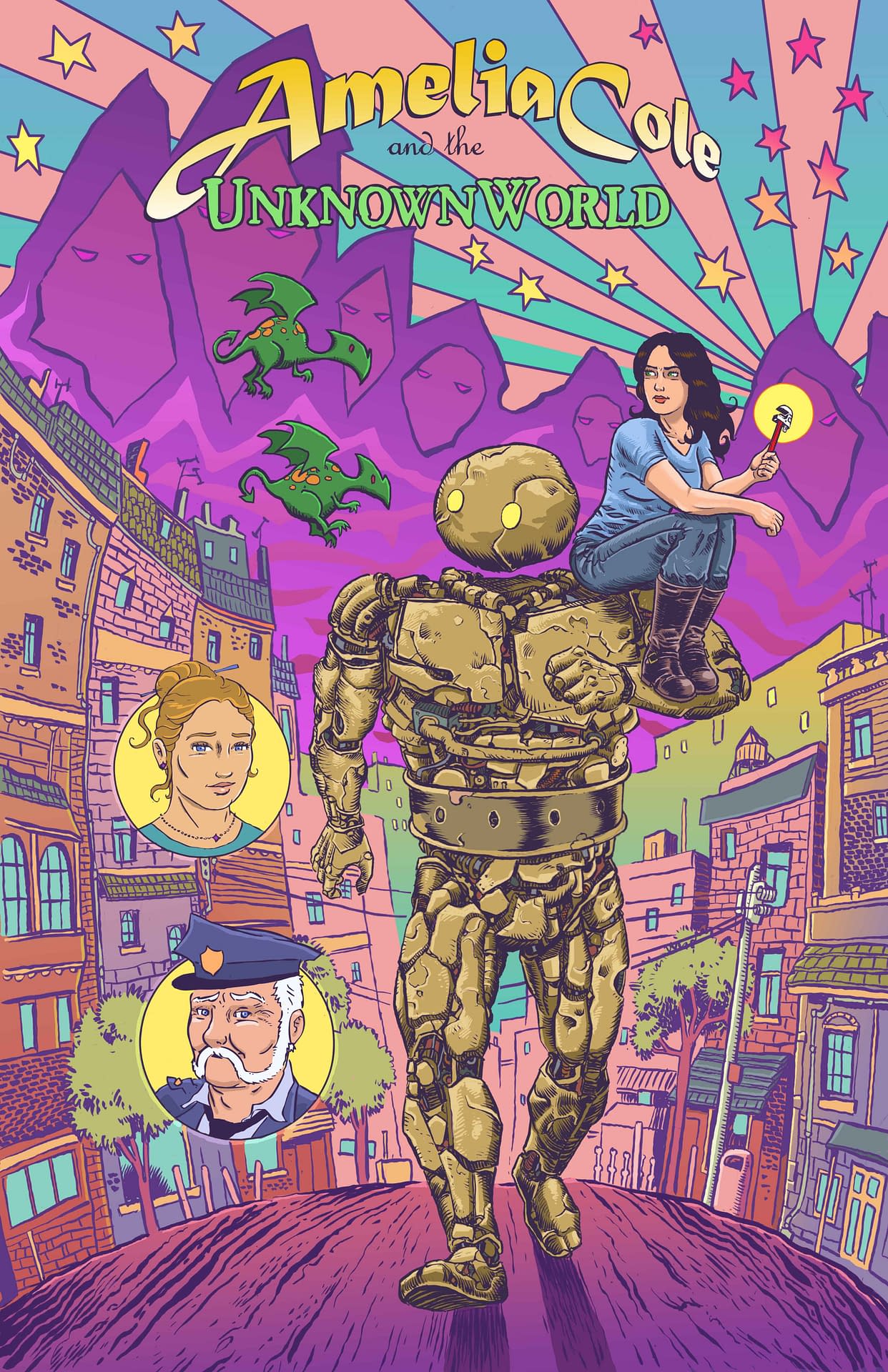 To give you an idea of the scope and variety of Knave's writing activities, Amelia Cole is written by Knave and D.J. Kirkbride, with art by Nick Brokenshire, lettering by Rachel Deering and color assists by Ruiz Moreno. It follows the life of a realistic young heroine who lives in "two worlds", each governed by technology and magic respectively. As the worlds begin to collide and havoc looms, Amelia is posed with difficult questions and choices that are bound to reach a modern reader in relatable ways. The first print collection, Amelia Cole and the Unknown World, is currently available, but 11 issues leading into the series second arc are also digitally available on ComiXology.
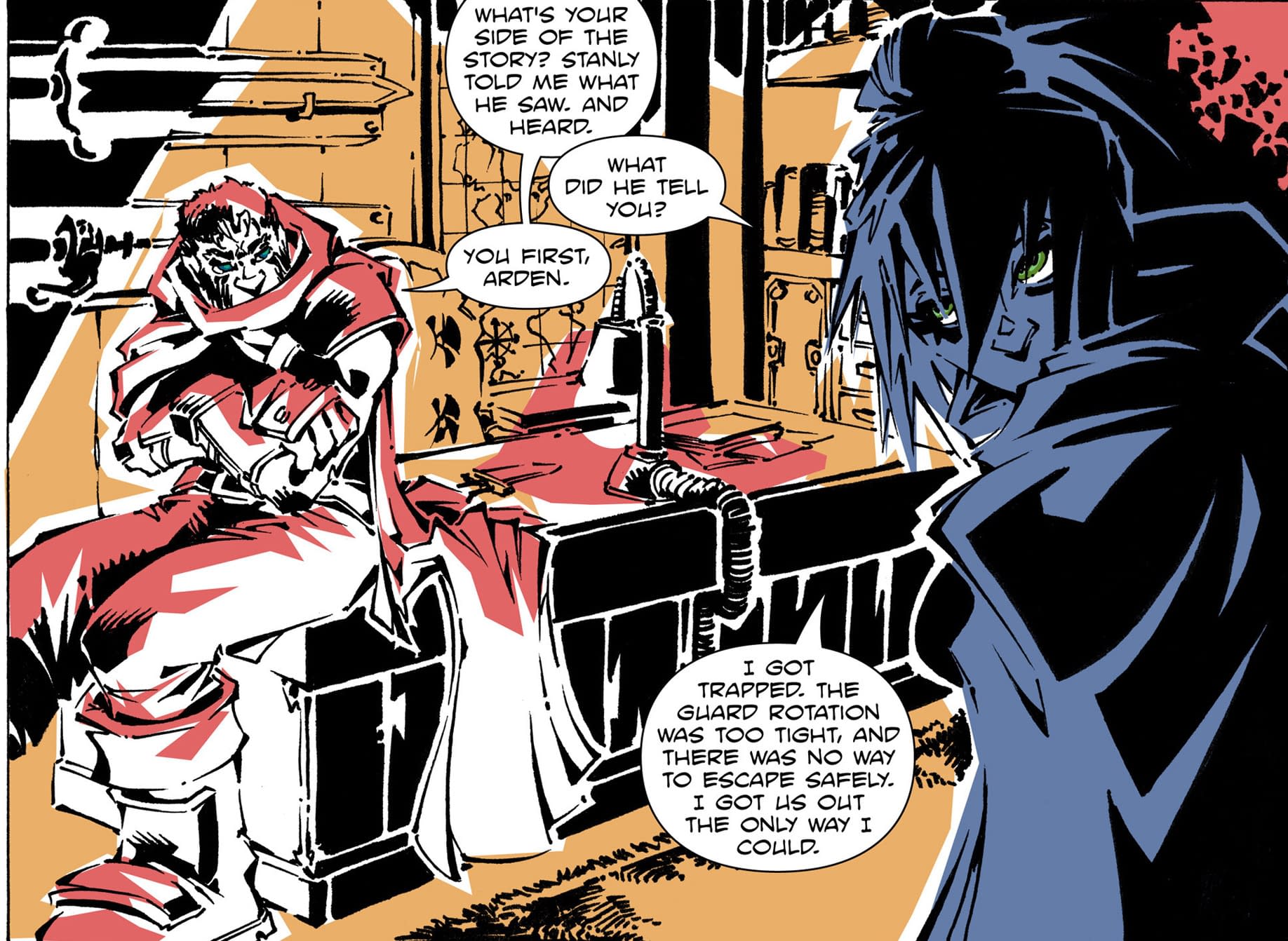
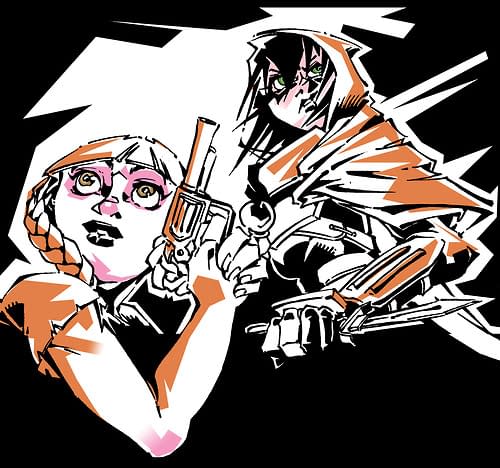
Artful Daggers is written by Knave and Sean E. Williams, with art by Andrew Losq and lettering by Frank Cvetkovic. It features the exposive change wrought by technological advancement dropped into the heart of medieval England, leading to corporate power houses in the place of monarchies, and follows the activities of spies and assassins grappling within these competitive super powers. 8 issues are available on ComiXology at the moment, with the 9th issue on pre-order, and its first collection is coming to print from IDW early in 2014.
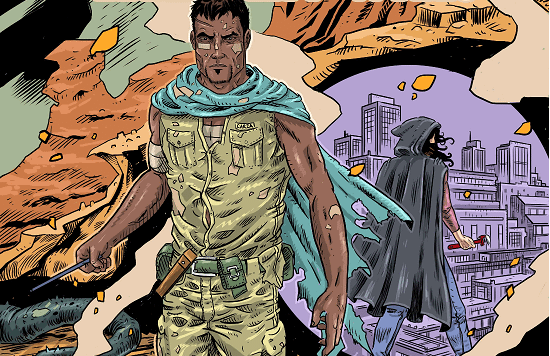
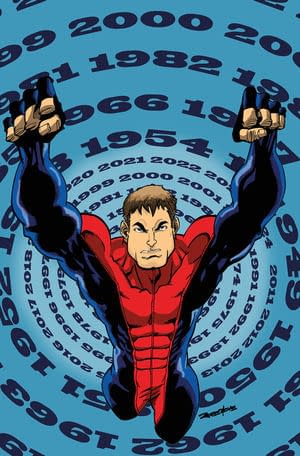 Never Ending is already on pre-order from Dark Horse and shows Knave and Kirkbride jumping into a super-hero tale with artist Robert Love. The series is not without its sci-fi elements, as a hero stuck in an unaging body seeks to find a cure for his condition and has to negotiate with foes in the process. It's tagline, "How do you kill and unkillable man?" promises plenty of the emotional engagement and plot complexity of Knave's other works so far.
I managed to catch up with Adam a week before New York Comic Con and his move west, and our interview became more of a conversation about some surprising subjects, from his literary family background to his overarching philosophy of storytelling and its intricate relationship to music. It reminded me again that observing the lives of highly productive people and listening to what they have to say about the arts is an open invitation to learn from other more experienced perspectives. There's plenty here for comics fans, and for those working on creator-owned projects to ponder, and you may well find that he confirms some of your zanier thoughts about the medium itself.
Adam P. Knave: My only rules for interviews are to be honest, even though I hate it, and don't break any laws. Those two keep me focused. I've been doing interviews for years from both sides of the table. My father was a writer and my mother's an editor and a writer.
Hannah Means-Shannon: That was one of my questions, actually, because I often find that's true, that people have some kind of inspiration in their background.
 APK: I almost got disowned because I wasn't going to major in English going to college. So when I was a little kid, you do that thing like, "Tell me a story, Daddy", and at one point when I was like 5 or 6, my father said, "You tell me one". That's how it went.
HMS: Stephen King did that to his kids! And some ended up being writers. He made them tell him stories and also read out loud to him, and they were put to work. I guess he got tired of having to be the storyteller all the time.
APK: Well, sure. Now I understand my father. I mean, you get off work and then you have to do this crap for that little obnoxious shit, I mean, come on!
HMS: How many children are in your family?
APK: There's me, I have a sister. I have a half sister. And they've both dabbled in writing but that's not their focus. I get paid to lie to children–genius!
HMS: You grew up in Manhattan? Are both your parents from here?
APK: Yes. I am essentially third generation Manhattan. Well, New York.
HMS: Well, let's keep going with annoying childhood questions. What does your family think of the fact that you're a writer?
 APK: Well, my father died before I actually started writing. And that may be a good thing. I actually stopped writing for almost a decade when I was 18 because my father sold his first story when he was 13. So the entire time I was growing up, I was trying to write shit. And you feel that clock ticking, and it gets a little further out and you feel like you can catch up. Then you go off to college–I went to Boston University for a little bit– and I was in this writer's concentration dorm, which was a horrific idea.
HMS: Wow, yeah, I don't know about putting a bunch of writers together…
APK: No! We were all psychotic and way too young to cope! The number of us who ended up drinking heavily was staggering. But because of that, you're aware of all sorts of people doing better and you're like, "Fuck it, I'm out!"
HMS: I was actually involved in a bunch of writer's clubs in college, and it's amazing how neurotic it got. Once in awhile is fine, but…even if people are being nice to each other, it happens.
APK: There's a level, if you're around a bunch of people who have whatever degree of achievement is their goal, like "I've published a story", then people start to calm the hell down. You can hang out with writers en masse and it's the best thing in the universe. But when you find a bunch of writers who are all too young to understand how the universe works, there's this mistaken idea that writers are in competition with each other. Comics is the size of Rhode Island in terms of size, and yeah, sure, there are like 10 jobs to go around, but I'm still not in competition with anyone for the job.
 HMS: What about reading growing up? What kinds of prose or comics did you like?
APK: I literally went from Dr. Seuss to Clifford Simak, an old science fiction writer, and his novel City. Which, when you read it as a kid sounds like this cool little story. Humans leave earth and they leave nothing behind but these dogs which are hyper-intelligent and are looked after by a robot–and the story sounds ridiculous as I'm telling you this–but it's amazing that Simak had the grace and skill to tell this story. It charts the progress of this society, and as a kid it's just like, "Oh, cool, talking dogs!" But when you look at it as an adult, you're like, "Oh my God, why would anyone let a child read this?" It really is just this messed up book.
But I realized when I was 18 that I'd never read all those children's books you're supposed to read. Alice in Wonderland. Peter Pan. So I started hunting them down and had that weird level again of "Why do we let children read these things?" Because they are messed up! They are deeply disturbing, which I think works better for children, because they are not going to see that level. But for me, it was just straight into science fiction. And just about everything since then. I'm that guy who gets weird looks at bookstores because I'll buy a physics text, and some history books, and some random genre stuff, and a copy of Alice in Wonderland. And they look at you and they say, "Which of these do you want gift wrapped?" And you have to say, "None".
I actually got asked the same thing once buying music. When I was buying, I believe it was some Nirvana, Tom Waits, and Bach all at the same time. They tend to get confused, but it's all good stuff, just in different directions. Music and writing are the same thing. This is my anger over Dazzler, for God's sake. It should be the biggest thing in comics. Music and comics, especially, are exactly the same damn thing.
HMS: Big fan of Dazzler?
APK: Well, I grew up reading that, so I'm a big fan naturally, but the actual comics are not that great. But the concept was way ahead of its time. And music and comics work so well. Even today you can see and think, "Oh, Scott Pilgrim". But it's deeper than that. Work through the number of artists you know who are also musicians, and there's a reason.
HMS: Yes, in my own family.
APK: You watch a TV show, you read books, you watch movies, whatever–pacing is the same animal whatever medium you're in and pacing is a rhythm. It starts that deep, where music, writing on any level, and art, are the same animal. And for some reason we keep fighting that.
HMS: I've had the longest discussions with comics people about music. We always start talking about music after awhile. That's what they want to talk about.
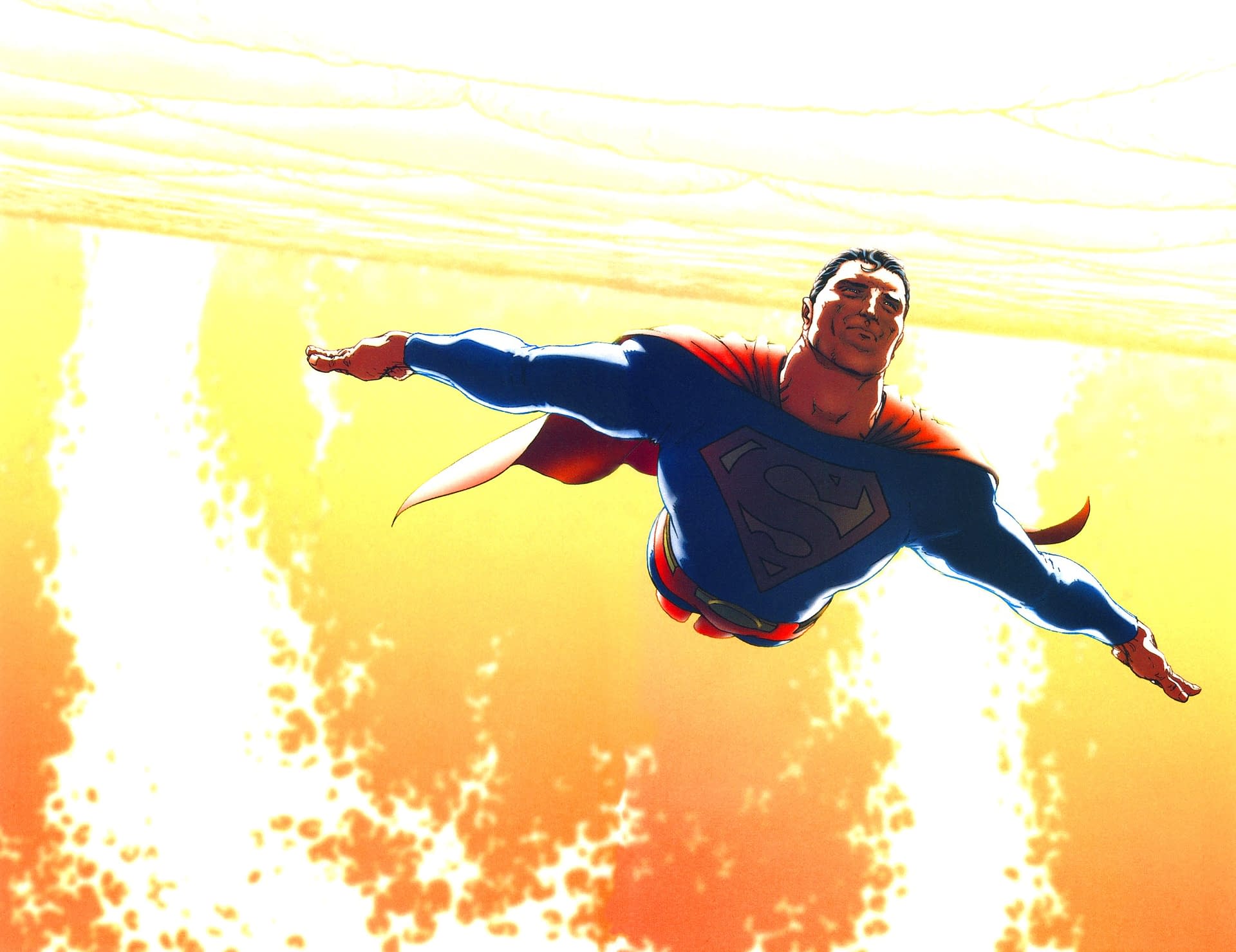 APK: Actually, me and D.J. Kirkbride–we write Amelia Cole together and a bunch of other stuff–we always discuss actually the John Williams Superman March. When All Star Superman was first coming out, DJ read the last issue and called me. He said, "Did you hear the music?" And I said, "I really did". There's that last scene where you can hear the Williams march. It's paced out to the music. So that's become one of our little watchword for things. I ask, "Does this scene make you hear the music?" Because if it doesn't, you haven't built it right.
HMS: So have you read–Phonogram?
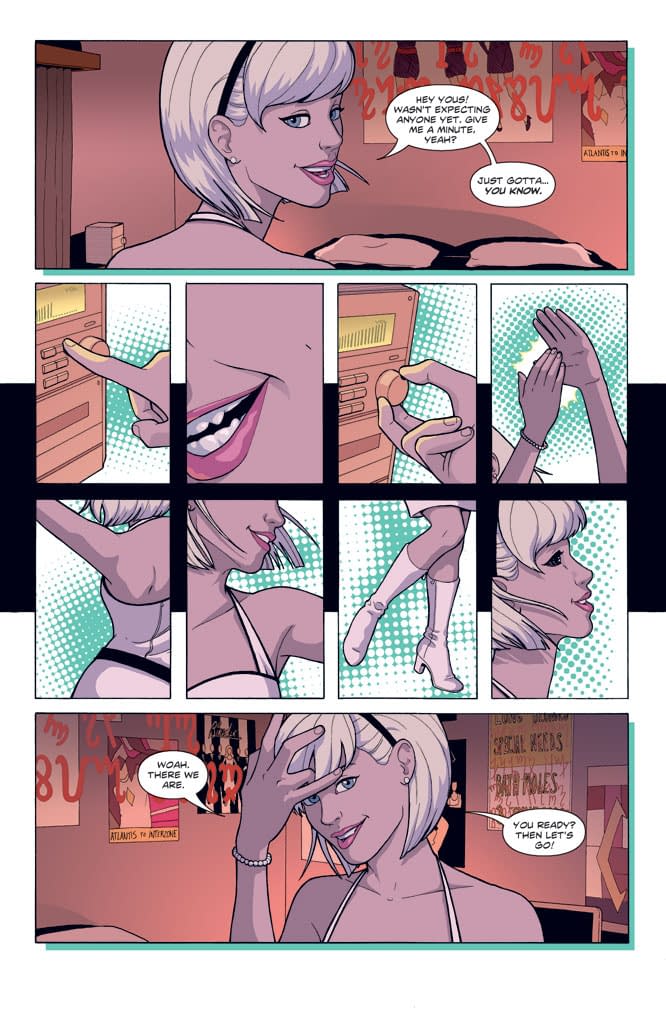 APK: (laughs) Please. Kieron Gillen and Jamie McKelvie–I routinely talk about how much I despise them because now with Young Avengers and with Phonogram, they have raised the bar unfairly every month. When the first issue of Young Avengers came out, they even said, "We want to make this like a pop single" and there all these action scenes people noticed. And I said, "You fools. Have you not noticed that all the quiet scenes are paced out to different songs?" Not just action scenes, but they just didn't tell anyone that. But you can hear it. And it's in the rhythm of the dialogue, the rhythm of the visuals. They're building these complex songs out of a compilation of 3 minute pop songs to build, basically, a rock opera under everyone's noses. John Hughes writes a rock opera by mistake and you end up with Young Avengers. So I just hate them because they are making my life harder.
Once I met J.K. Woodward of Doctor Who, Fallen Angel, to get a commission off of him at a bar. We spent four hours sitting there, mostly talking about music. We were listening to the jukebox and we kept getting distracted. So we dropped all pretext of discussing anything else.
HMS: Tell me more about writing at a young age.
APK: Well every child will write if you let them. Storytelling, in every form, from music on up, is the essential human condition. We invented fire, partially to cook things and keep us warm, but also to push the darkness back. And the minute you add fire, we start telling stories around it. You can make the case that we actually made the fire to start telling stories longer into the night. It is the essential human condition. We are storytellers, that's how our memories work. And so I think that everyone does that at a young age, but most of us get it beaten out of us. My family was twisted enough that they beat it back in. So in one form or another, I've been writing most of my entire life. But I've been studying storytelling and writing, for far longer than I was actually writing, it fascinates me.
HMS: I almost always find myself asking that question in interviews because I want to know the answer myself, "Why storytelling?"
 APK: Well on some levels it's the answer to everything. And if we ever fully answer that, we're done. We're finished. So, it's kind of dangerous, but a worthy danger. Storytelling is what humans do that nothing else on earth does for us. Even Dolphins seems to be telling stories. And like with music, it's like helping people find the right notes for what they already hear. And that's part of my work as an editor, finding what that note is.
HMS: That was another topic I was going to ask you about, your philosophy of editing, and why you work as an editor also.
APK: For me, editing is one of those things where you get to get inside someone else's head and because, as a writer, you're always trying to find that next note, that melody, a music in your head that is that story that you're trying to tell. You may you think you know what it is and there's an intrinsic message you're trying to put forward. But that translation from some part of your brain to your language center to the physical process of writing it down or even speaking it out loud, breaks down in at least three different places. You can never actually write the story you think of in your head. It is physically impossible. Joyce might have done it, but if you've ever read Joyce you'll understand why you may not really want to.
It's kind of like being a heroin addict. You are always chasing the dragon. You know you will never get there but you can also never stop trying. And from an editing standpoint, my entire job is figuring out what the noise in a client's head was and then helping them get as close as humanly possible. It's a hell of a lot of fun. It's solving a big puzzle. If you start from the standpoint of storytelling, you're enabling people. And that may sound too noble, and like bullshit, but it keeps you going at 4 in the morning. So I'll take it.
 And part of it is, you have to love the research. I am not the best writer on earth. I am not the best editor on earth. I know some great editors who are far better than I will ever be, but I put in the work. I am constantly studying. Because if you're editing, you have to talk writer, which is fine, but you also have to talk penciller, and inker, and colorist, and letterer. And know how to do all of their jobs even if I can't do it, I need to be able to talk to them on their own level and understand their job perfectly, otherwise I can't help them. So there's just this constant homework going on, which is fun.
One of my skills from studying is when I'm working with newer writers, is to translate between writer and artist, and a lot of people can't do that at first. Explaining the translation to both sides also, so they don't need it next time.
HMS: How did you get involved in editing the Popgun anthologies?
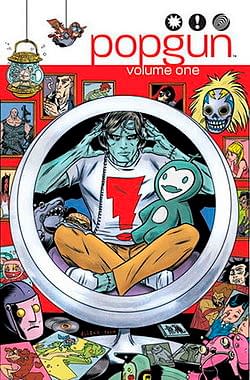
APK: This is a quick story. I had known D.J. [Kirkbride] for years, and one time we were at a coffee shop, and one time he said, "Oh, I think we need another editor". That was the first thing I had ever done in comics, and I came in about half way through that book. I hadn't done any comic writing that had gotten anywhere, and actually me and DJ had done some comic writing that ended up in Pop Gun. And actually I had never edited any comics before, which is my dirty little secret, I suppose. But I was just the assistant editor. Most of my job was e-mailing people, but I used that as a gateway to getting my hands dirty as much as possible. And luckily everyone there was onboard with that.
 One of the issues with writing is that it is just as hard as being a plumber, for example. I view writing as like building cars on an assembly line, it is a trade craft. But people don't always see that, that it is a craft. But it's hard to get people to understand that because I can't show you my writer card. You can get a degree in English and creative writing and all that but they are necessarily worth much of anything because you have to do it. And there's a certain trick in your head. I can teach someone how to do it, but if they don't have that little trick in their head, they'll never be great. Am I writer? I don't know. I don't make my living doing it. But I have stuff that's professionally out there. Regarding being an editor? Who decides that? There is no authority.
HMS: Well, your publication list is pretty impressive. And you've written prose novels, short stories. So you did that for a while before you ever considered writing comics?
APK: I've always wanted to write comics, but the problem is I can't draw. I can write a bunch of stuff at once, but any artist who is drawing a comic is probably doing just that. They need to get paid badly because they need to pay rent. But when you're new to writing, and no one knows who you are, how do you actually talk these artists into doing something with you? That was just a big, scary, strange animal to me at first, so I just focused on the prose stuff, because that is what I knew how to do any way.
Popgun was the thing for me because both me and D.J. met so many people working on Popgun who had learned to trust us and how we dealt with what they were working on. So if we went to them to tell them we had this idea, they were willing to listen. Which is that foot in the door you need at first. You just need that 10 seconds of their time, and then you prove yourself to be an idiot or not. And if you can get that one thing done, you keep building it, and it becomes the rest of your life.
HMS: Creating comics really seems to be all about relationships, I've noticed.
APK: I think every major deal I've made has been at a bar.
HMS: What did you most want to accomplish in Amelia Cole?
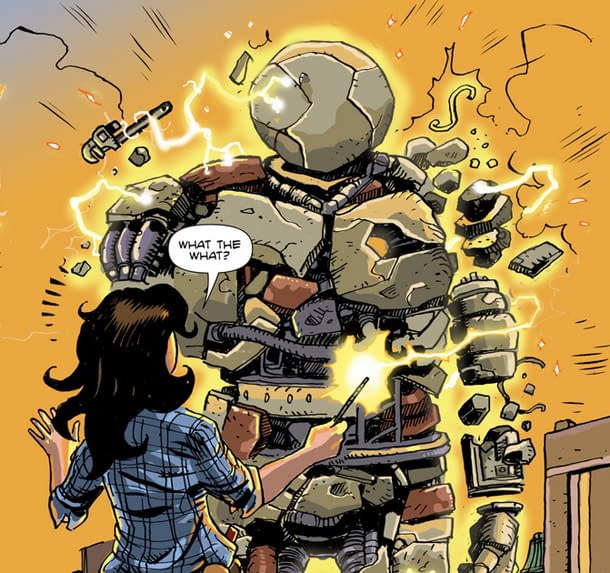 APK: When I grew up, and when DJ grew up, there was that level of Marvel comics in the 80's that could be read by anyone, all ages. And so there was that urge to do something that was all ages. That a kid could pick up, an adult could pick up, but that specifically had a female character who would wear actual human clothes, who had actual weight, not just like a stick figure, and be a full, well-rounded character. And we felt like "Let's just put some of that out in the world because we need it, frankly".
HMS: In Artful Daggers and also Amelia Cole, you seem to have a tension between technology and magic or a more primitive way of life. Are you afraid of the future, or of technology? You talk about technology a fair amount.
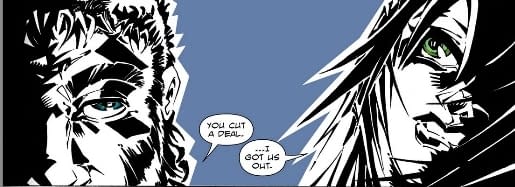 APK: (laughs) That's completely random. I didn't even notice that we were doing that because there are two different writing teams. But I look at the other pitches I have out right now and yes, I am obsessed with technology. It's not even that I don't trust technology because I work with technology all day. But because I work with technology all day, I understand a lot about technology that other people who write about technology don't seem to get, which is that it doesn't advance in a straight line.
It doesn't adopt in a straight line. You see a movie where everyone has holographic phones, and you never see that one schmuck with a flip phone who just can't do it, can't afford it or whatever. But technology adopts along societal curves. So using technology in stories, you can get a lot of sociology done very quietly if you know where to look. And it works as a shorthand because a lot of people understand without understanding. So a lot of people don't feel hit on the head by it.
HMS: So you can use technology as a gateway to discussing sociology, looking at culture through that lens?
APK: Right. And some people don't understand what you're doing necessarily but they can understand the cues because everyone deals with technology. And technology also solves as many problems as it creates when you're writing. It's one of those fun puzzle pieces you get to play with.
 With Artful Daggers, the fun was asking, "What happens if you drop this societal bomb in the heart of medieval England?" And we've shown, in the first arc, which has a lot of moving pieces, that this doesn't just affect England, but how does this effect the rest of the world. England has all this technology, but what about China? This arc is setting up where we are, and it is very complex in terms of the politics involved, but it's all setting things up. Because there are explosions coming. This book will have a body count.
HMS: So if you had your way, would you be in to Artful Daggers for the long haul?
APK: Oh, yeah, we intend to. Artful Daggers isn't ending any time soon. Amelia we have three volumes, or arcs, that make up one story. The first is in print. The second is half way done. We have three arcs that tell our essential story. But we have jokingly discussed the tenth arc of that book already. We know what the next six are called. Same thing with Artful Daggers, we have a plan.
HMS: Well, this is creator-owned, so if you can keep people on board, you can potentially go for ages.
APK: We can go forever, it's just a question of money, it's a question of time, it's a question of people getting snatched up for bigger things. Which is sad that it could happen, but reality has its way with us.
HMS: That could happen to you, too.
APK: Oh, no, I have eight pitches out right now, including a web comic that starts in January, Dong Patrol. It started off as a typo and a joke, and then we said, "Let's actually do it". It's a web comic on its own site. You might as well have fun, right? If you cannot feel that we are having fun when we are doing our books, then we are not doing our jobs. The minute it stops being fun, then we are not going to keep doing it. That's the joy of creator-owned. We don't have to keep doing them forever. But you do them as long as the passion is there. And if the right idea is there, the passion doesn't go away.
HMS: We wish you all the best in your new home, Adam, and are counting on a continuing inundation of new work from you and the leg up you're giving to new creators through your editing, too. Thanks from Bleeding Cool.
Hannah Means-Shannon is Senior New York Correspondent at Bleeding Cool, writes and blogs about comics for TRIP CITY and Sequart.org, and is currently working on books about Neil Gaiman and Alan Moore for Sequart. She is @hannahmenzies on Twitter and hannahmenziesblog on WordPress. Find her bio here.
Enjoyed this? Please share on social media!



Stay up-to-date and support the site by following Bleeding Cool on Google News today!